

Proton e.MAS 5 review

Kushal Rajbhandari
· Oct 3, 2026
Good
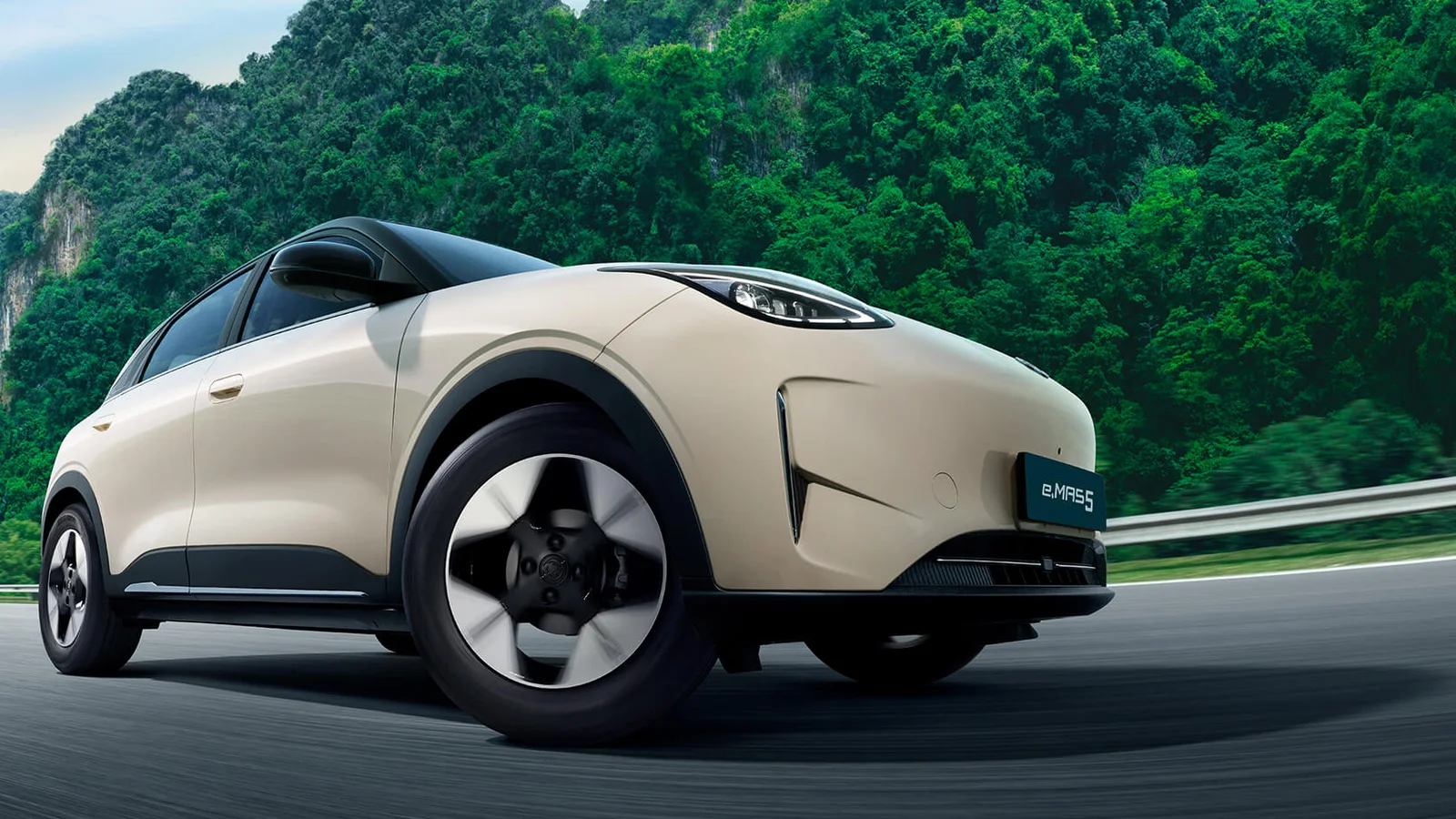
The e.MAS 5 Premium is a comfortable, well-equipped small EV with unusually good storage, held back by modest range, no brand-run charging and a much weaker base Prime.
Kushal Rajbhandari
Oct 3, 2026
The e.MAS 5 Premium is a comfortable, well-equipped small EV with unusually good storage, held back by modest range, no brand-run charging and a much weaker base Prime.
Kushal Rajbhandari
Oct 3, 2026
What we like
- Multi-link rear suspension rides broken roads better than most rivals
- 70-litre front trunk and 28-litre under-seat bin add to a 375-litre boot
- Premium adds adaptive cruise, automatic emergency braking and a 360-degree camera
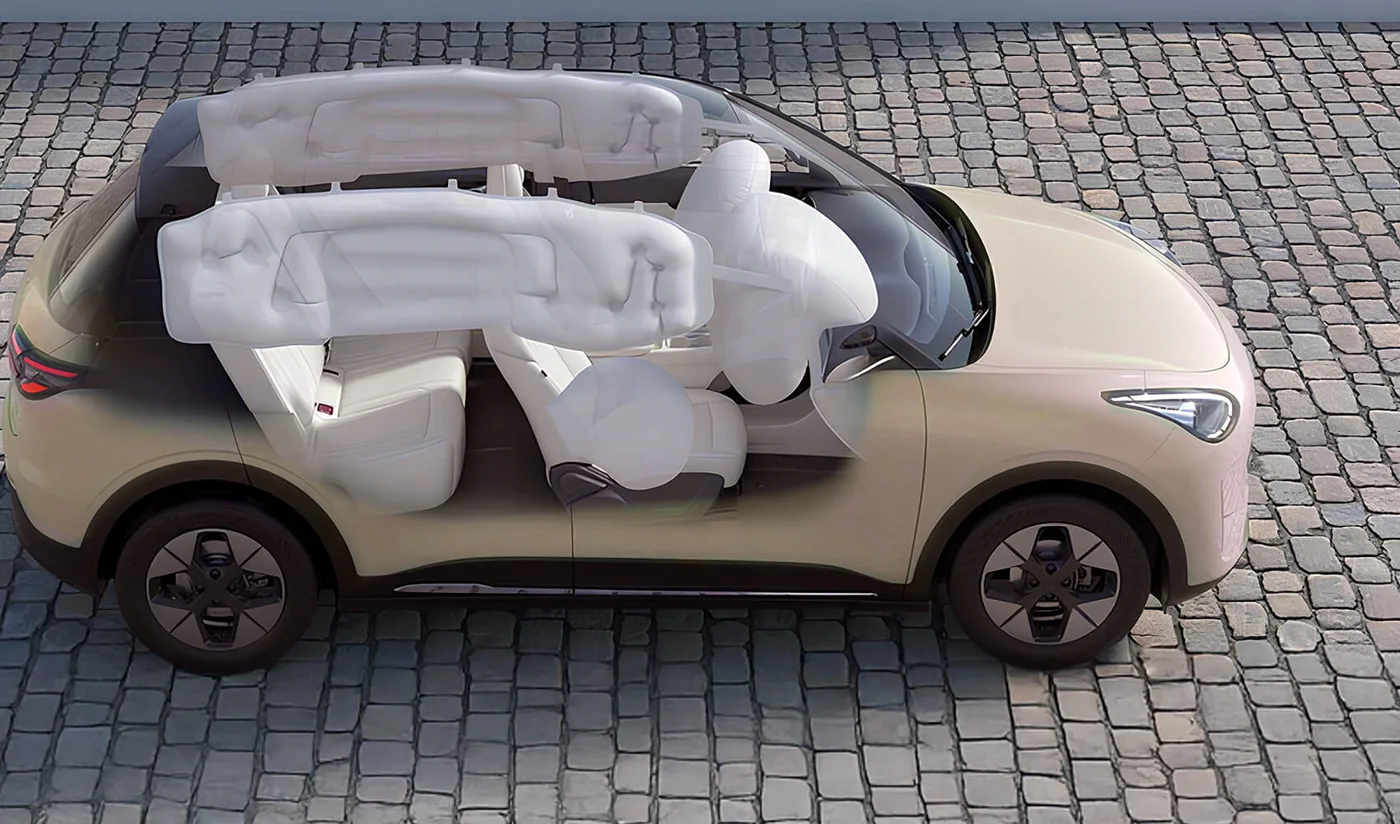
- Six airbags and blind-spot detection on both trims
- 30-80% DC charge in about 21 minutes on both trims
- 6-year unlimited-mileage vehicle warranty and 8-year battery cover
What could be better
- Prime's 30 kWh pack is rated at only 225 km WLTP
- Prime has no automatic emergency braking and uses halogen headlamps
- Prime's 58 kW motor struggles on long climbs with a full car
- Manual seats and a tilt-only steering wheel limit the driving position
- No Proton-run charging network in Nepal
- Steering and brakes give little feel
The e.MAS 5 Premium is one of the most complete small EVs on sale in Nepal. It has rear-wheel drive with a multi-link rear axle, a 40 kWh battery, a full driver assistance package and more storage than its size suggests. The cheaper Prime gives up a quarter of the battery, a third of the power and most of the active safety kit, so the two trims need judging separately.
Proton is Malaysia's national carmaker, and the e.MAS 5 is built on the same platform as the Geely EX2. Jagdamba Motors launched it in Nepal in July 2026 as the brand's second EV after the e.MAS 7. Both trims use CATL LFP cells, a 14.6-inch touchscreen and six airbags. The Premium has 85 kW, 325 km of WLTP range, adaptive cruise and automatic emergency braking.
It suits a city household that wants a comfortable, well-equipped first EV and makes the occasional trip out of the valley. Buyers who regularly drive long highway stages, or who want brand-run charging behind them, have stronger options.
Design, interior & features
Design and exterior7.0
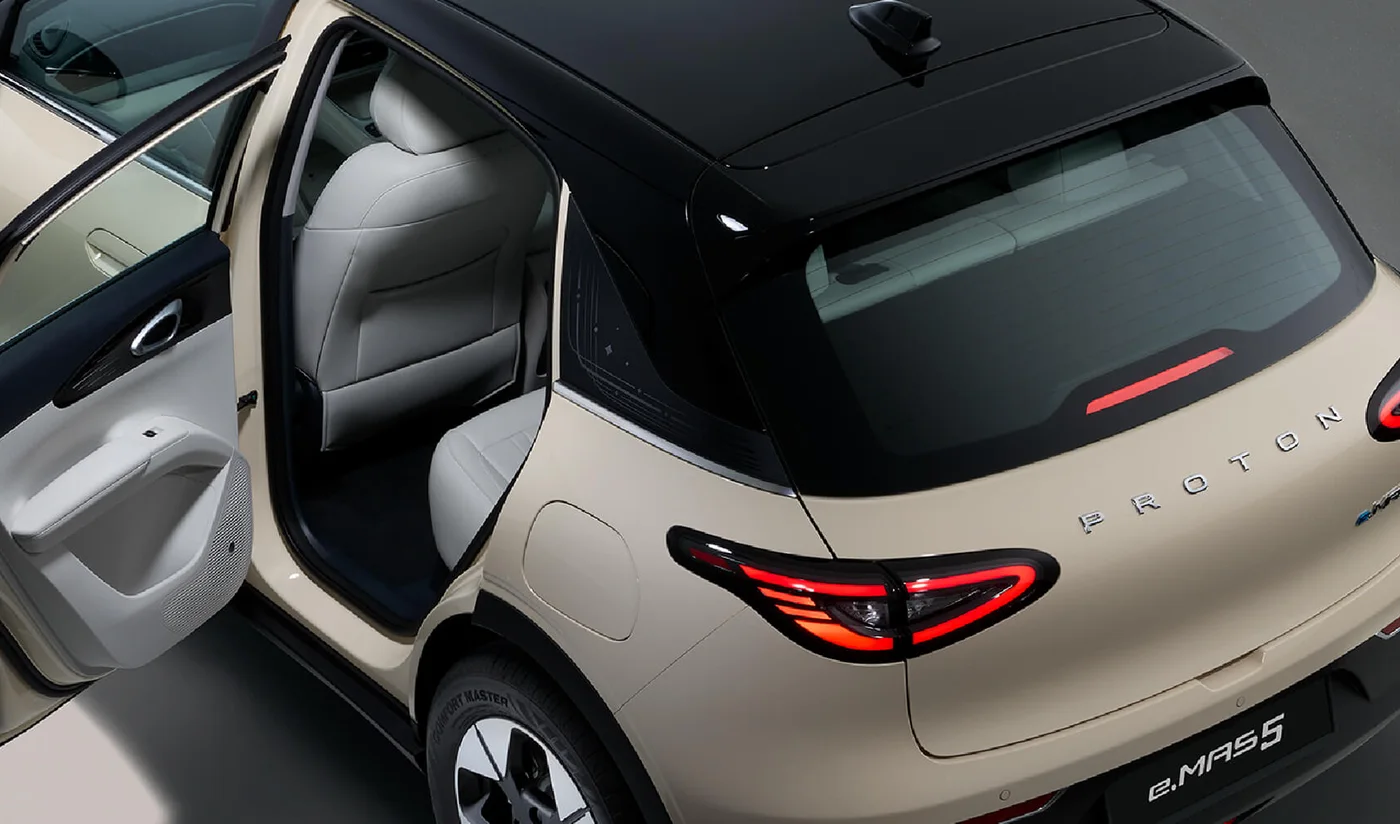
The e.MAS 5 has a rounded, friendly face. Slim headlamps sit above a closed nose with deep vertical scoops at the corners, and the bodywork has short overhangs and smooth surfaces. The door handles are semi-concealed, and the Premium can have a contrasting black roof in three of the six colours. Colours like Jade Green and Quartz Rose stand out against the greys and whites most rivals are sold in.
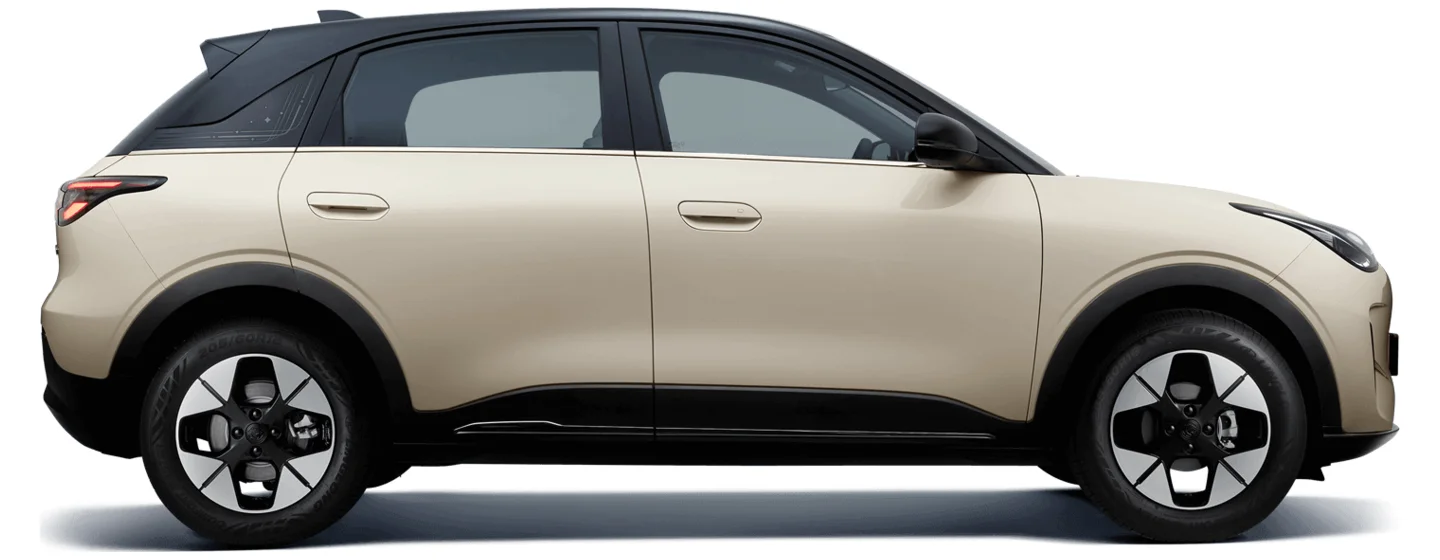
At 1.805 metres it is wide for its length, which gives it a planted stance and helps the cabin. The trims look different. The Prime has halogen headlamps, 15-inch wheels and a body-coloured roof, while the Premium gets automatic LED headlamps with intelligent high beam, 16-inch alloys and the two-tone roof option.
Interior, space and practicality8.0
The boot holds 375 litres, rising to 1,320 litres with the rear seats folded. There is also a 70-litre front trunk with gas struts, a 28-litre bin under the rear seat and a 20-litre space under the centre console. Only the Nammi Vigo carries more among its direct rivals.
The cabin feels airy up front, helped by a low dashboard and a wide windscreen. The materials do not feel cheap for the class, and the Premium can be had with a pale Alabaster interior that brightens it further, though it will show dirt quickly. Climate and hazard controls keep physical buttons, which helps on a bumpy road.
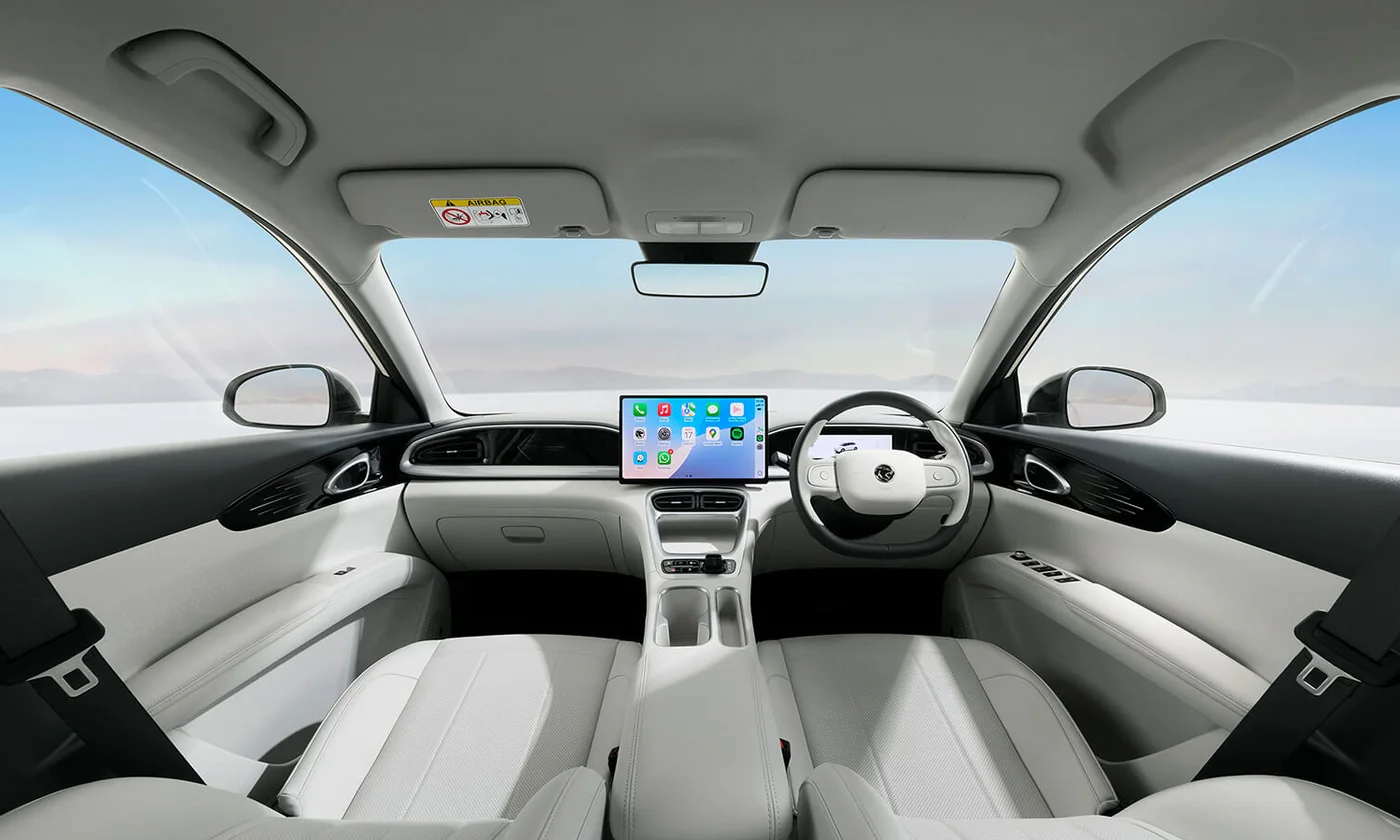
The rear is fine for two adults. Knee room is good on the 2.65-metre wheelbase and the cushion sits high, but headroom is tight for taller passengers, the backrest does not recline and three across is a squeeze. Both front seats are manually adjusted on both trims, and the steering wheel tilts but does not telescope, so some drivers will struggle to find a comfortable position.

Features and technology8.0
Both trims get the same 14.6-inch touchscreen running Proton's ATLAS software, with Apple CarPlay and Android Auto, an 8.8-inch digital driver display, 4G connectivity, online navigation, keyless entry, rear air vents and vehicle-to-load power. The screen is sharp and responds quickly, which is not true of every rival in this class.
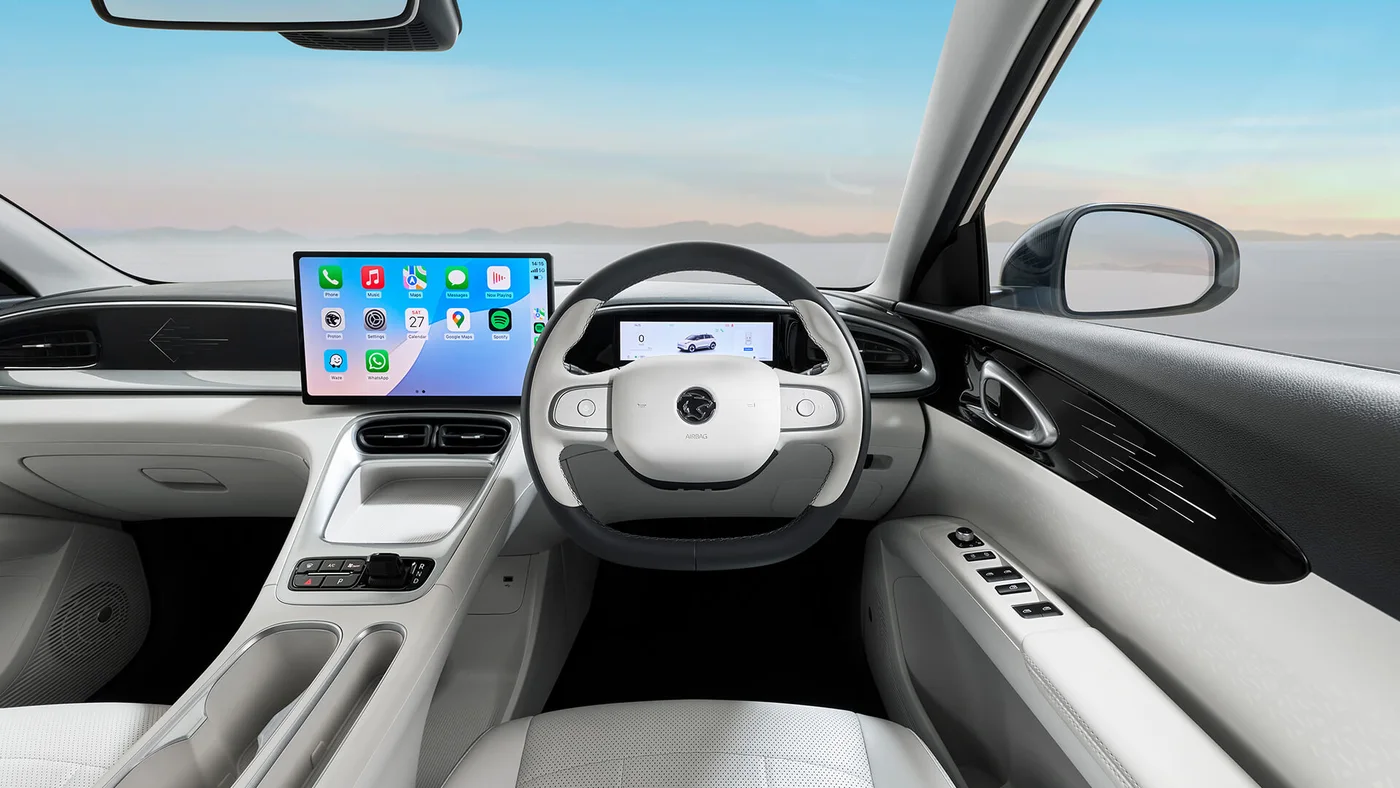
Every e.MAS 5 has blind-spot detection, lane change warning, rear cross-traffic alert, rear collision warning and a door opening warning. The Premium adds adaptive cruise control, automatic emergency braking, forward collision warning, lane departure warning and traffic sign recognition, plus a 360-degree camera with a 3D view. The Prime makes do with a rear camera. The Premium also gets a powered tailgate and six speakers instead of four.
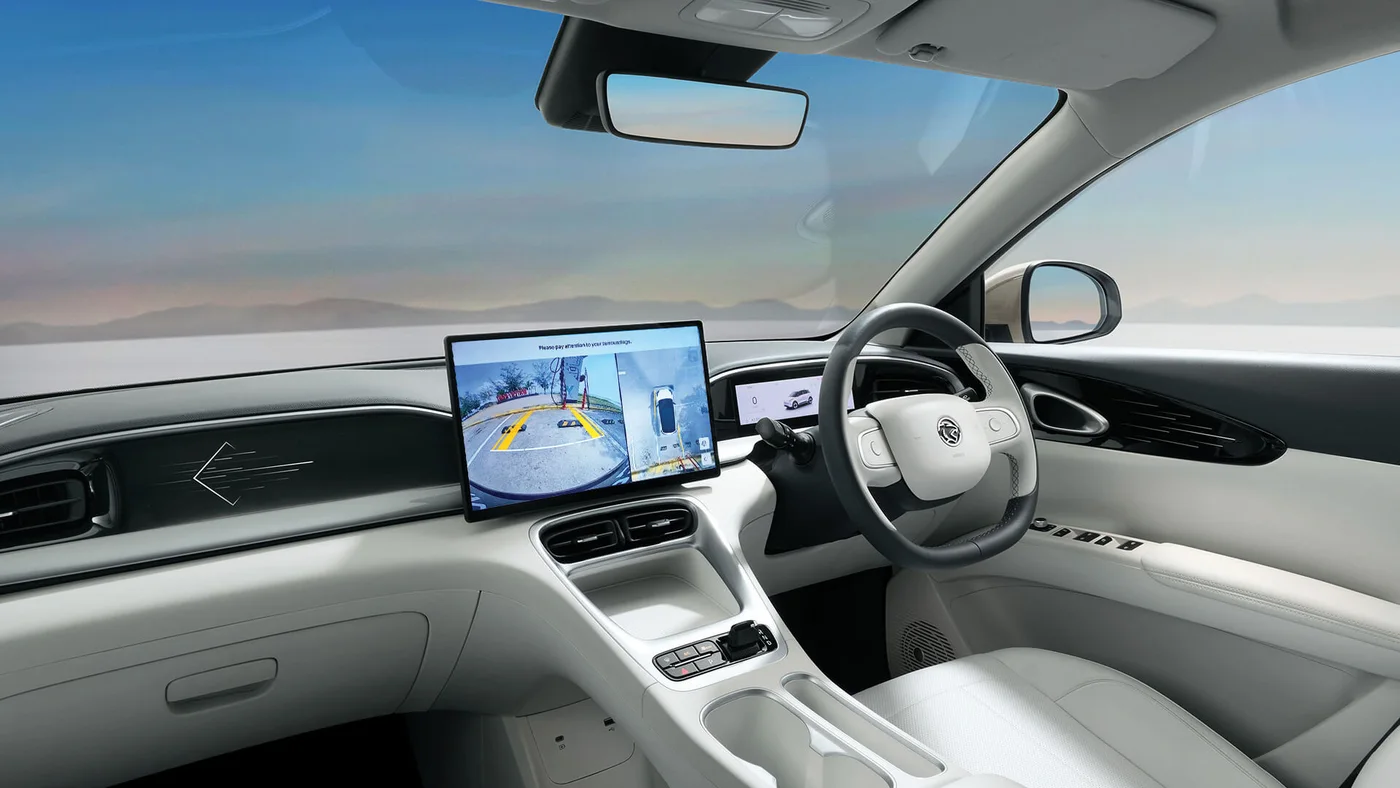
The adaptive cruise brakes harder than it needs to in traffic, and neither trim has power seats, a sunroof or ventilated seats.
Range, battery & charging
Real-world range7.0
The Premium's 40.16 kWh pack is rated at 325 km on WLTP and 395 km on the looser NEDC cycle. In mixed driving, expect around 280 to 300 km, a little more in slow valley traffic and less on a hill-heavy day. That covers a week of commuting or a one-way trip to Pokhara with a margin.
The Prime's 30.12 kWh pack is rated at 225 km WLTP, which works out to roughly 190 to 200 km in practice. That is fine for the city but tight for anything longer.
- Battery
- 30.12 kWh LFP
- Range (WLTP)
- 225 km
- Range (NEDC)
- 285 km
- Typical real-world
- 190-200 km
- DC peak
- 53 kW
- Battery
- 40.16 kWh LFP
- Range (WLTP)
- 325 km
- Range (NEDC)
- 395 km
- Typical real-world
- 280-300 km
- DC peak
- 71 kW
Against the segment, the Premium runs with the longer-range Punch EV and Nammi Box and beats the Atto 1 and Tiago EV, but the Nammi Vigo goes further. The Prime sits with the short-range versions of those cars.
Battery7.0
Both packs use CATL lithium iron phosphate cells, which cope well with regular charging to full and degrade slowly. The cells are rated at 185 Wh per kg. Neither pack is large for the class, but the Premium's 40 kWh is about the segment average, and the 8-year, 160,000 km cover on the high-voltage battery and components is reassuring.
Efficiency and running cost8.0
The e.MAS 5 is frugal. Mixed driving returns about 12 to 13 kWh per 100 km, and slow traffic brings that lower, so a full charge at home costs very little. Highway speeds above 100 km/h push consumption up noticeably. The vehicle warranty runs 6 years with no mileage limit, which is longer than most rivals offer, and servicing a car this simple is cheap. The Prime's 15-inch tyres are inexpensive to replace.
Charging8.0
DC charging is quick for the class. The Prime peaks at 53 kW and the Premium at 71 kW, and both take about 21 minutes from 30 to 80 percent because the smaller pack fills faster. That makes a charging stop on the way to Pokhara or Butwal short. On AC, both trims take 6.6 kW, so a full charge from 10 percent takes 4.3 hours on the Prime and 5.9 hours on the Premium, easily done overnight.
Charging availability6.0
Proton and Jagdamba do not run their own charging network in Nepal, and no free home wallbox has been confirmed for the e.MAS 5. Owners rely on NEA and private DC chargers, which suit the car's CCS2 port, and charge at home on a standard AC unit. The car's built-in live charging map helps find stations, but the brand adds little on top of the national network.
Performance & driving
Performance and hill climbing7.0
The Premium's 85 kW and 150 Nm rear motor gets it from 0 to 50 km/h in 3.9 seconds and to 100 km/h in about 10 seconds. It feels eager in town and pulls cleanly up steep valley roads, with rear-wheel drive helping traction on wet climbs. Its torque is modest, so the shove tails off above 60 km/h and overtaking on a highway climb needs planning.
The Prime has 58 kW and 130 Nm. It takes about 12.5 seconds to reach 100 km/h and feels it on long climbs with four people aboard. Both trims have hill hold, auto hold and hill descent control, and regenerative braking helps hold speed on descents.
Driving experience, ride and handling8.0
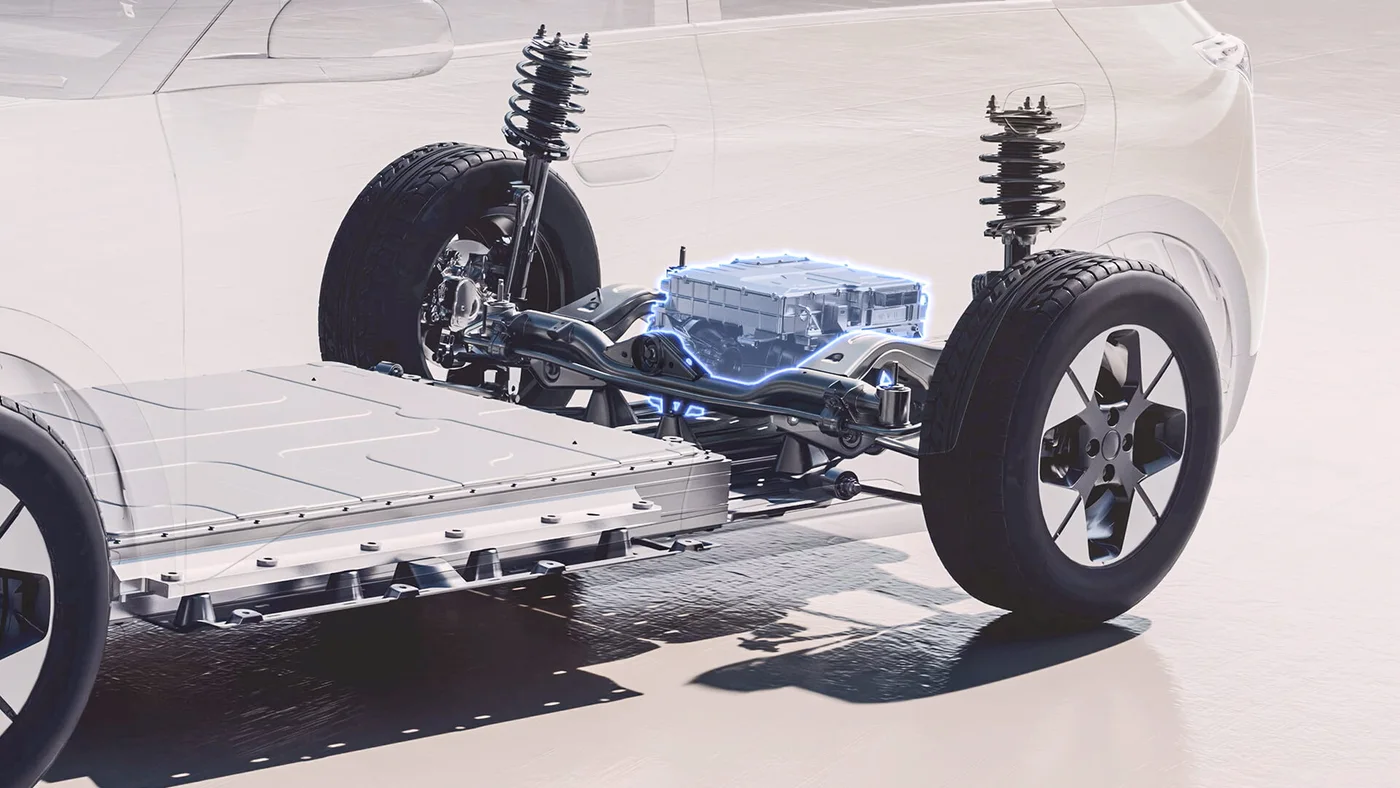
Few cars in this class have independent rear suspension, and the multi-link rear keeps the car settled over Kathmandu's patched roads, where rivals with a simpler rear axle thump and bounce. Body control is good for a soft-riding car, though it leans in quick corners.
The steering is light and accurate in town, and the 4.95-metre turning circle makes U-turns and tight parking easy. It gives no feel, though, and the brake pedal is vague, with the nose dipping hard under heavy braking. Cabin noise is low at city speeds, but wind noise builds above 80 km/h.
Road tolerance7.0
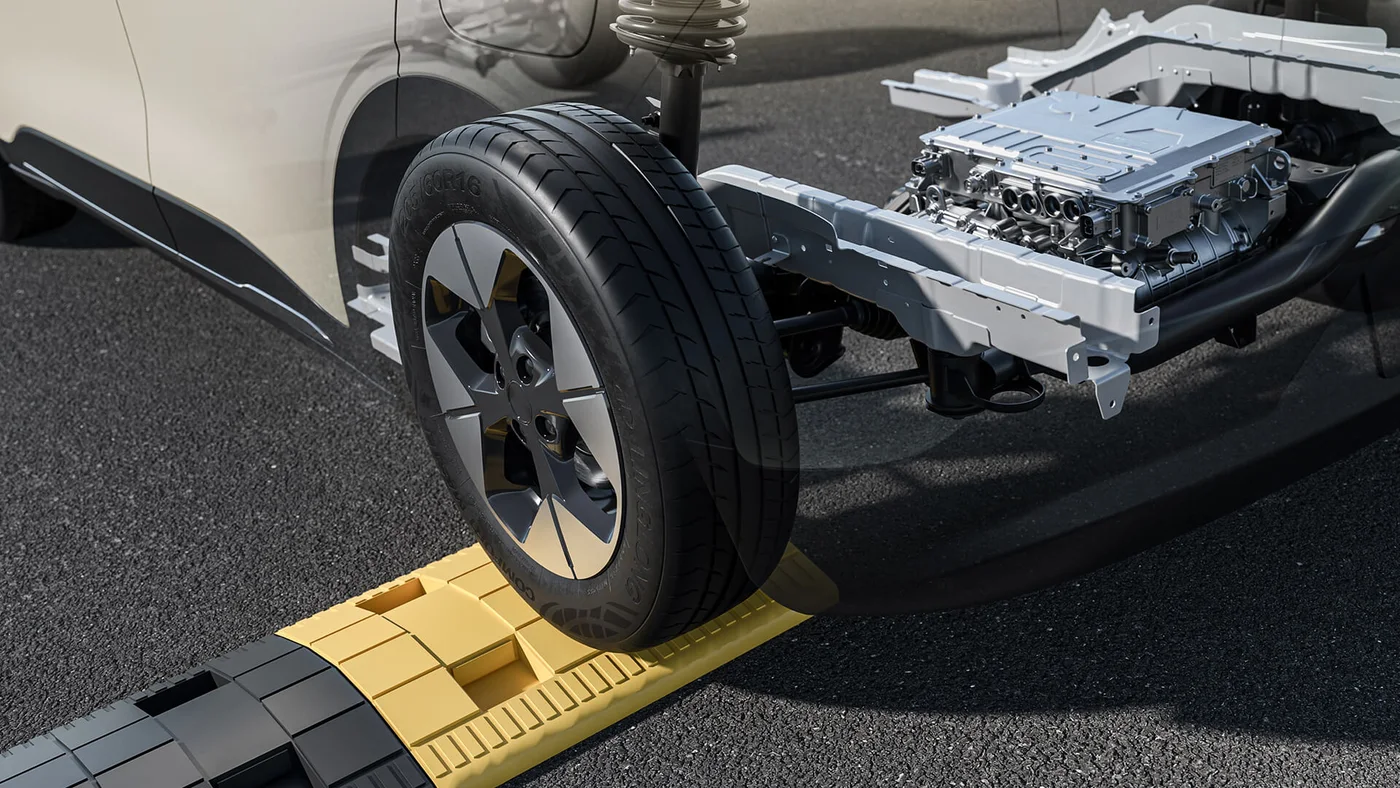
The suspension copes well with broken tarmac and speed breakers, and the Prime's tall-sidewall 205/65 tyres soak up sharp edges. Rear-wheel drive puts the weight where it helps on a steep, loose driveway. The car is still a low-slung crossover, so rough unpaved roads call for care, especially with a full load.
Safety & build
Safety7.0
Six airbags are standard on both trims: front, front side and curtains. So are stability control, traction control, ABS with brake assist, tyre pressure monitoring and rear parking sensors. The Premium's automatic emergency braking and adaptive cruise put it ahead of most rivals for active safety, while the Prime has no automatic braking at all.
The e.MAS 5 itself has not been crash tested. The closely related Geely EX2 earned five stars from Euro NCAP, but that car had an extra centre airbag and reverse automatic braking that the e.MAS 5 lacks, and the test flagged weak protection for the driver's legs in the offset crash. The Punch EV, with its own five-star result, remains the safer bet.
Build quality and reliability7.0
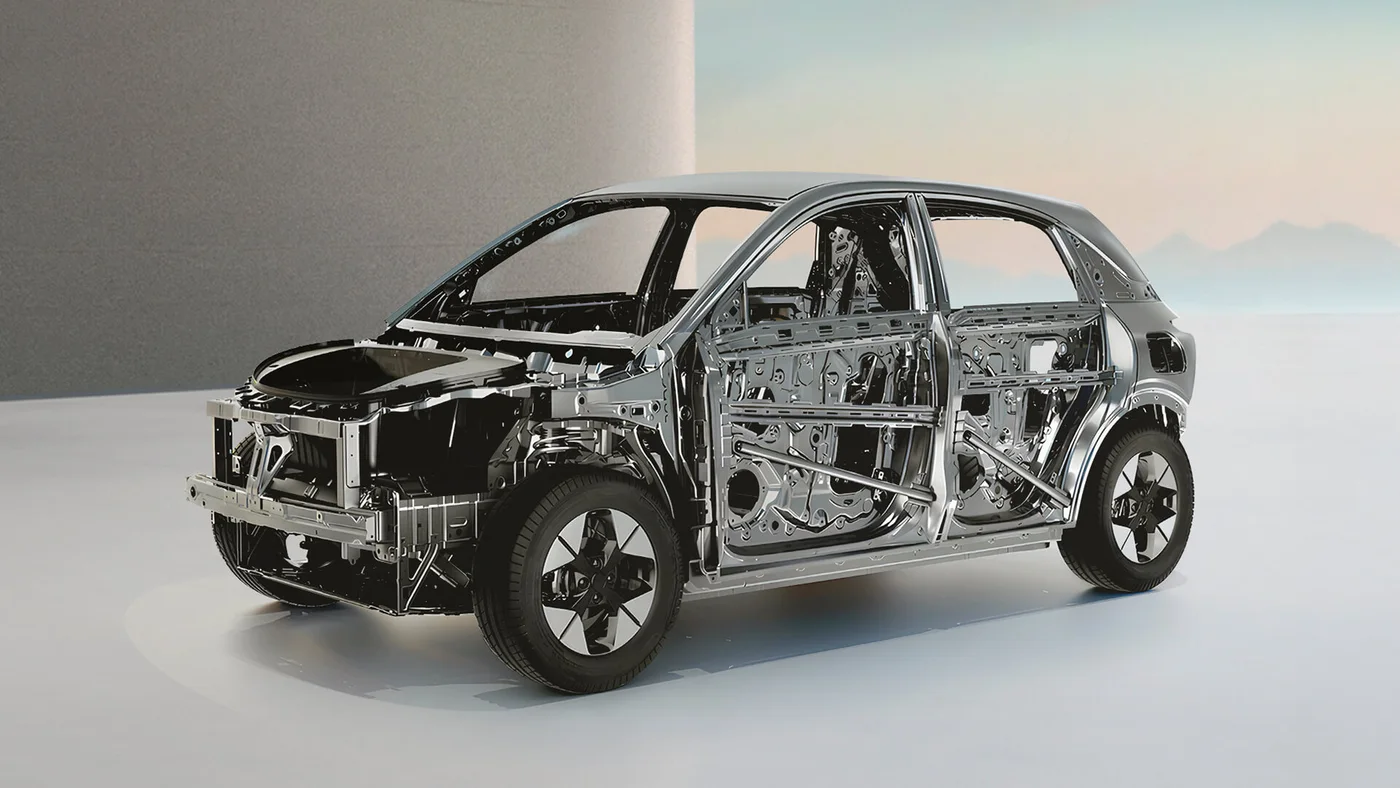
The cabin feels solidly put together, and the CATL cells and Geely-developed platform are already sold in large numbers in other markets. We know of no recalls or common faults so far; one test car did develop a grinding noise from the rear on left turns. The car is new to Nepal, so there is no long-term local ownership record yet.
Value & ownership
Price and value8.0
The Premium is strong value. It brings adaptive cruise, automatic braking, a 360-degree camera, a 40 kWh battery and a more composed ride for less than most rivals ask for similar equipment. The Prime is cheaper still, but with halogen lamps, no automatic braking and a 225 km rating, it has a much weaker case against the Atto 1 and Punch EV. The long warranty adds to the value of both.
After-sales and service network7.0
Jagdamba Motors is an established distributor, and its Proton outlets combine sales and service. Since the e.MAS 5 launch it has grown to 11 locations, covering Kathmandu and Bhaktapur plus Biratnagar, Chitwan, Pokhara, Butwal, Birgunj, Janakpur, Nepalgunj and Dhangadhi, with Birtamode planned. That reach is good for a new EV brand, though it is still smaller than Tata's, and the Proton EV parts supply is new and untested over years of ownership.
Editor's opinion8.0
We would recommend the e.MAS 5 Premium over the Nammi Vigo to a buyer who values ride comfort, safety equipment and storage over outright range. The Prime is harder to recommend against the Punch EV, which is quicker and has a stronger safety record. In Premium form, it is better rounded than the Vigo.
Verdict
The e.MAS 5 Premium suits Nepal's roads well. The multi-link rear suspension soaks up broken roads better than its rivals, the storage is clever, the charging is quick, and it has more active safety equipment than most cars at this size. The range is only average for the class, the steering and brakes are short on feel, and the adjustable driving position is limited. Proton offers no charging network of its own, and the car has no long-term record in Nepal yet. The Prime keeps the cabin and the ride but loses so much power, range and safety kit that it is a separate decision.
Good
The e.MAS 5 Premium is a comfortable, well-equipped small EV with unusually good storage, held back by modest range, no brand-run charging and a much weaker base Prime.
Kushal Rajbhandari
Oct 3, 2026
The e.MAS 5 Premium is a comfortable, well-equipped small EV with unusually good storage, held back by modest range, no brand-run charging and a much weaker base Prime.
Kushal Rajbhandari
Oct 3, 2026
FAQ
What is the real-world range of the Proton e.MAS 5?
The Premium covers around 280 to 300 km in mixed driving against its 325 km WLTP rating. The Prime manages about 190 to 200 km against its 225 km rating. Expect less on hill-heavy routes and at sustained highway speeds.
What is the difference between the e.MAS 5 Prime and Premium?
The Premium has a 40.16 kWh battery instead of 30.12 kWh, 85 kW instead of 58 kW, and 71 kW DC charging instead of 53 kW. It also adds LED headlamps, 16-inch alloys, a powered tailgate, six speakers, a 360-degree camera, adaptive cruise control and automatic emergency braking.
How long does the e.MAS 5 take to charge?
Both trims go from 30 to 80 percent in about 21 minutes on a DC fast charger. On a 6.6 kW AC charger, a full charge from 10 percent takes 4.3 hours on the Prime and 5.9 hours on the Premium.
Is the e.MAS 5 good for Nepal's roads?
Yes, on paved and broken roads. The multi-link rear suspension and rear-wheel drive handle potholes, speed breakers and steep wet climbs better than most rivals. It is still a low crossover, so rough unpaved tracks need care.
How many airbags does the e.MAS 5 have?
Six on both trims: two front, two front side and two curtain airbags. Stability control and tyre pressure monitoring are also standard.
What warranty does the Proton e.MAS 5 get in Nepal?
The vehicle is covered for 6 years with unlimited mileage, and the high-voltage battery and components for 8 years or 160,000 km.
Where can I service the Proton e.MAS 5?
Jagdamba Motors has Proton sales and service outlets in Kathmandu, Bhaktapur, Biratnagar, Chitwan, Pokhara, Butwal, Birgunj, Janakpur, Nepalgunj and Dhangadhi.
How big is the e.MAS 5's boot?
The boot holds 375 litres, or 1,320 litres with the rear seats folded. There is also a 70-litre front trunk and a 28-litre compartment under the rear seat.