

Leapmotor B03X review

Kushal Rajbhandari
· Oct 19, 2026
Good
A roomy, well-equipped compact crossover with a big battery and quick charging, held back by numb steering, touchscreen-heavy controls and a thin service network outside the valley.
Kushal Rajbhandari
Oct 19, 2026
A roomy, well-equipped compact crossover with a big battery and quick charging, held back by numb steering, touchscreen-heavy controls and a thin service network outside the valley.
Kushal Rajbhandari
Oct 19, 2026
What we like
- 53 kWh LFP battery with a claimed 382 km WLTP range, competitive for an affordable subcompact electric crossover
- 145 kW front motor with 200 Nm gives brisk performance, 0 to 100 km/h in about 8.6 seconds and a 160 km/h top speed
- Quick DC fast charging, 30 to 80 percent in roughly 16 minutes, so highway top-ups are short
- Large 14.6-inch central touchscreen with Leap OS software plus an 8.8-inch driver display for a modern, tech-forward cabin
- 190 mm of ground clearance and a crossover stance help on rough and uneven Nepali roads
- Practical packaging for its size, with a flat-floor layout, high seating for visibility and Leapmotor's claimed 33 storage spaces
What could be better
- Real-world range will run under the 382 km WLTP claim once hills, AC and city traffic are factored in
- Front-wheel drive only, so it lacks the traction of an all-wheel-drive setup on steep or slippery hill roads
- Very new model both globally and in Nepal, so long-term reliability and real-world ownership data are still limited
- Leapmotor is a young brand in Nepal, so its service network, parts availability and resale track record are still unproven
- Home AC charging is an overnight affair, so daily top-ups depend on planning around a wall box
- Subcompact footprint (4,270 mm long) means it is tighter for larger families or bulky loads than a mid-size SUV
The Leapmotor B03X is a compact electric crossover that gives you a bigger battery, a stronger motor, faster charging and a larger boot than most cars at its price, along with a long equipment list. On the road it is less polished: the steering is light and tells you little, the front tyres spin easily when you floor it, and too many everyday controls sit inside the touchscreen.
Shangrila Motors launched it in Lalitpur in August 2026 and sells one version in Nepal, the ProMax. It is the export version of the China-market A10, with a 53 kWh LFP battery and a 145 kW front motor, more power than the A10 gets at home. Leapmotor's export business is a joint venture with Stellantis, the group behind Peugeot and Citroën, which Shangrila also sells.
It suits a small family that wants space, kit and short charging stops, and that mostly drives in and around the valley with the odd trip out. Buyers who enjoy driving, or who want a long local track record and workshops in every major town, should look harder at the BYD Atto 2.
Design, interior & features
Design and exterior7.0
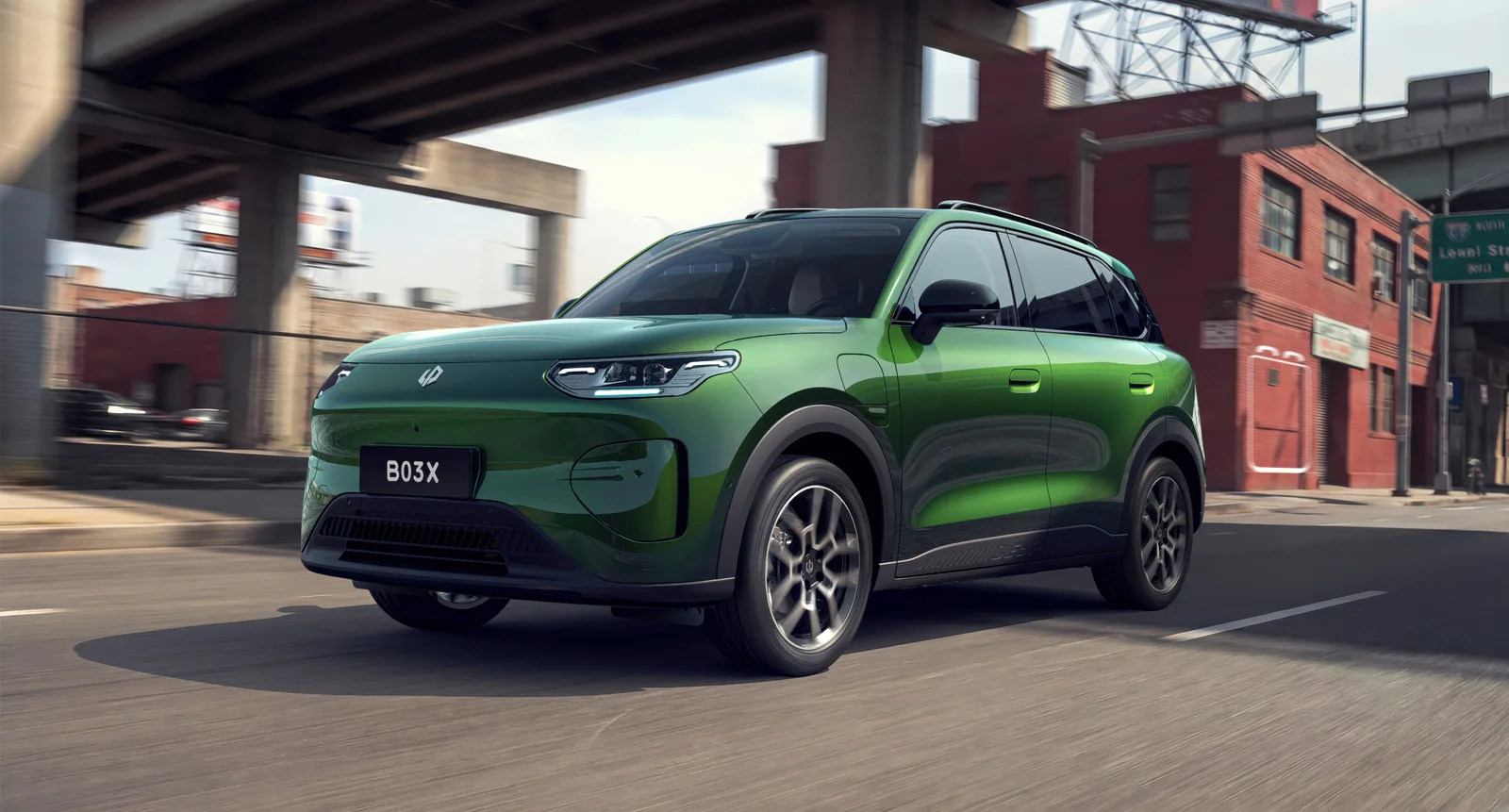
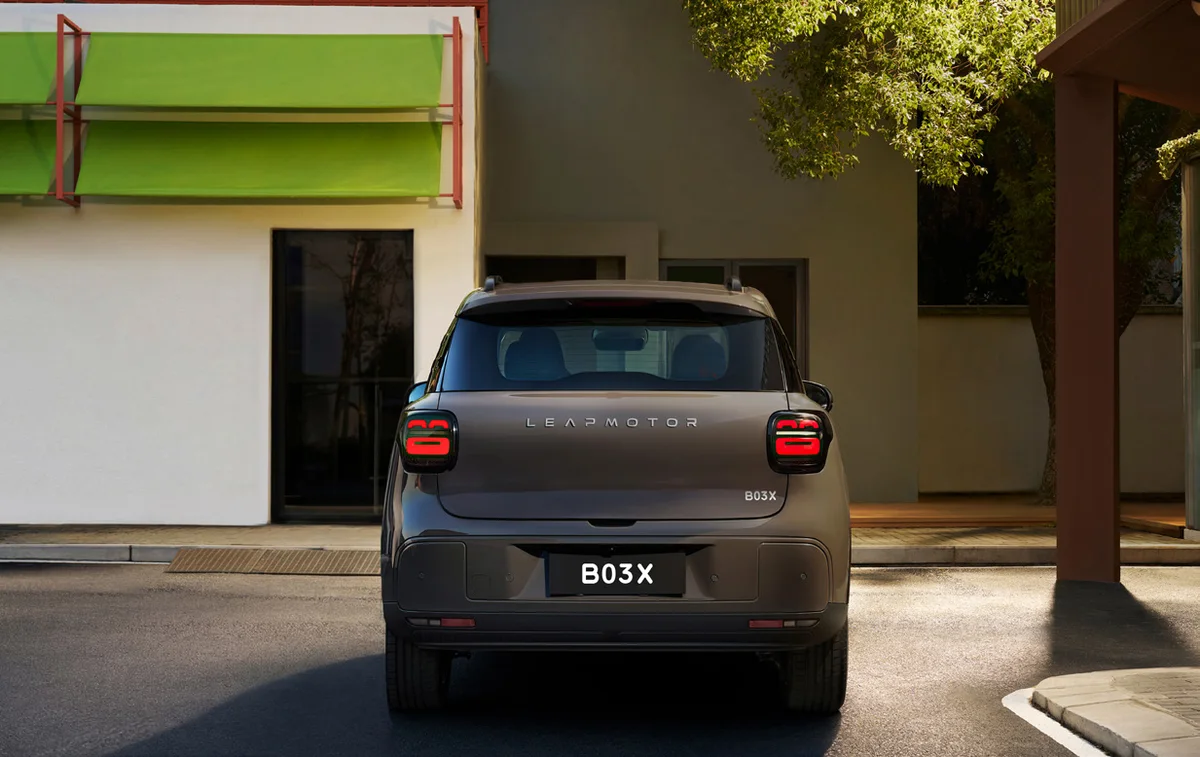
The B03X is boxy and upright, with short overhangs, roof rails and a thin light bar across the nose. At 4,270 mm long, 1,810 mm wide and 1,635 mm tall it is a little shorter than most compact SUVs but tall for its length.
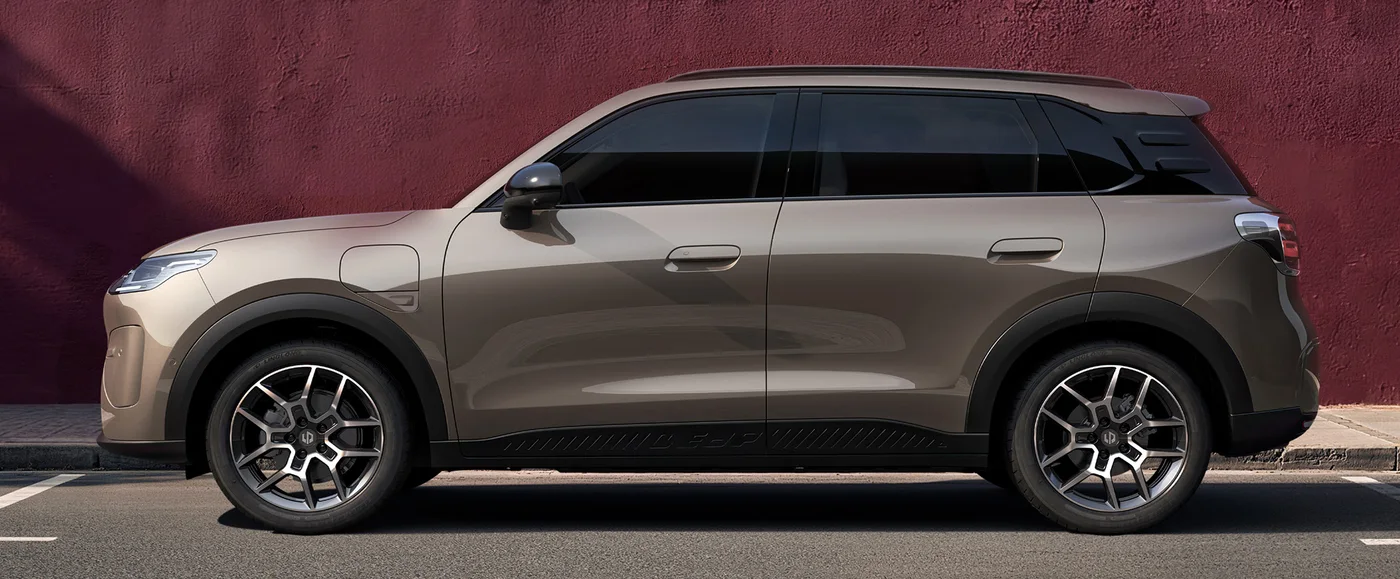
The detailing is neat. The door handles sit almost flush, the alloy wheels fill the arches well, and the rear lamps have a stacked graphic that makes the tail easy to recognise. Some local testers find the plain tailgate a little empty. It is a tidy shape, though the Nammi Vigo and Deepal Nevo Q05 make a stronger first impression.
Interior, space and practicality8.0
Space is the strongest part of the car. The 2,605 mm wheelbase and flat rear floor give generous legroom, and six-footers fit behind a tall driver. The rear seat cushions flip up to leave a tall space for plants or boxes, and the backrest splits 40:60. The bench is narrow for three adults, and there are no rear air vents, no rear centre armrest and no seatback pockets, where the Nevo Q05 at least fits rear vents.
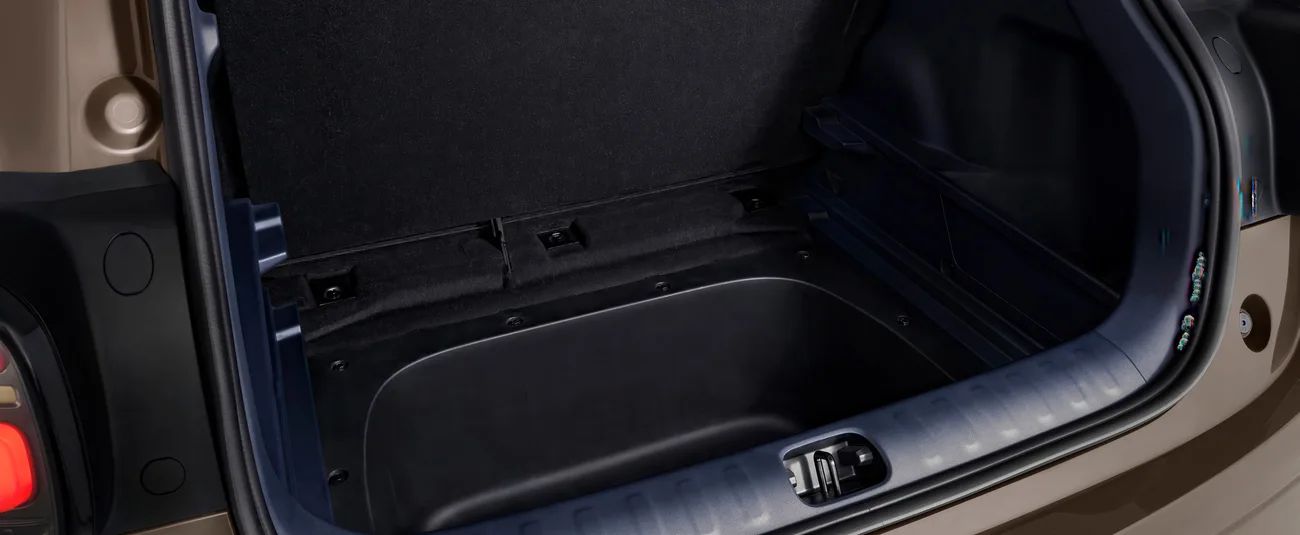
The boot holds 510 litres, counting the space under the floor, and 1,605 litres with the rear seats folded. That is more than the Atto 2 or MG S5 offer. Nepal-market cars come with a spare wheel of a different size from the road wheels, which matters for anyone heading off the main highways. There is no front boot, and the tailgate opens by hand.
The seats are trimmed in black eco-leather on the Nepal car. The dashboard top, door cards and armrest are soft to the touch, with harder plastics lower down. There are plenty of places to put things, and the centre console has two cupholders and a phone pad in front of an armrest bin.
Features and technology8.0
The standard kit list is long for the price: a 14.65-inch touchscreen, an 8.8-inch driver display, Apple CarPlay and Android Auto, which Nepali testers report connect wirelessly, a 15 W wireless charger, 12 speakers, a 360-degree camera with a transparent-chassis view and a built-in dashcam. The driver's seat adjusts electrically six ways, and both front seats and the steering wheel are heated.
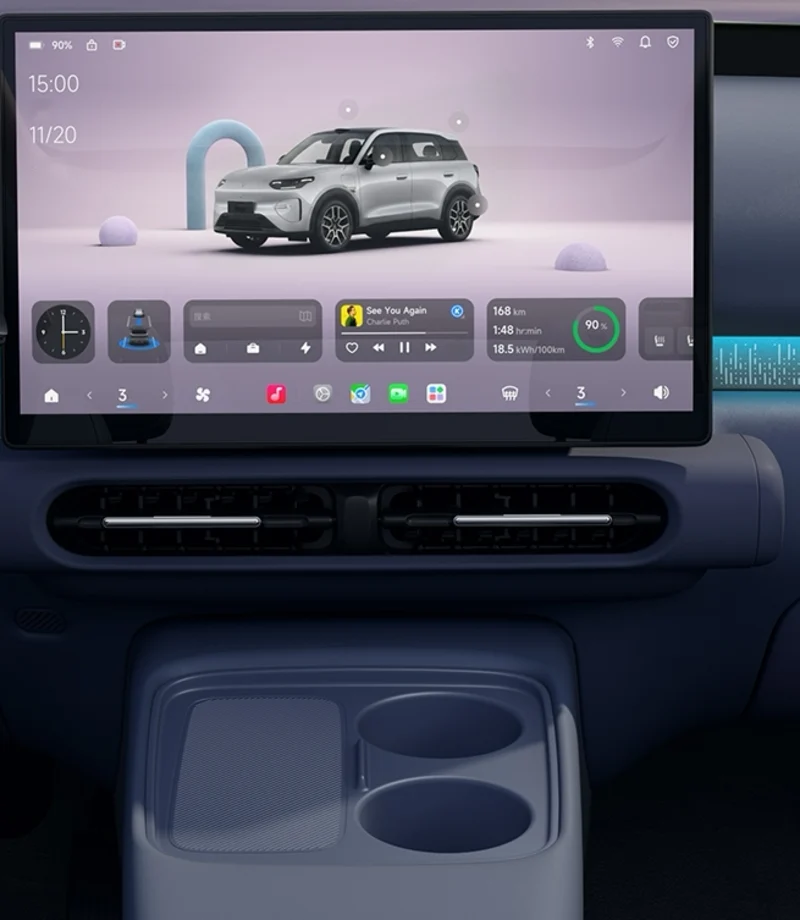
The screen runs Leap OS on a Snapdragon 8155 chip. Nepali testers found it quick and smooth; some overseas testers ran into lag and missed presses. There are no physical climate buttons, so changing the fan or temperature means tapping the screen, and regen levels and steering weight are also set there. Offline maps of Nepal work. The voice assistant handles simple commands, and the car starts with an NFC card placed on the charging pad, which takes a moment to wake up.
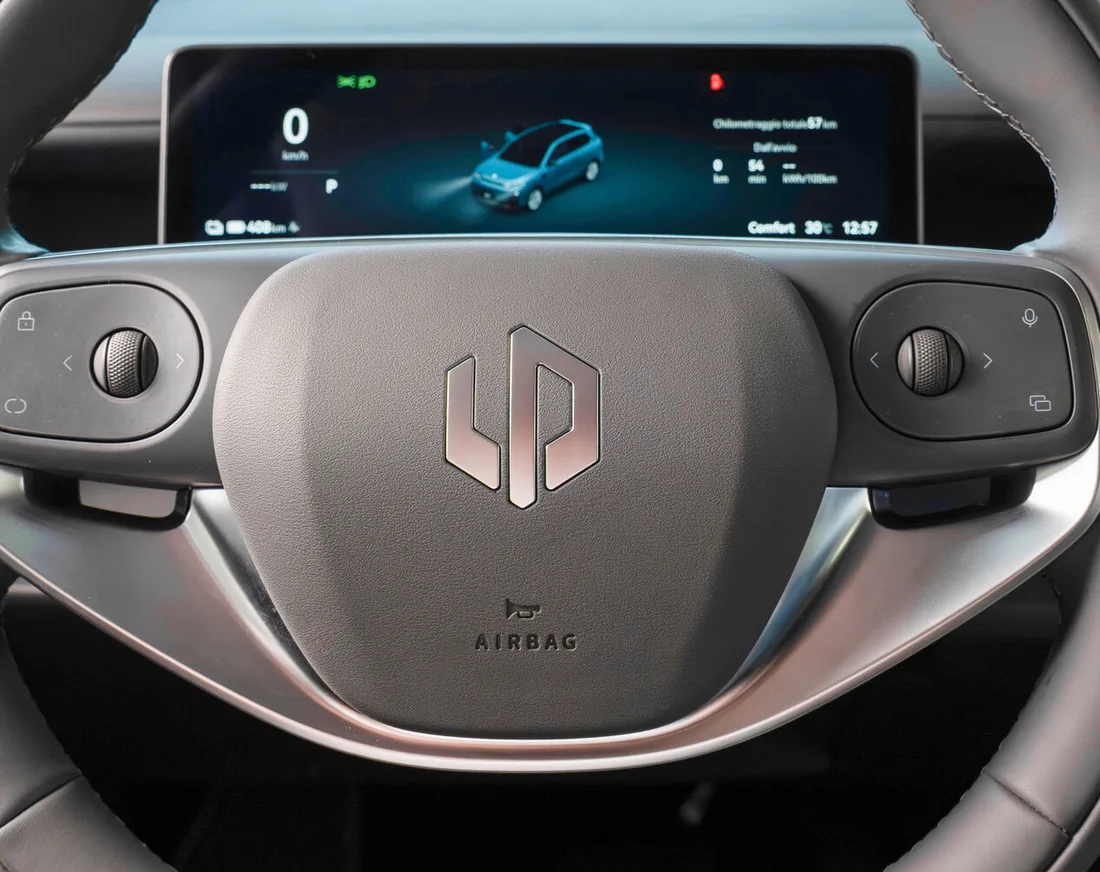
There is no sunroof and no ventilated seats, and the rear-view mirror dims by hand.
Range, battery & charging
Real-world range7.0
The claimed range is 382 km on the WLTP cycle. Some Nepali reports quote the 505 km CLTC figure, which is a lighter test and should be ignored for planning. In Kathmandu city traffic with the AC on, one local tester used 11.1 kWh per 100 km and projected roughly 400 km from a full charge. A run from Kathmandu to Helambu, with steep climbs and the AC on full, averaged about 17 kWh per 100 km, which works out at around 310 km.

Expect about 310 to 400 km depending on how much climbing you do, and around 340 km on a typical mixed week. That puts it level with the Atto 2 Premium and MG S5.
Battery8.0
The B03X uses a 53 kWh lithium iron phosphate pack, sealed to IP67. That is a larger battery than the Atto 2's entry trim, the MG S5's 49 kWh version or the Nevo Q05. LFP chemistry is happy to be charged to 100 percent every day and is less prone to thermal runaway. The battery warranty runs for eight years or 160,000 km.
- Battery
- 53 kWh LFP
- Range (WLTP)
- 382 km
- Motor
- 145 kW, 200 Nm, front
- DC peak
- 133 kW
- DC 30-80%
- 16 min
- AC on-board charger
- 11 kW
- V2L
- 3.3 kW
Efficiency and running cost7.0
The official WLTP figure is 15.7 kWh per 100 km, which is ordinary for the class. On the road it does better in town than on climbs: testers have recorded around 11 kWh per 100 km in gentle city driving and above 20 kWh per 100 km on long mountain roads. Nepali tests so far fall between about 11 and 17 kWh per 100 km, so home-charging costs stay low.
The vehicle warranty, including the motor and electronics, runs for four years or 100,000 km, shorter than BYD's but much longer than MG's one-year cover. Shangrila has not published a free-service schedule for the B03X.
Charging8.0
DC charging peaks at 133 kW, and the claimed 30 to 80 percent top-up takes 16 minutes. Overseas testers timed 10 to 80 percent at roughly 21 to 25 minutes. The Nevo Q05, the Nammi Vigo E2+ and the 62 kWh MG S5 quote higher peaks, but the B03X's 30 to 80 percent time is close to the best of them, and the Atto 2 is noticeably slower. Most Nepali public DC chargers deliver 60 kW or less; on a 60 kW unit the same top-up takes about half an hour.
The 11 kW on-board AC charger is larger than most rivals fit, and charges from 30 to 80 percent in about three hours on a suitable wallbox. On a 3 kW socket, a charge from near empty takes most of a day, so it is better to top up overnight. Vehicle-to-load at up to 3.3 kW can run appliances from the battery.
Charging availability6.0
Leapmotor and Shangrila do not run their own DC charging network in Nepal, so owners rely on NEA and private chargers. We could not confirm a home wallbox in the box; local cars carry a portable charger under the boot floor. Charging can be scheduled from the app. BYD, by contrast, runs its own and partner chargers.
Performance & driving
Performance and hill climbing7.0
The 145 kW motor is stronger than the Atto 2, MG S5 or Nevo Q05 offer, and Leapmotor claims 0 to 100 km/h in 8.6 seconds. Nepali testers describe strong pull from a standstill and plenty in reserve for overtaking at highway speeds. With 200 Nm going through the front wheels, though, the tyres spin easily when you accelerate hard, and on the steep climb to Helambu the traction control stepped in repeatedly.
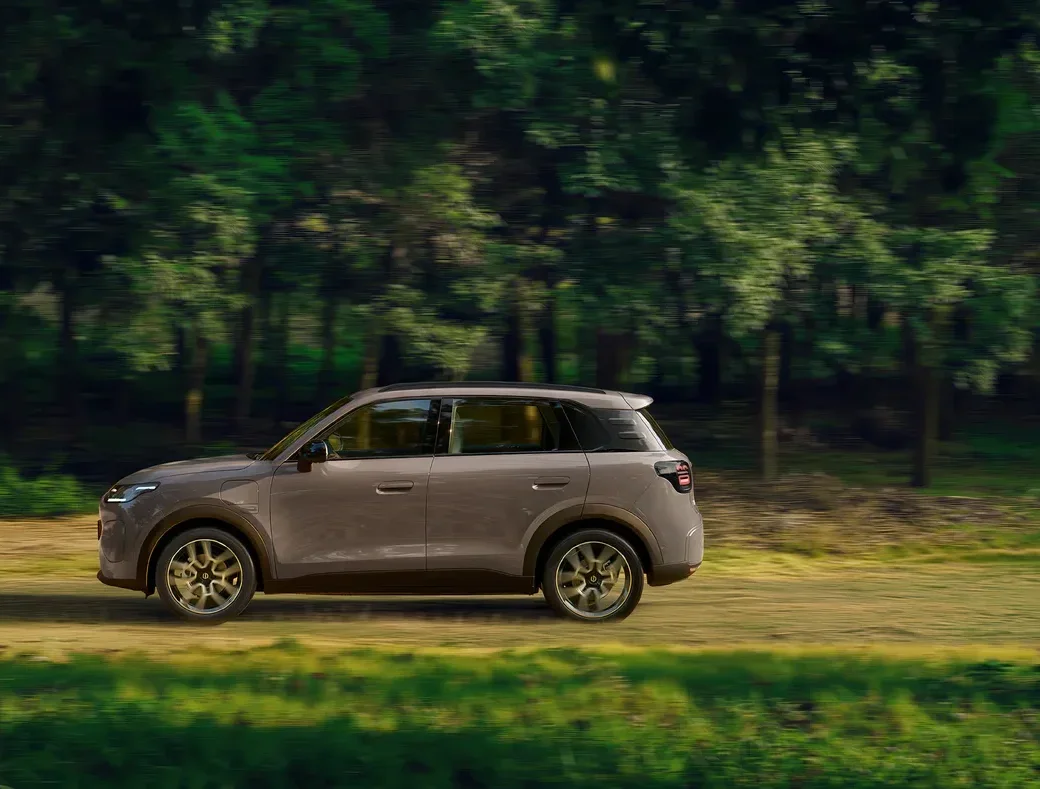
On descents, three regen levels and a one-pedal mode recover a lot of energy and hold the car well, and hill-hold and hill-descent control are standard. A hill-heavy day costs real range, with consumption in the high teens per 100 km.
Driving experience, ride and handling6.0
This is the B03X's weakest area. The steering is light and gives almost no sense of what the front tyres are doing, a point every overseas review makes and Leapmotor has acknowledged with a promised software update. There are three steering weights; Comfort is too light, and Standard suits most drivers best. The body moves around at higher speeds.
The ride is tuned soft. Nepali testers rate it well over potholes and broken tarmac, where the long-travel feel soaks up most bumps, though overseas testers found it floaty on fast roads and the rear thumps over sharp bumps. It is quiet, apart from tyre noise on rough concrete. The brakes stop the car cleanly, with a claimed 100 to 0 km/h distance of 38.5 metres, but the blend between regen and the friction brakes can feel soft. The MG S5 is the better car to drive, and the Atto 2 steers more precisely.
Road tolerance7.0
The B03X's 190 mm of ground clearance beats the MG S5 and Nevo Q05 and falls short only of the Atto 2, the soft suspension takes the sting out of potholes, and testers report almost no panel rattles on rough concrete. Front-wheel drive and the easy wheelspin limit it on loose or muddy climbs, so unpaved tracks are best avoided. The spare wheel helps on remote routes.
Safety & build
Safety7.0
The ProMax has seven airbags, including a far-side bag between the front seats, plus stability control, rollover mitigation and post-collision braking. Its driver-assistance kit lists 21 functions, among them adaptive cruise, lane centring, automatic lane change, autonomous emergency braking, blind-spot detection and front and rear cross-traffic alerts that can brake the car. A driver-monitoring camera and child-presence detection are also fitted.
The systems work, but they are fussy. Lane keeping can feel overactive, the speed-limit warning chimes often, and the settings return to default every time the car starts, though a shortcut button switches off the unwanted ones. Leapmotor's C10 and B10 both earned five stars from Euro NCAP, but the B03X has not yet been tested by Euro NCAP, ANCAP or C-NCAP.
Build quality and reliability7.0
Fit and finish are better than expected for the class, with soft-touch surfaces where hands fall. Some lower plastics feel cheap, and the load cover is flimsy. The model is new everywhere, so there is no long-term reliability record yet. The 53 kWh LFP battery and single-motor drivetrain are simple, proven types.
Value & ownership
Price and value8.0
The B03X gives you more for the money than almost anything near it. A larger battery, a stronger motor, quicker DC charging, an 11 kW on-board charger, a bigger boot, a 360-degree camera, heated seats and a powered driver's seat all come in the one ProMax trim. The Atto 2 Essential has less battery and less equipment for slightly more, and the MG S5 Comfort costs a little less but has a smaller battery and a much weaker motor. It gives up BYD's longer vehicle warranty, and both BYD and MG are better-known names, which helps at resale.
After-sales and service network6.0
Shangrila Motors runs its main Leapmotor service centre in the Kathmandu Valley, a new facility has opened there, and a further site is planned in Bhaktapur. Outside the valley, a dealer in Bharatpur offers service, but we could not confirm Leapmotor workshops in Pokhara, Butwal or Biratnagar. Shangrila says spare parts are fully stocked, but with around 600 Leapmotors in the country there is little owner experience to go on, and BYD and MG both have far wider workshop networks.
Editor's opinion8.0
The B03X is one of the best-equipped and most practical cars in its price bracket, and its battery, charging and boot all beat the BYD Atto 2. The Atto 2 is still the nicer car to drive and comes with a far wider service network and a longer vehicle warranty. For a buyer who drives mostly in the valley and values space and kit over steering feel, we would choose the B03X.
Verdict
The Leapmotor B03X packs a 53 kWh battery, a 145 kW motor, 133 kW DC charging and a 510-litre boot into a compact crossover, with an equipment list that rivals charge more for. Its 190 mm of ground clearance and soft suspension suit Nepali roads, and real-world range of about 310 to 400 km covers most weeks comfortably. The weaknesses show when you drive it hard: numb steering, front tyres that spin under full power and a body that floats at speed. Living with it means tapping the screen for basic controls and putting up with driver-aid settings that reset on every start. The service network outside the valley is still thin and the vehicle warranty is shorter than BYD's. For valley families who want space and equipment, it is one of the strongest buys in its class.
Good
A roomy, well-equipped compact crossover with a big battery and quick charging, held back by numb steering, touchscreen-heavy controls and a thin service network outside the valley.
Kushal Rajbhandari
Oct 19, 2026
A roomy, well-equipped compact crossover with a big battery and quick charging, held back by numb steering, touchscreen-heavy controls and a thin service network outside the valley.
Kushal Rajbhandari
Oct 19, 2026
FAQ
How much real-world range does the Leapmotor B03X get in Nepal?
The claim is 382 km on the WLTP cycle. Nepali tests suggest about 400 km in gentle city driving and around 310 km on a hilly run with the AC on full. About 340 km is a fair figure for mixed use.
Is the 505 km range figure correct?
505 km is the CLTC figure, a lighter Chinese test cycle. The WLTP figure of 382 km is closer to what owners will see.
How fast does the B03X charge?
It accepts up to 133 kW on DC, with a claimed 30 to 80 percent top-up in 16 minutes. On the 60 kW chargers common in Nepal the same charge takes about half an hour. The 11 kW on-board charger handles 30 to 80 percent in about three hours on a suitable wallbox.
Is the Nepal B03X the same as the China-market Leapmotor A10?
They share a body, but the Nepal car is the export version with a 145 kW motor and a 53 kWh battery. The China-market A10 uses a less powerful motor, and its lidar option is not offered here.
What warranty does the Leapmotor B03X come with?
The battery is covered for eight years or 160,000 km. The vehicle, including the motor and electronics, is covered for four years or 100,000 km.
Does the B03X have a sunroof or ventilated seats?
No. It has heated front seats and a heated steering wheel, but no sunroof and no ventilated seats.
Has the B03X been crash-tested?
Not yet. Euro NCAP, ANCAP and C-NCAP have not published a result for the B03X or the A10. It has seven airbags and a full set of driver aids.
Where can the B03X be serviced?
Shangrila Motors services Leapmotors in the Kathmandu Valley, and a dealer in Bharatpur offers service. Check with Shangrila before buying if you live elsewhere.