

Kaiyi e-Qute 04 review

Kushal Rajbhandari
· Oct 27, 2026
Okay
A well-equipped city car that is easy to park and very cheap to run, held back by a weak motor, two airbags and a service network that barely leaves Kathmandu.
Kushal Rajbhandari
Oct 27, 2026
A well-equipped city car that is easy to park and very cheap to run, held back by a weak motor, two airbags and a service network that barely leaves Kathmandu.
Kushal Rajbhandari
Oct 27, 2026
What we like
- Compact 3695 mm body and light steering make it easy to park and thread through city traffic
- Tall roof and flat rear floor give more headroom and cabin space than the footprint suggests
- 360-degree camera, keyless entry, stability control and auto hold are standard
- Around 240 km of real-world range, more than the Tiago EV
- Very low energy use keeps running costs down
- CATL LFP battery covered for eight years or 150,000 km
What could be better
- 40 kW motor slows noticeably on long climbs with four aboard, and top speed is 100 km/h
- Only two airbags and no independent crash rating
- No Kaiyi charging network or bundled home wallbox
- Service is mostly limited to Kathmandu, and owners report slow parts supply
- Short wheelbase makes the ride busy over broken roads and speed breakers
- Light-coloured cabin trim shows dust quickly, and there is no front armrest or spare wheel
The Kaiyi e-Qute 04 is a small, upright five-door hatchback for people who mostly drive inside the valley and want an EV that is easy to park and cheap to run. It is shorter than a Tata Tiago EV, yet the tall roof and 2,500 mm wheelbase give it a usable cabin, and the equipment list includes a 360-degree camera, keyless entry, stability control and an electric parking brake with auto hold, which is more kit than most cars this small carry.
Its weak points are the drivetrain and the brand. The 40 kW motor and 110 Nm are enough for city traffic but leave little in hand on long climbs or on a highway, where the car tops out at 100 km/h. The 28.08 kWh LFP battery is good for roughly 240 km in mixed use. There are only two airbags, the car has no crash rating, and Kaiyi's service set-up is still mostly limited to Kathmandu.
Nepal gets one version, sold by G.O. Automobiles and Laxmi E-Mobility, in white, pink or blue with a pink or black-and-white cabin. It makes the most sense as a second car or a first EV for a city commute.
Design, interior & features
Design and exterior7.0
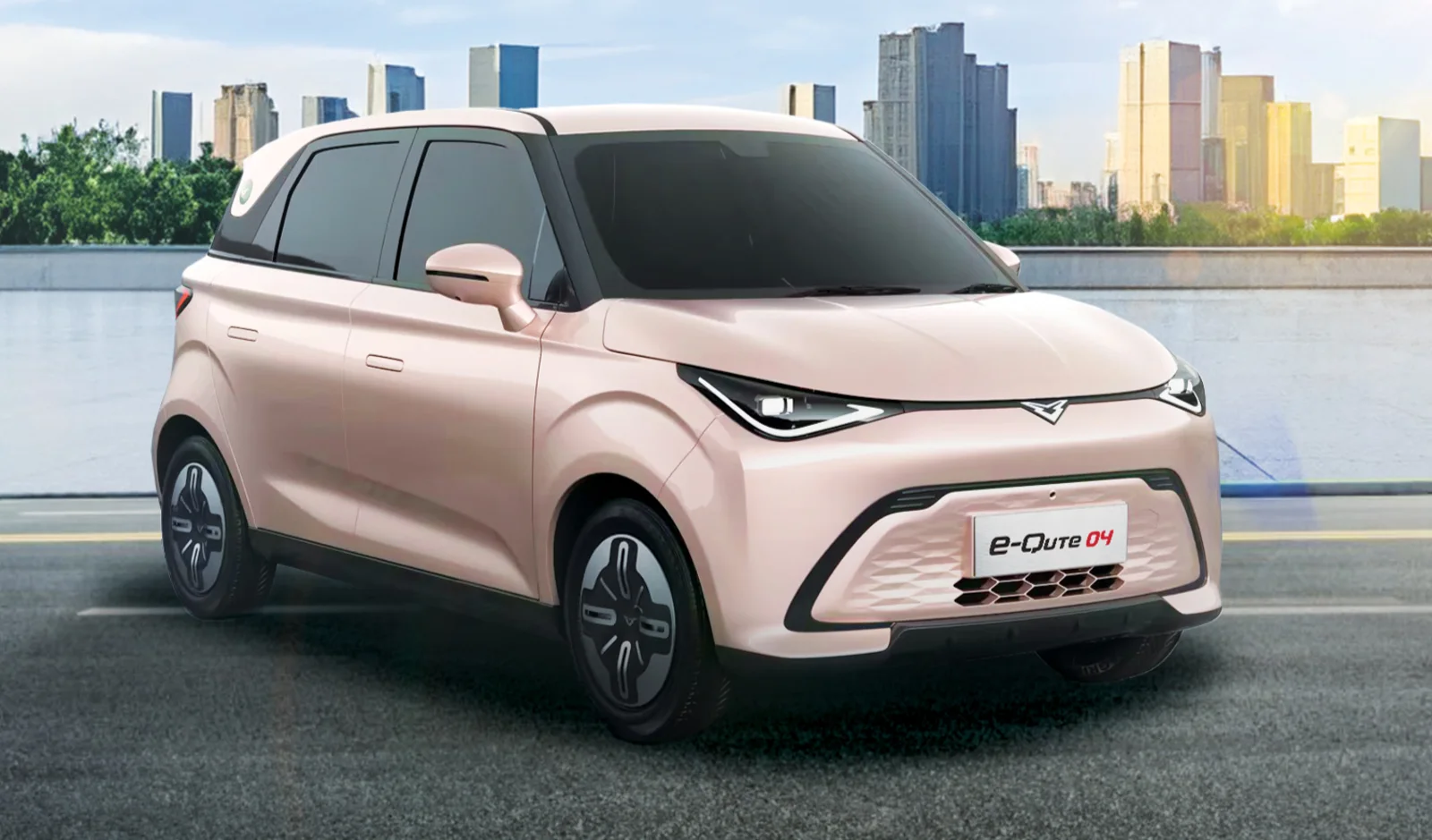
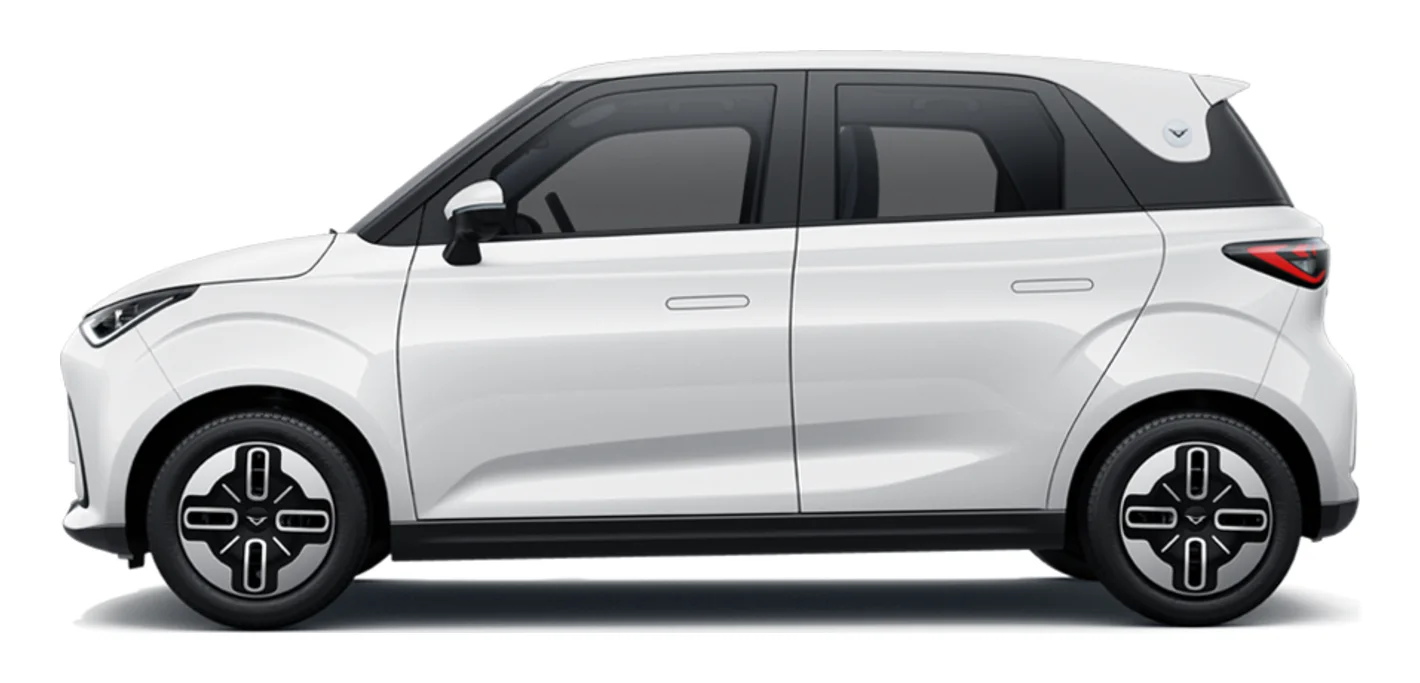
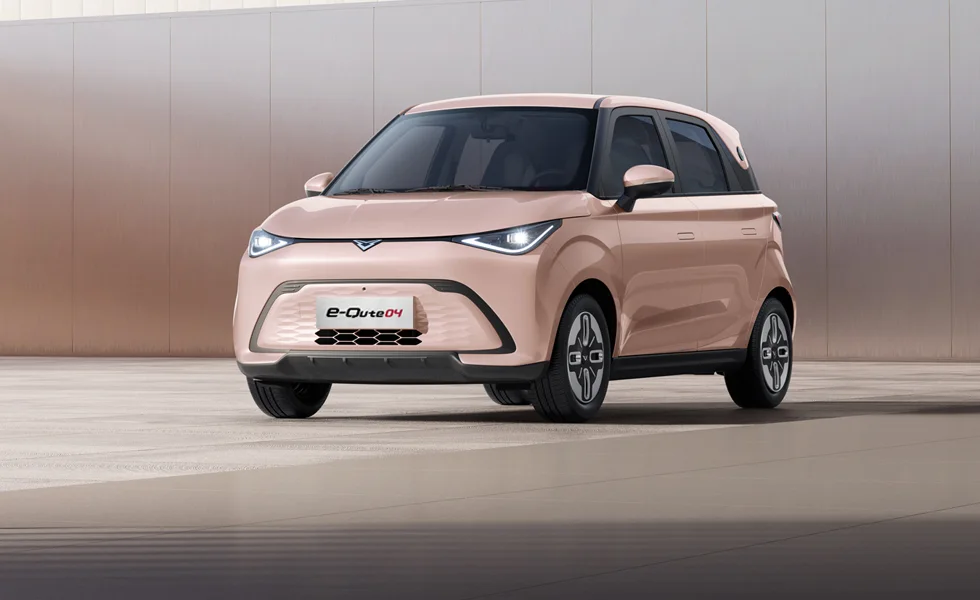
The e-Qute 04 has a short, rounded nose, slim headlamps that meet the bonnet line, a roof that seems to float above blacked-out pillars, and flush door handles that pop out electrically. The pastel colours suit it, and it looks more modern than most cars at this level. At 3,695 mm long and 1,685 mm wide it is very easy to place in traffic, and the short overhangs help on steep driveways.
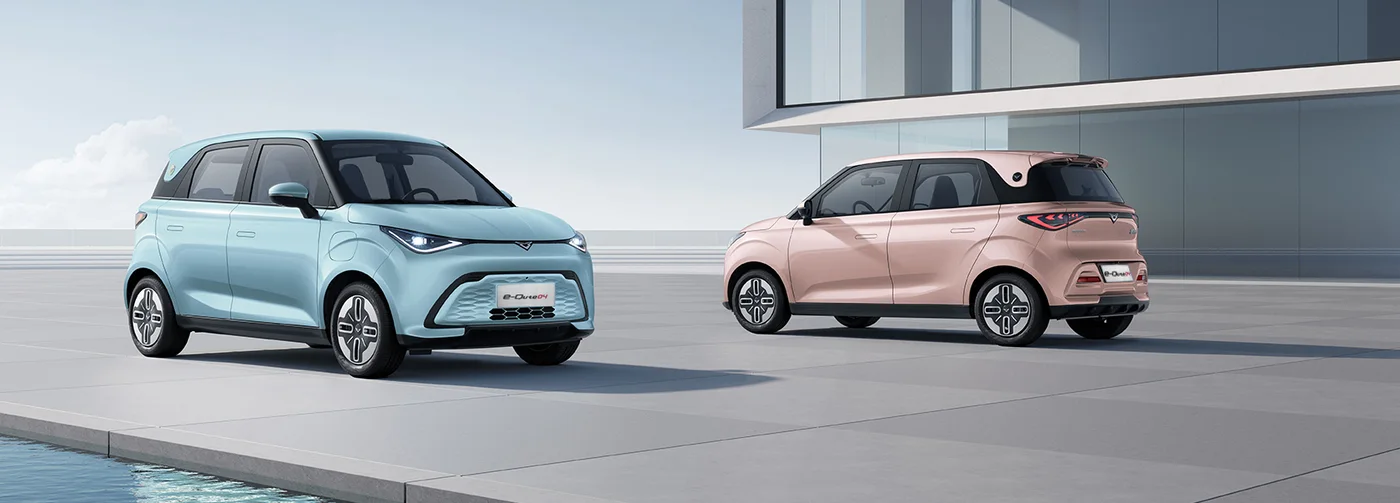
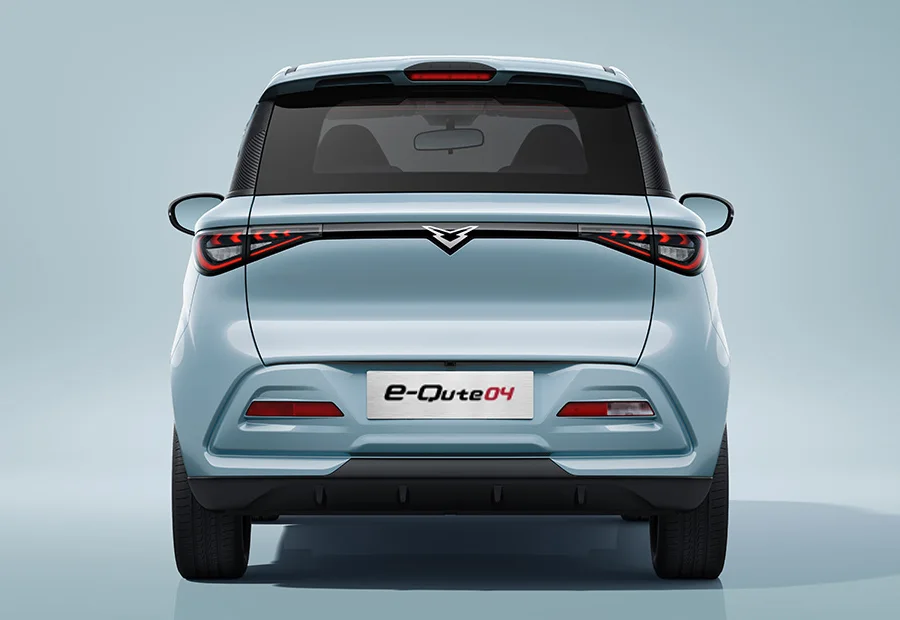
The rear is tidy, with a small roof spoiler and slim lamps, though the small wheels look lost in the arches from some angles. Buyers who want a rugged look will find it too cute.
Interior, space and practicality6.0
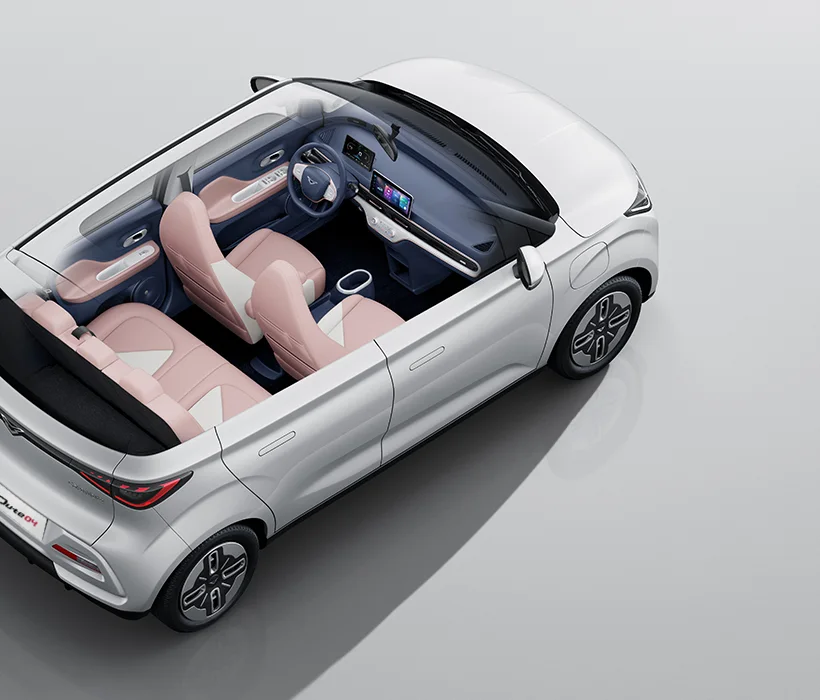
Thanks to the tall body, headroom is generous front and rear, the rear floor is flat, and two adults fit behind average-height front occupants without trouble. Three across the rear is a squeeze in a car 1,685 mm wide, so treat it as a four-seater with a spare belt for short trips. The cabin comes in pink or black and white, in fabric or imitation leather, and the light trim shows Kathmandu dust quickly.
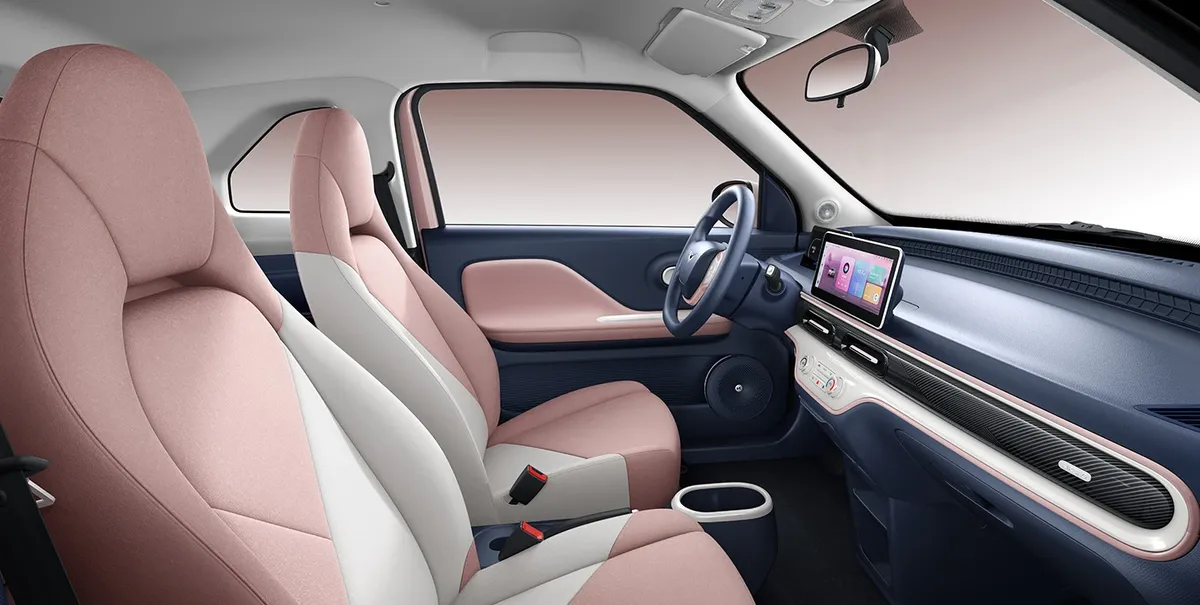
The boot holds about 237 litres, roughly what a Tiago EV offers, and enough for a weekly shop or two cabin bags. The rear backrest folds for bigger loads, and there is no spare wheel. Small annoyances include the lack of a front centre armrest and a start button placed low under the dashboard, where it is hard to find at first. The driver's seat adjusts six ways and the passenger's four, both manually.
Features and technology7.0
The equipment list is long for a car this size. Every e-Qute 04 has keyless entry and push-button start, a 360-degree camera with front and rear parking sensors, tyre pressure monitoring, an electric parking brake with auto hold, hill-start assist and stability control. The touchscreen runs Apple CarPlay, Android Auto and EasyConnection, and there are six speakers, Wi-Fi, a USB-A port and a USB-C port.
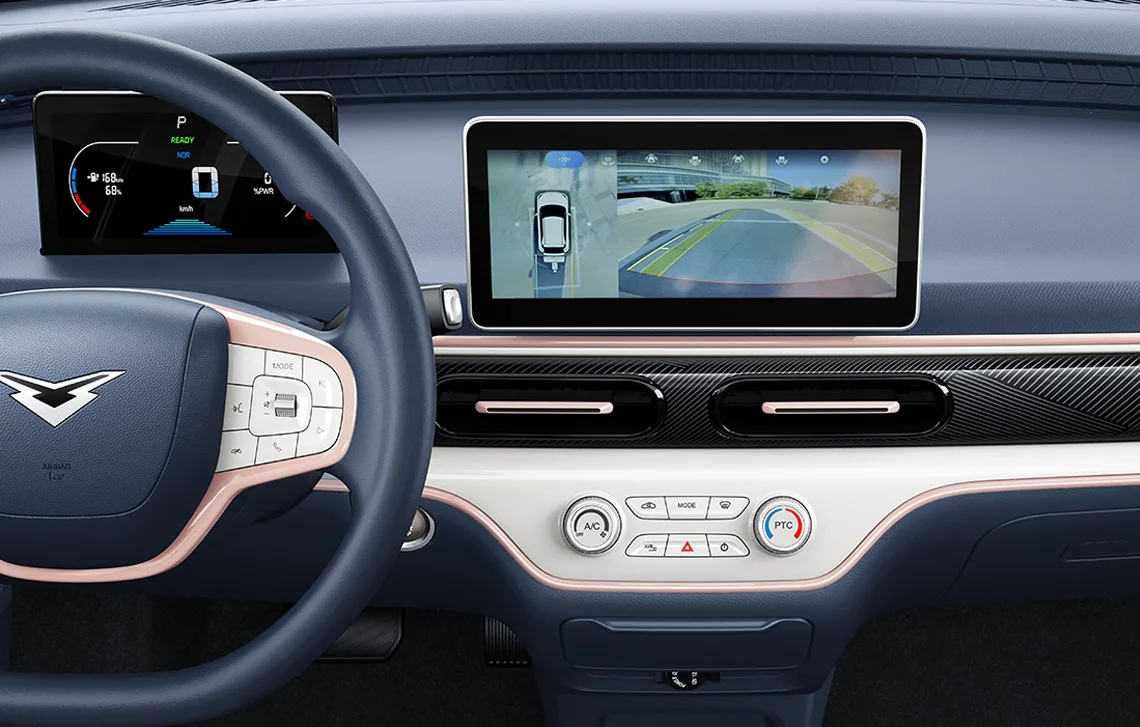
The 360-degree camera earns its place in narrow lanes and tight parking. Gear selection is by a stalk on the steering column, which frees space between the front seats. The climate control is manual, and owners report occasional glitches with the touchscreen and phone pairing, so try it with your own phone on a test drive.
Range, battery & charging
Real-world range6.0
The e-Qute 04 is rated at 301 km on the Chinese CLTC cycle, which is generous. Owners report between about 230 and 280 km depending on how they drive, and around 240 km is a fair figure for mixed valley driving with the AC on. A full load and hill roads pull it down further.
That is more than a Tiago EV manages in daily use and enough for most commutes, with charging two or three times a week. Trips out of the valley take planning: a run to the Tarai is possible with one charging stop, but Pokhara and back needs at least one long top-up on the way.
Battery7.0
The pack is a 28.08 kWh lithium iron phosphate unit from CATL. LFP cells tolerate frequent full charges and age slowly, which suits owners who plug in every night. The battery and motor are covered for eight years or 150,000 km. It is a mid-sized pack for this class: bigger than the Tiago EV's, smaller than the Atto 1's.
Efficiency and running cost8.0
A light car with a small motor uses little energy. Going by the real-world range, the e-Qute 04 uses roughly 12 kWh per 100 km, about the same as a Tiago EV, so home charging costs very little per kilometre. Small tyres and no engine oil keep servicing simple. The main cost question is long-term parts supply, covered under after-sales below.
Charging6.0
DC fast charging takes the battery from 30 to 80 percent in about 30 minutes, a modest rate that adds energy about as quickly as a Tiago EV does. On AC, a full charge takes about seven hours, so plugging in overnight at home works. A portable charger comes with the car, which helps owners who do not have a wallbox.
Charging availability6.0
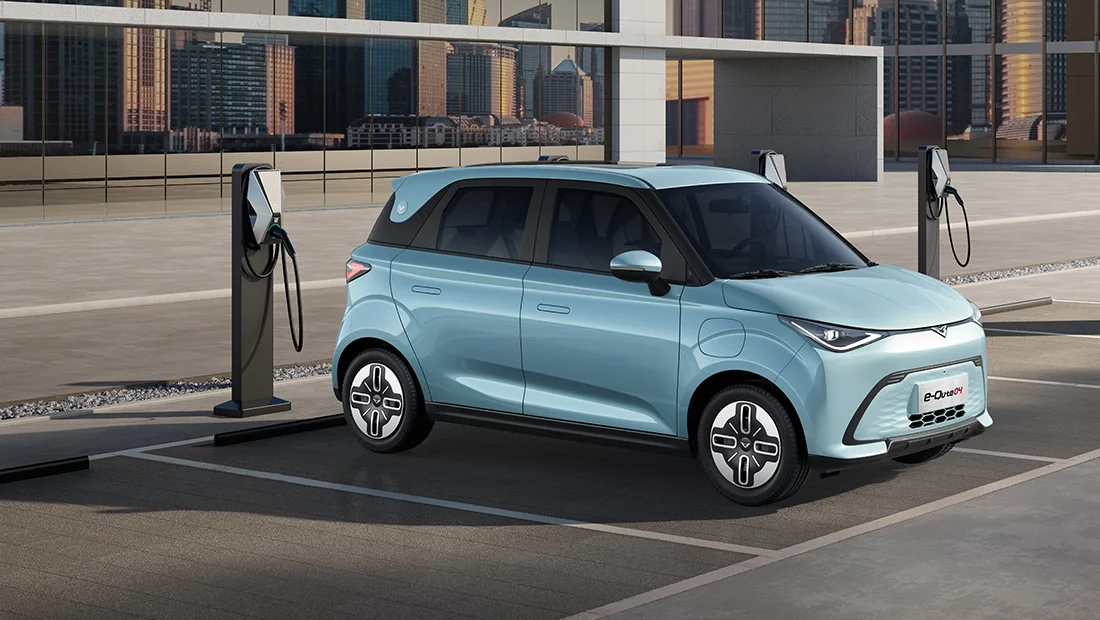
Kaiyi has no charging network of its own in Nepal, and neither distributor bundles a home wallbox as standard. Owners rely on the portable charger at home and on NEA and private stations on the road.
Performance & driving
Performance and hill climbing5.0
The front motor makes 40 kW and 110 Nm. In town that feels fine, because the torque arrives instantly and the car is light, so it pulls away from junctions briskly in Sport mode. Acceleration fades at higher speeds, and with a 100 km/h top speed, highway overtakes need planning.
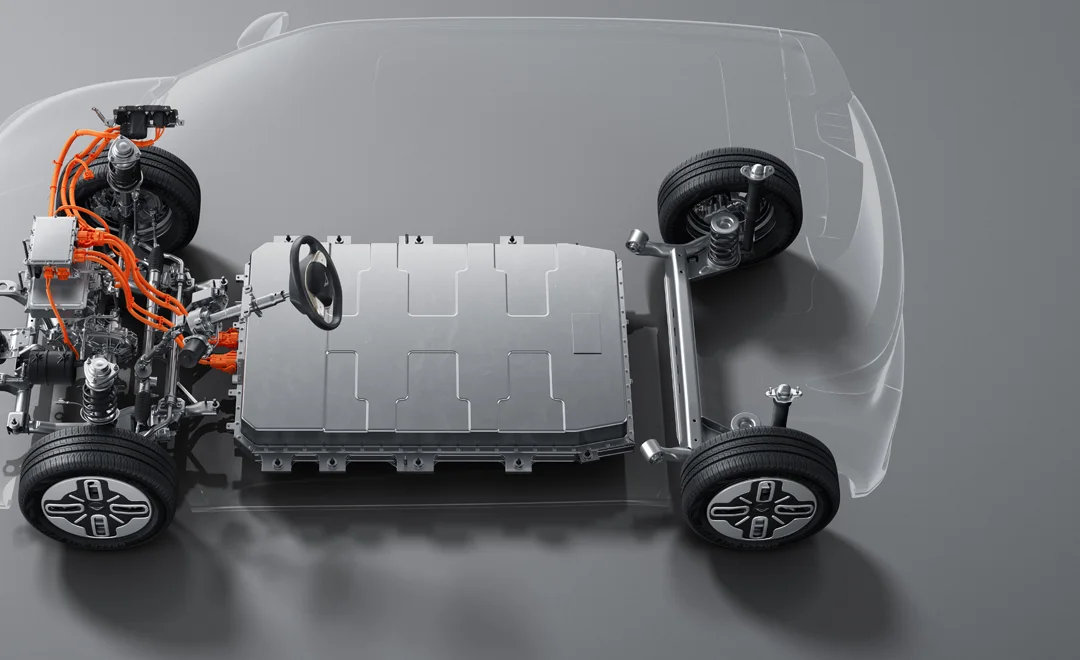
The limits show on long Nepali climbs. With one or two aboard it will hold a steady pace on a valley-rim road, but loaded with four adults it slows noticeably on steep sections, and a hill-heavy day drains the small battery fast. Three regeneration levels help on the way down, and the strongest one saves the brakes on long descents.
Driving experience, ride and handling6.0
The e-Qute 04 is easy to drive. The steering is light, the turning radius is about 5.2 metres, and the short body squeezes through gaps and into parking spaces that larger cars cannot use. Eco and Sport modes change throttle response, and the cabin is quiet at city speeds.
The short wheelbase and simple MacPherson strut and torsion beam suspension make the ride busy on broken tarmac, with more pitching over speed breakers than in longer cars like the Atto 1.
Road tolerance7.0
Clearance is 165 mm, slightly less than the Tiago EV and Atto 1. The short overhangs make steep ramps and driveways easy, and the car copes with normal potholes and rough valley roads at sensible speeds. The small wheels need care on deep potholes and broken edges.
Safety & build
Safety5.0
Safety is the weakest part of the package. The e-Qute 04 has only two front airbags and has never been crash tested by any independent body. Electronic aids are good for the price: stability and traction control, anti-lock brakes with brake-force distribution, hill-start assist, tyre pressure monitoring, ISOFIX child-seat mounts, door-open warning and a pedestrian alert sound at low speed. The Tiago EV has six airbags as standard.
Build quality and reliability6.0
The cabin uses hard plastics, but the two-tone trims lift it above most budget city cars. Owners have not reported major mechanical or battery faults; their complaints are about software glitches. Kaiyi has links to Chery, but its own track record in Nepal is short, so long-term durability is not yet known.
Value & ownership
Price and value8.0
The e-Qute 04 costs less than most of its rivals, yet it has five doors, five seats, a long equipment list, a bigger battery than the Tiago EV and very low running costs. Against that, the Tiago EV costs a little more and brings six airbags and a far bigger service network.
After-sales and service network5.0
Two companies sell Kaiyi in Nepal, G.O. Automobiles with its Thapathali showroom and Laxmi E-Mobility, whose service centre at Tinkune handles Kaiyi cars. Laxmi also has a showroom in Pokhara, but there is no dedicated Kaiyi workshop outside the valley. Owners report slow parts supply and software updates. Tata, MG and BYD have far bigger networks.
Editor's opinion6.0
The e-Qute 04 is well equipped and very cheap to run, and it goes further on a charge than the Tiago EV. The Tiago EV has six airbags, more power and Tata's much larger service network, so for most buyers it is still the safer choice. We would recommend the e-Qute 04 mainly as a second car or a first EV for city driving.
Verdict
The Kaiyi e-Qute 04 gives a lot for the money. It is a cute, upright five-door with a usable cabin, a 360-degree camera, keyless entry and stability control, and its 28.08 kWh LFP battery covers about 240 km in mixed valley driving at a very low running cost. The 40 kW motor is fine in town but weak on long climbs and highways. The car has only two airbags and no crash rating, and the service network is mostly in Kathmandu. As a second car for the city or a first EV for short commutes it makes sense, but it is not a car for regular trips out of the valley.
Okay
A well-equipped city car that is easy to park and very cheap to run, held back by a weak motor, two airbags and a service network that barely leaves Kathmandu.
Kushal Rajbhandari
Oct 27, 2026
A well-equipped city car that is easy to park and very cheap to run, held back by a weak motor, two airbags and a service network that barely leaves Kathmandu.
Kushal Rajbhandari
Oct 27, 2026
FAQ
What is the real-world range of the Kaiyi e-Qute 04?
It is rated at 301 km on the CLTC cycle. Owners report between about 230 and 280 km, and around 240 km is a fair figure for mixed valley driving with the AC on.
How long does the e-Qute 04 take to charge?
DC fast charging takes the battery from 30 to 80 percent in about 30 minutes. A full AC charge takes about seven hours, and a portable charger comes with the car.
Can the Kaiyi e-Qute 04 climb Nepal's hills?
Yes, but slowly when fully loaded. With one or two people aboard it holds a steady pace, while four adults on a steep, long climb will slow it noticeably and drain the battery faster. Three regeneration levels help control speed on descents.
How many airbags does the e-Qute 04 have?
Two, for the driver and front passenger. It also has stability control, a 360-degree camera, tyre pressure monitoring and ISOFIX mounts, but it has not been crash tested by any independent body.
What warranty does the e-Qute 04 come with?
The battery and motor are covered for eight years or 150,000 km, and the rest of the car for three years or 100,000 km.
How big is the boot?
About 237 litres, enough for a weekly shop or two cabin bags. The rear backrest folds for bigger loads, and there is no spare wheel.
Where can I service a Kaiyi e-Qute 04 in Nepal?
Laxmi E-Mobility's service centre at Tinkune in Kathmandu handles Kaiyi cars, and G.O. Automobiles sells them from Thapathali. There is no dedicated Kaiyi workshop outside the Kathmandu valley yet.