

Hyundai Creta EV review

Kushal Rajbhandari
· Sep 25, 2026
Good
A quiet, comfortable and well-built electric SUV with superb regen and one of Nepal's widest service networks, held back by a small 42 kWh battery and a single trim with no driver assists.
Kushal Rajbhandari
Sep 25, 2026
A quiet, comfortable and well-built electric SUV with superb regen and one of Nepal's widest service networks, held back by a small 42 kWh battery and a single trim with no driver assists.
Kushal Rajbhandari
Sep 25, 2026
What we like
- Quiet, refined drive with smooth power and superb regen, including one-pedal i-Pedal
- 200 mm ground clearance and a full-size spare suit broken roads and remote trips
- Practical five-seat cabin with a 433-litre boot
- Efficient at around 8 km per kWh, for roughly 300-340 km of mixed real-world range
- Executive Tech adds a panoramic sunroof, ventilated front seats and wireless Android Auto and Apple CarPlay
- Laxmi Hyundai's 17 service centres and its own chargers cover most main cities
What could be better
- 42 kWh battery keeps real-world range well short of the 415 km MIDC claim
- The only trim on sale has no ADAS, no blind-spot monitor and no 360-degree camera
- No independent crash-test rating yet
- Raised battery floor leaves rear passengers slightly knees-up
- Most Nepali DC chargers cannot match the quoted 39-minute fast charge, and 7.4 kW AC takes about six hours
- Several Chinese rivals offer bigger batteries and more equipment for similar money
The Hyundai Creta Electric is the most grown-up way to go electric without changing what you drive. It is quiet, smooth and comfortable, it sits high enough for Nepali roads, and it is backed by one of the widest service networks in the country. What holds it back is the spec Nepal now gets: a modest 42 kWh battery and, in the only trim on sale, no driver-assist systems or 360-degree camera, in a class where Chinese rivals offer more battery and more equipment.
It is the electric version of the familiar Creta SUV, sold here by Laxmi Hyundai. At launch it came in several trims, but the line-up has since been cut to one, the Executive Tech. It pairs a 42 kWh liquid-cooled battery with a 99 kW (135 PS) motor driving the front wheels, and is rated at 415 kilometres on India's MIDC test cycle.
It suits a family that wants an EV that feels like a normal, well-made SUV, mostly drives in and around the valley and wants the reassurance of an established brand. Before signing, weigh three things: real-world range is closer to 300 than 400 kilometres, the Executive Tech gives up the safety tech of the earlier top trim, and several rivals offer more car for similar money.
Design, interior & features
Design and exterior7.0
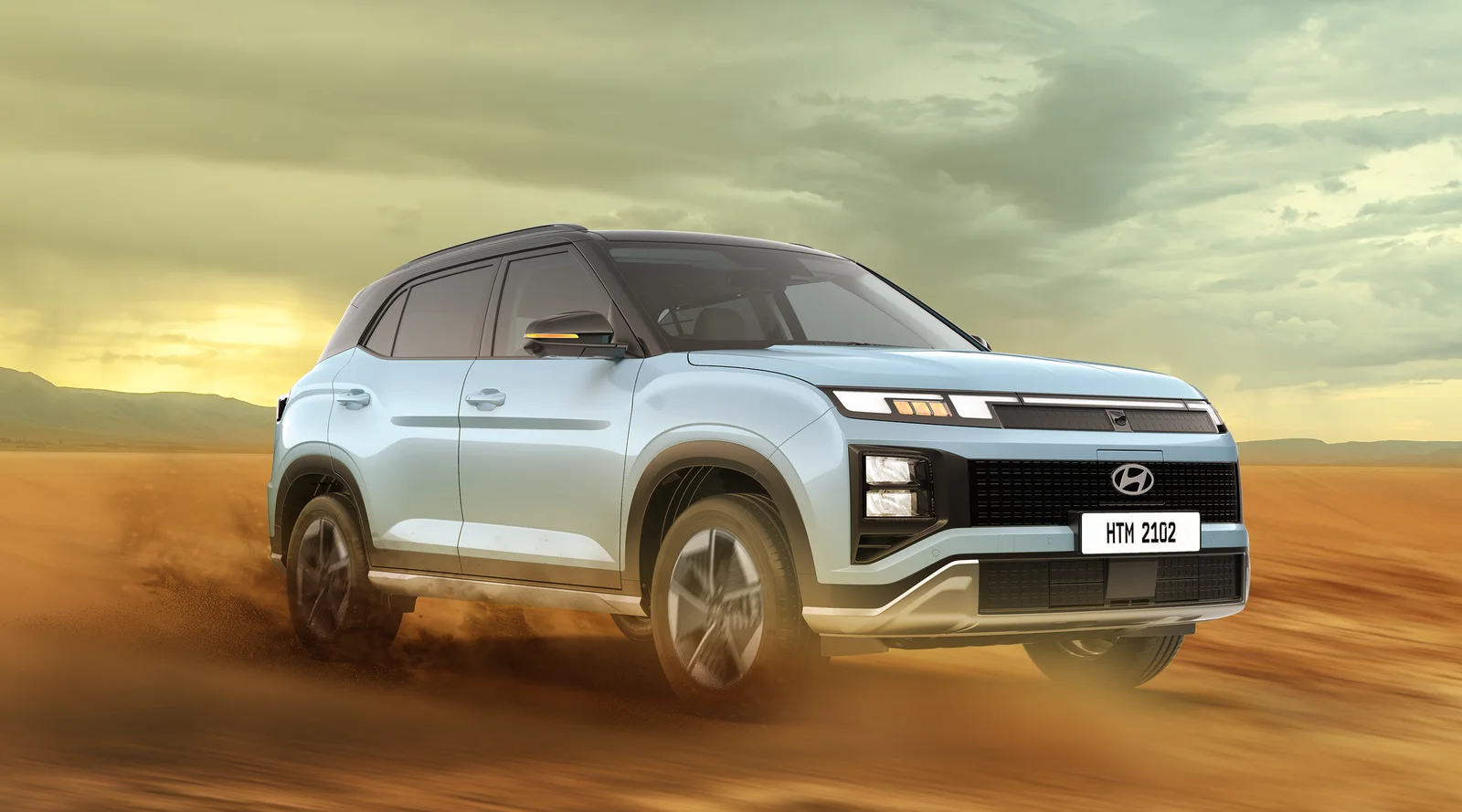
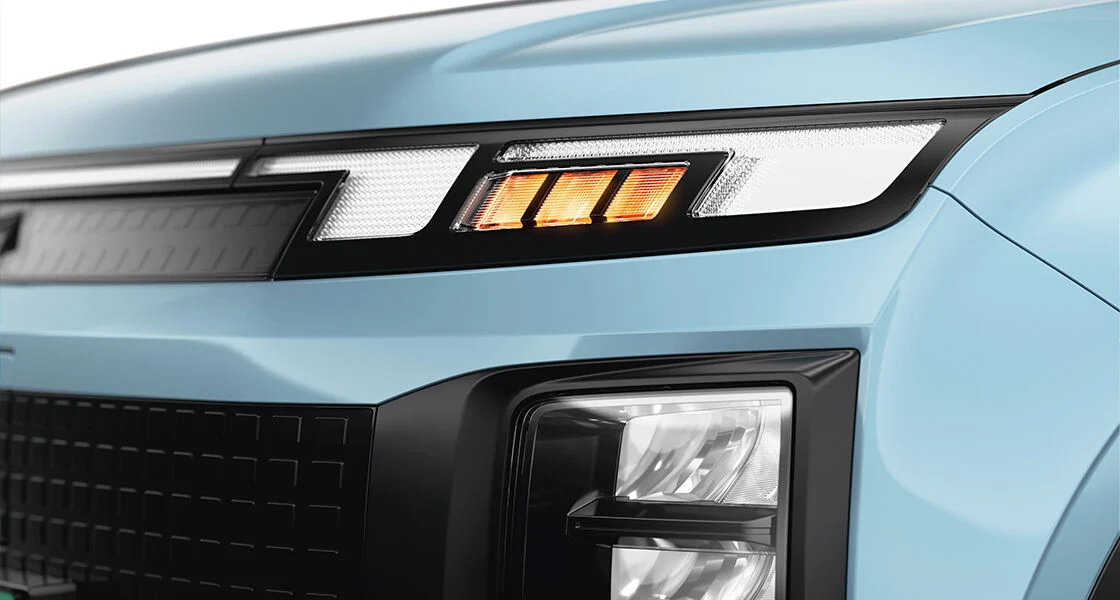
The Creta Electric looks like a Creta, and that is mostly a strength. The shape is upright and well proportioned, and the electric version adds its own details: a pixelated grille panel, a closed front with active air flaps and a full-width light bar across the nose. Seen side-on, the battery shows as a slightly thicker sill, but it is easy to miss. At 4.34 metres long on a 2.61-metre wheelbase, it is a comfortable size for Kathmandu streets.
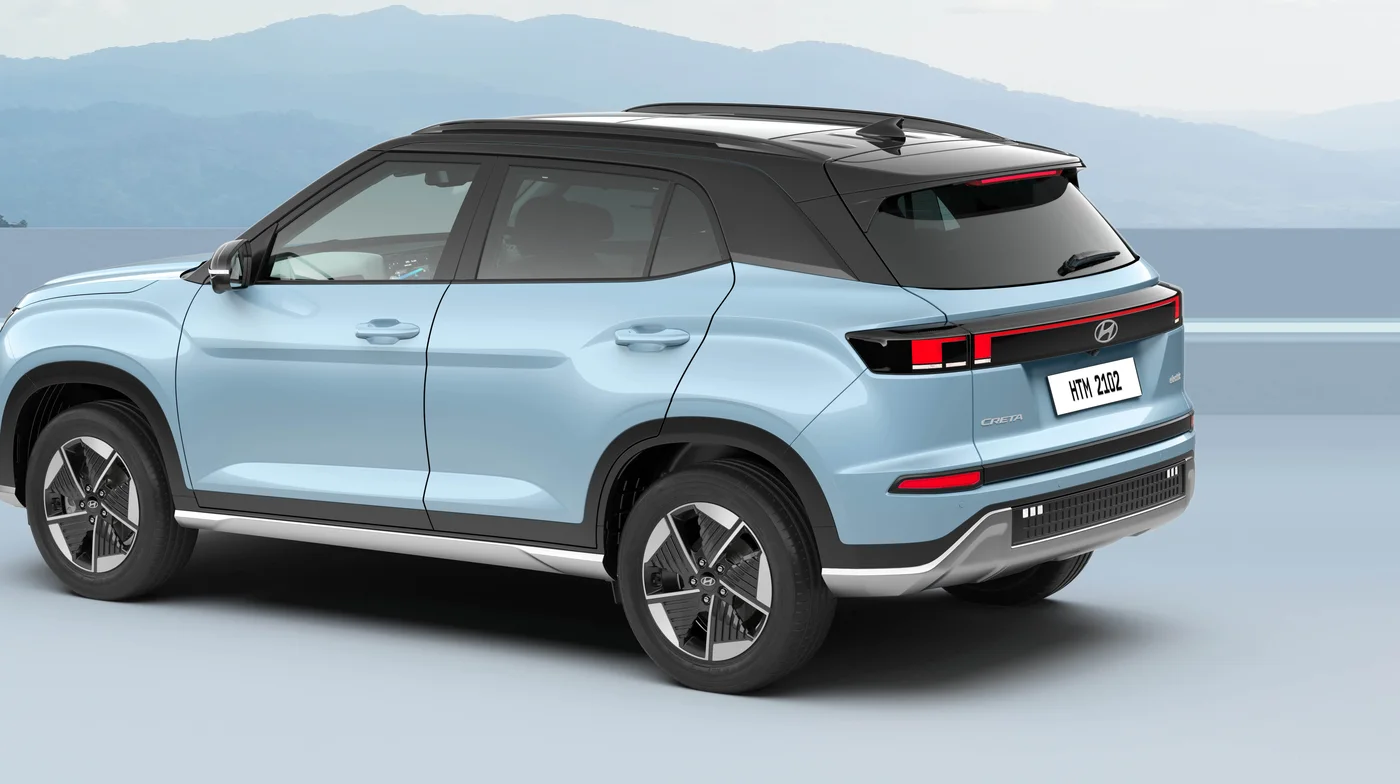
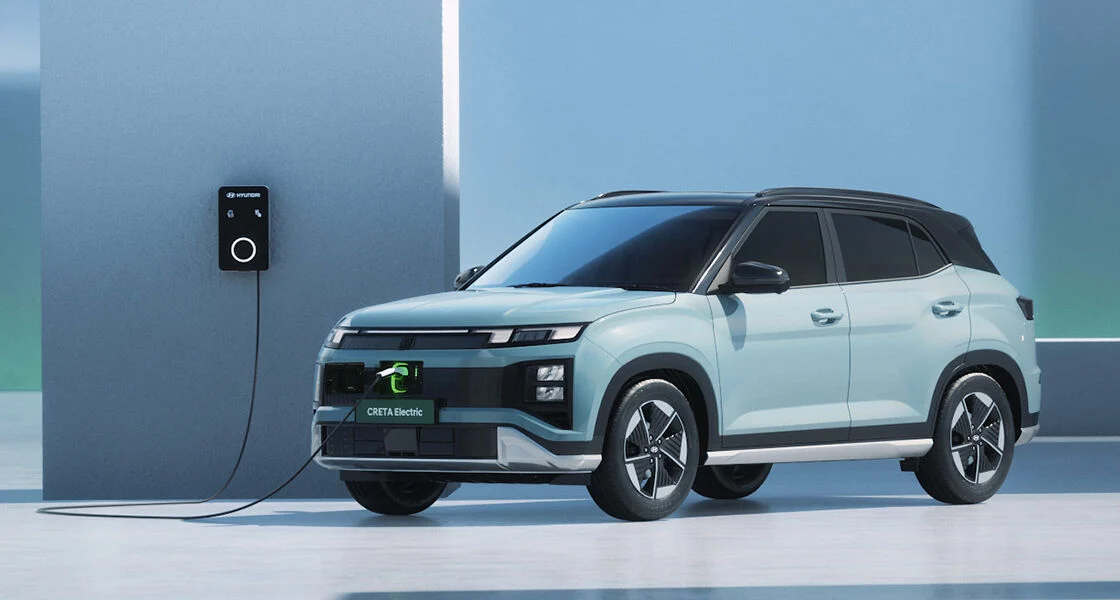
The Executive Tech gets quad-beam LED headlamps with a horizontal LED running light, 17-inch aero alloys on low rolling resistance tyres, silver skid plates and body-coloured mirrors and spoiler. The charging port sits behind the front panel with a coloured surround light that shows the state of charge at a glance.
Interior, space and practicality7.0
The cabin feels well built. The dashboard is a clean dual-tone layout in grey and navy, and the Executive Tech gets leatherette seats, steering wheel and door armrests. There is more hard plastic than you might expect at this level, but nothing feels cheap or loose.
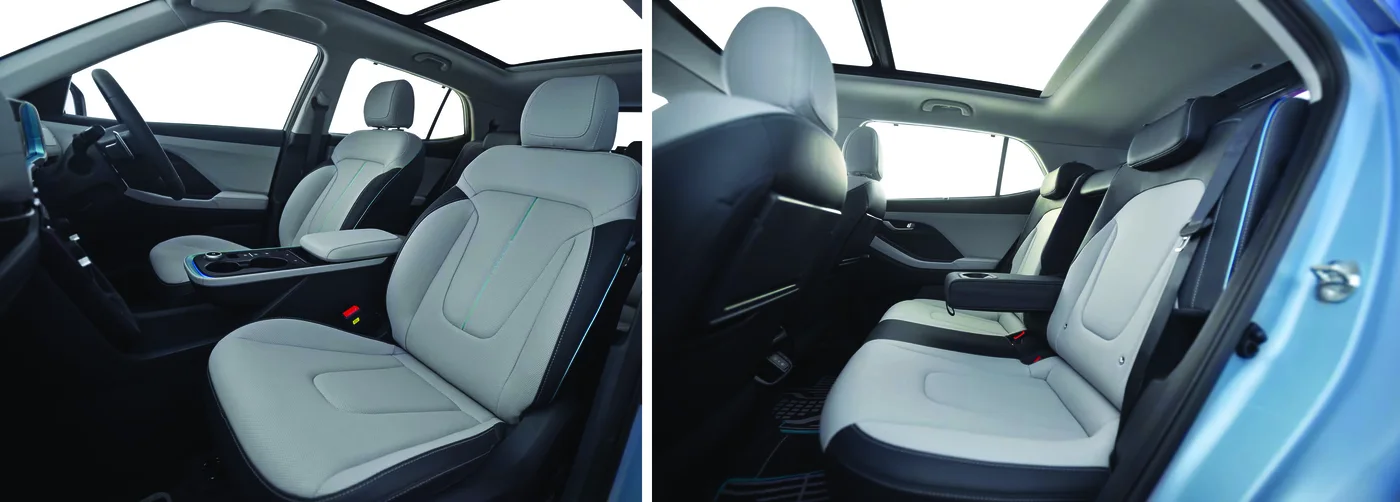
Front-seat space is good, and the gear selector on the steering column frees up the centre console. The rear is roomy enough for two adults, with a 2-step recline, sunshades, AC vents and a centre armrest. The catch is the raised floor over the battery: taller passengers sit slightly knees-up and get less thigh support than in the petrol Creta.
The boot holds 433 litres, the same as the petrol car, and the rear seat splits 60:40. Better still for Nepal, a full-size spare lives under the floor. Hyundai shows a small front trunk and vehicle-to-load for the Creta Electric, but neither is listed in the Executive Tech specification, so check them on the car at the showroom.
Features and technology7.0
The Executive Tech is well equipped for comfort: a panoramic sunroof you can open by voice, ventilated front seats, dual-zone automatic climate control, cruise control, a smart key with remote start and auto-folding mirrors. Twin 10.25-inch screens form the cluster and the touchscreen, with wireless Android Auto and Apple CarPlay, connected-car features and over-the-air map updates.
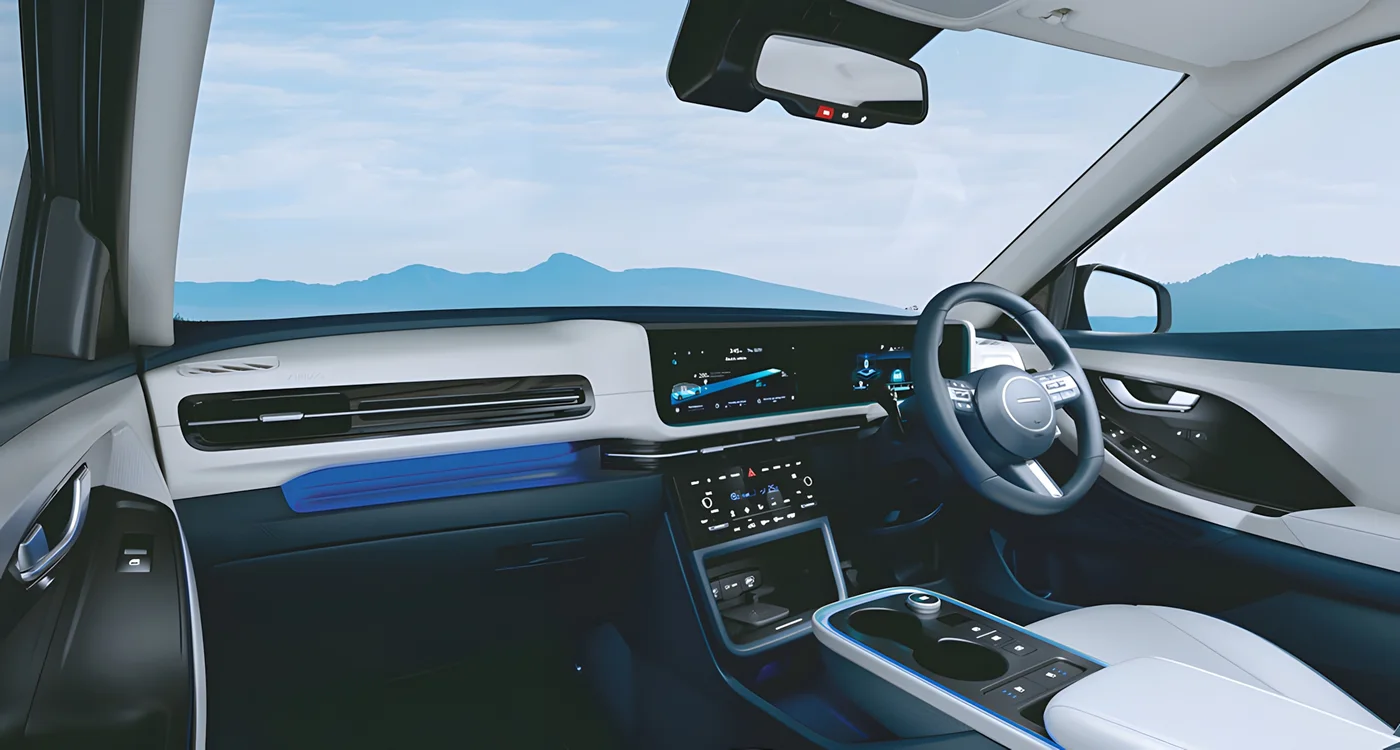
The screens are clear and quick, but look small and thick-bezelled next to the large displays in Chinese rivals. The touch climate panel is harder to use on the move than proper buttons.
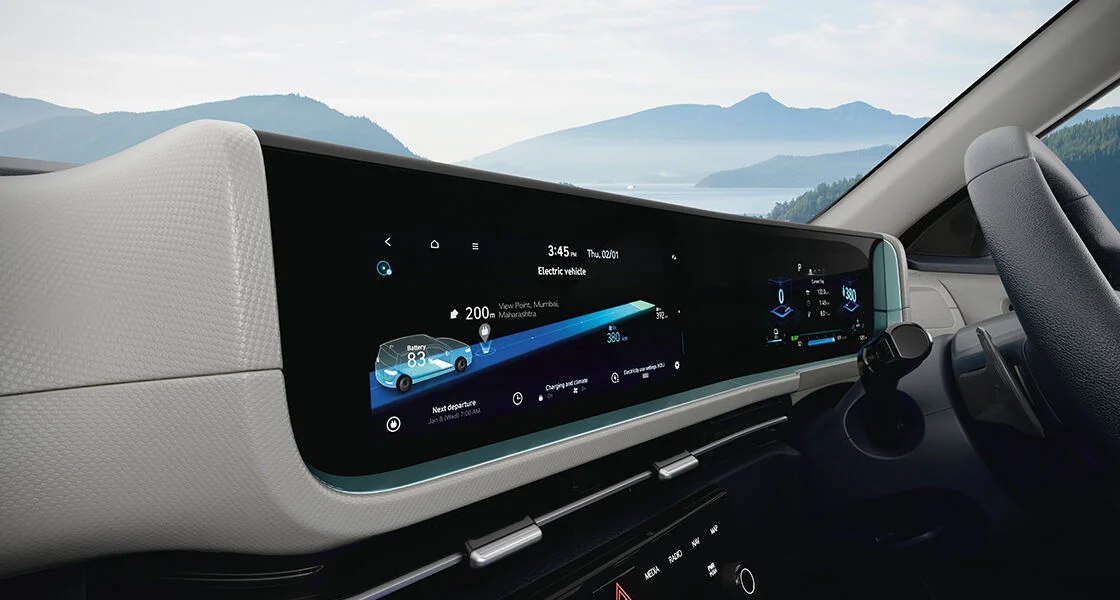
The bigger issue is what the only trim on sale leaves out. There is a rear camera and rear sensors, but no 360-degree camera, no blind-spot monitor, no front sensors and none of Hyundai's Level 2 driver assists, which were fitted to the earlier Premium+ trim. There is no wireless charger or Bose audio either.
Range, battery & charging
Real-world range7.0
Hyundai quotes 415 kilometres on the MIDC cycle for the Executive Tech, up from 390 kilometres at launch. MIDC is a gentle test, so treat it as a best case. Owners report 320 to 360 kilometres in easy driving. Plan on roughly 300 to 340 kilometres in mixed Nepali use, and less with a full car, the AC running and sustained highway speeds.
That covers a week of valley commuting, and Kathmandu to Pokhara is comfortable on one charge. On longer highway trips the 42 kWh battery is the Creta's main limitation, and a charging stop on the way is the sensible plan.
- Battery
- 42 kWh
- Range (MIDC)
- 390 km
- DC 10-80%
- 58 min
- AC charging
- 11 kW, 4 h
- Level 2 ADAS
- Premium+ only
- Ventilated seats
- No
- Battery
- 42 kWh
- Range (MIDC)
- 415 km
- DC 10-80%
- 39 min (100 kW+ charger)
- AC charging
- 7.4 kW, 6 h
- Level 2 ADAS
- No
- Ventilated seats
- Yes
Battery7.0
The 42 kWh pack is a liquid-cooled lithium-ion (NMC) battery, which Hyundai has used across its EVs for years. Liquid cooling helps it hold up in heat and during repeated fast charging. The battery is covered for eight years or 160,000 kilometres. Hyundai also sent owners of earlier Nepal cars a battery-management update that added a little range. The one real drawback is size: the pack is small for an SUV of this weight.
Efficiency8.0
Efficiency is a strength. Owners regularly see around 8 kilometres per kWh in mixed driving and 9 or more in town. That is roughly 11 to 12.5 kWh per 100 kilometres, and it is why a modest battery still gives usable range. Fast highway driving drops it to around 7 kilometres per kWh.
Charging7.0
Hyundai has improved DC charging since launch. The Executive Tech is now quoted at 10 to 80 percent in 39 minutes, but only on a charger rated above 100 kW. Most public DC chargers in Nepal deliver 30 to 60 kW, and owners have seen peaks in the mid-50s kW, so expect 50 minutes to an hour. On AC the Executive Tech is quoted with a 7.4 kW charger at around six hours for 10 to 100 percent. That is an easy overnight charge at home, though slower than the 11 kW launch spec.
Charging availability7.0
Laxmi Hyundai runs its own charging points alongside the public network, with AC and DC chargers across the valley and in Pokhara, Chitwan, Butwal, Bhairahawa, Nepalgunj, Birgunj, Biratnagar, Itahari, Birtamode and Dhangadhi, plus highway stops around Mugling, Dumre and Bardibas. With the main corridors covered, the Creta's modest range is easier to live with. Home charging should still be the main way you charge.
Performance & driving
Performance6.0
The 99 kW motor makes about 255 Nm, driving the front wheels. Hyundai does not publish an acceleration figure for the 42 kWh version, and it is slower than the 51.4 kWh long-range version. It pulls smoothly and quietly away from a standstill and has enough pace for city driving and relaxed overtaking. With four adults aboard on an open highway, it feels adequate rather than strong.
Driving experience, ride and handling8.0
This is where the Creta Electric feels most mature. It is very quiet, with little wind noise until highway speeds. Paddles select from several regeneration levels up to i-Pedal, which brings the car to a full stop without the brake pedal. The blend between regenerative and friction braking is among the smoothest in the class, which makes stop-start traffic easy.
The suspension is firmer than the petrol Creta's to carry the battery's weight. That keeps the body well controlled and never crashes, though sharp edges thump through into the cabin. It feels planted and confident at highway speeds, with less roll than the petrol car. The steering is heavier than some drivers will expect, but predictable. Hard acceleration can tug at the wheel slightly, a reminder that it is front-wheel drive.
Hill performance7.0
Instant torque makes steep valley roads and hairpins easy, and hill-start assist and auto hold keep things calm on steep stop-start ramps. Going downhill, the strong regeneration and i-Pedal do much of the braking and put some charge back into the battery. Hill descent control and disc brakes all round back them up. The limitation is front-wheel drive: on loose, steep gravel with a full load, the front tyres can scrabble for grip where a rear-driven car would not.
Road tolerance8.0
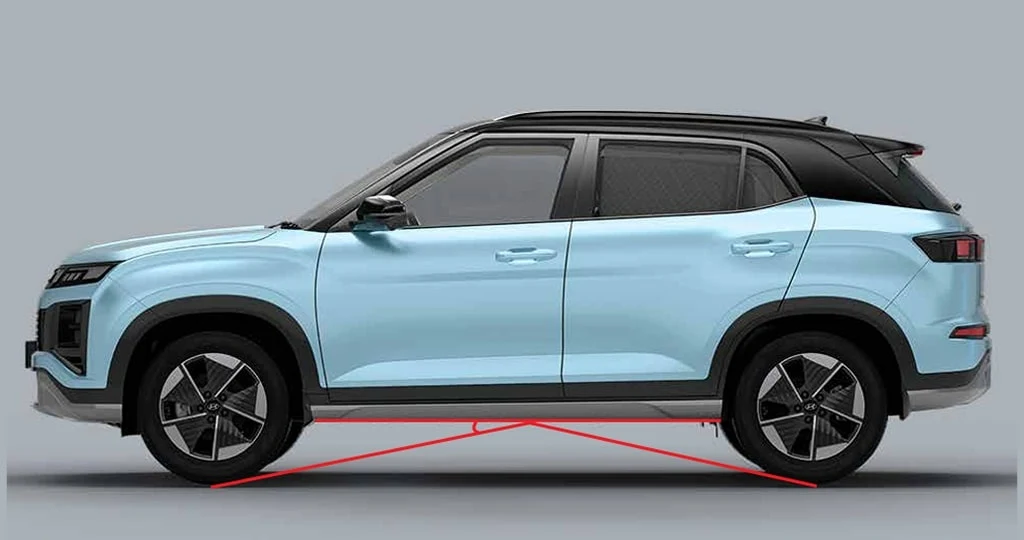
The Creta is well suited to Nepali roads. It has 200 millimetres of ground clearance and a breakover angle above 17 degrees, so speed breakers, broken patches and steep driveways rarely scrape it. Hyundai rates it to wade through 420 millimetres of water.
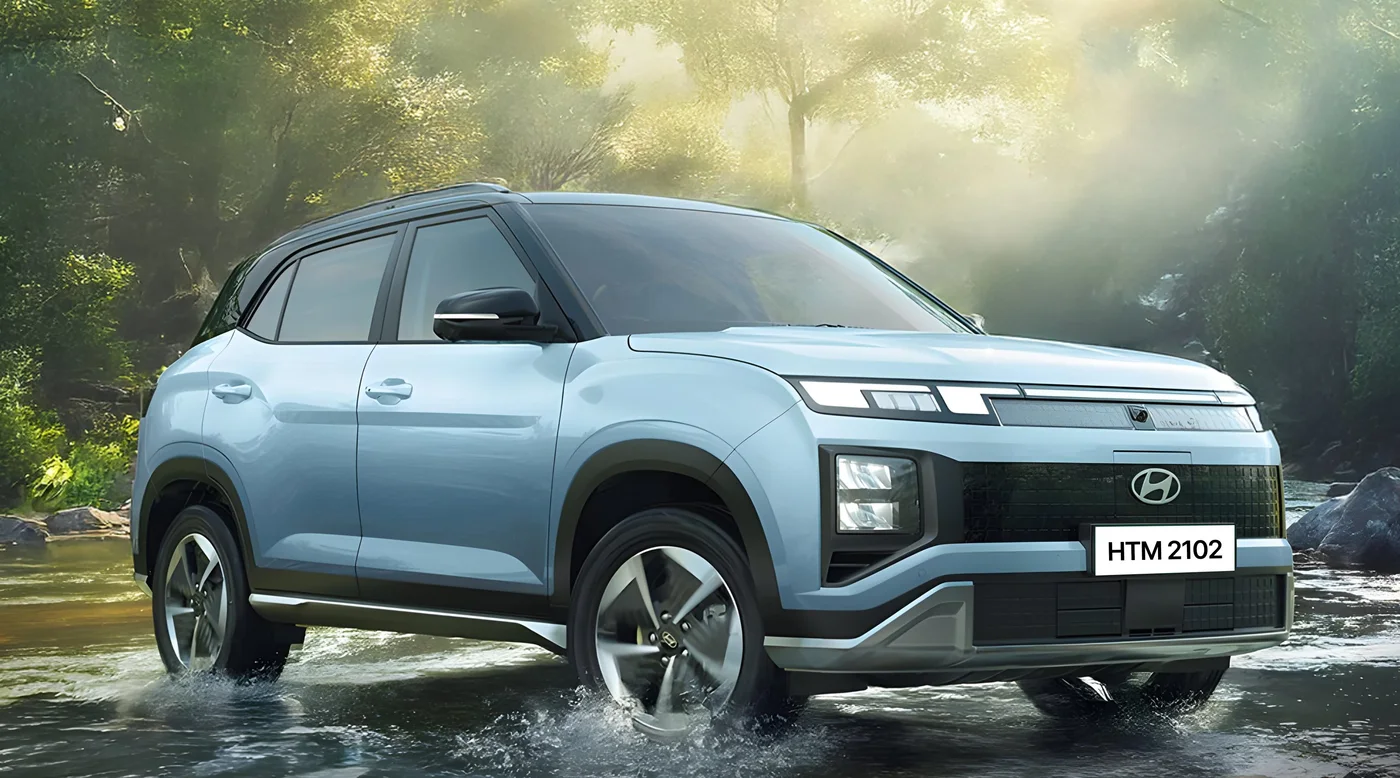
A full-size spare is a real advantage on remote routes, where a puncture kit would not help with a torn sidewall.
Safety & build
Safety6.0
Every Creta Electric gets six airbags, including curtain airbags, plus stability control, hill-start assist, hill descent control, tyre pressure monitoring, four-wheel disc brakes and ISOFIX mounts. Hyundai says about three-quarters of the body is advanced and high-strength steel.
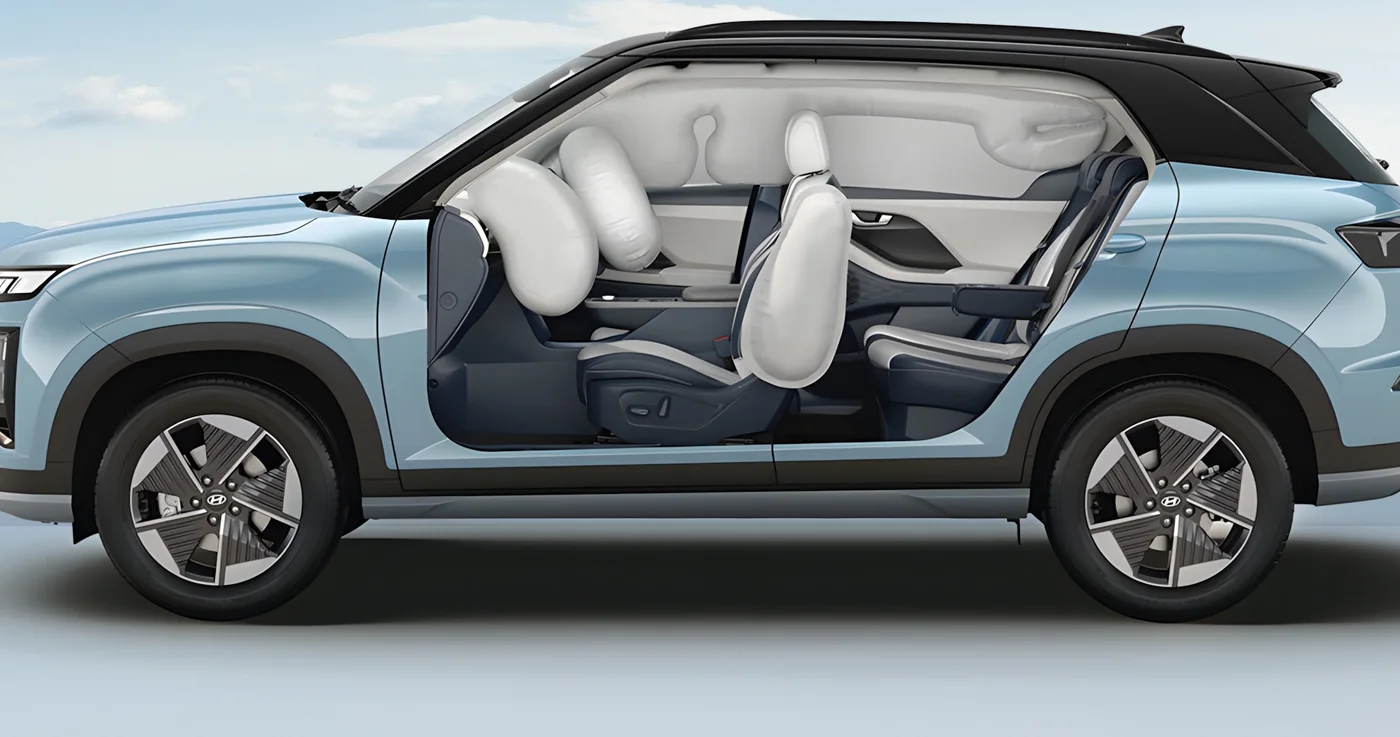
There are two gaps. The Creta Electric has not been crash-tested by any NCAP programme, so there is no independent rating. And the Executive Tech has none of the driver assists the earlier top trim had, such as autonomous emergency braking, lane keeping and blind-spot monitoring, nor a 360-degree camera. Chinese rivals in this class increasingly fit these as standard.
Build quality and reliability8.0
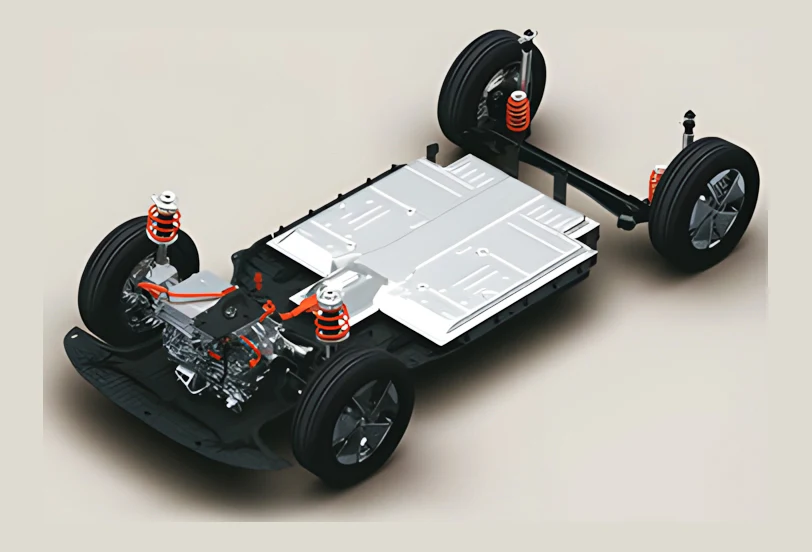
The Creta Electric pairs a proven body with Hyundai's established EV hardware, and it feels solidly put together. Owner reports after 18,000 to 20,000 kilometres are notably trouble-free, and no recalls have been reported for the electric model. Many parts are shared with the petrol Creta, which helps with repairs and parts supply.
Value & ownership
Price and value6.0
The Creta Electric's appeal is refinement, practicality and the Hyundai badge rather than value. The Executive Tech has good comfort features but a small battery for an SUV, no driver assists and no 360-degree camera. Several Chinese rivals at similar money offer larger batteries, more range and more safety tech. It makes most sense for a buyer who puts brand, build and service reach first.
Ownership cost8.0
Running costs are low. Electricity costs far less per kilometre than petrol, the car is efficient, and there is little routine maintenance. The battery is covered for eight years or 160,000 kilometres. The vehicle warranty is shorter: three years or 60,000 kilometres, with full cover only for the first two years, and two years on the motor. Laxmi Hyundai's free-service programme and the parts shared with the petrol Creta should keep workshop bills in check.
After-sales support8.0
Laxmi Hyundai is one of the most established car distributors in Nepal, with 17 service centres, six of them in the valley. Owners generally report quick turnarounds, with the car rarely off the road for more than a day or two. The Creta's popularity also means technicians and parts are familiar with it.
Service outside Kathmandu8.0
Outside the valley there are Hyundai workshops in Pokhara, Bharatpur, Hetauda, Butwal, Bhairahawa, Ghorahi, Nepalgunj, Dhangadhi, Biratnagar and Birtamode. That covers most of the main cities better than most EV brands can, though Madhesh and Karnali have no Hyundai workshop. Owners in the far hills still face a long drive for anything major.
Verdict
The Hyundai Creta Electric is a quiet, comfortable and well-built SUV that feels like a mature product from day one. Its regenerative braking and i-Pedal are excellent in traffic, 200 mm of ground clearance and a full-size spare suit Nepali roads, and a 433-litre boot keeps it practical for family life. A service network that reaches most of the main cities makes it one of the easiest EVs to own outside the valley. The trade-offs are the 42 kWh battery, which limits real-world range to roughly 300 to 340 kilometres, and an Executive Tech trim with no driver assists, no 360-degree camera and no crash rating. It is a sensible, low-risk choice for a brand-conscious buyer who mostly drives around the valley, but not the one to pick for range or equipment per rupee.
Good
A quiet, comfortable and well-built electric SUV with superb regen and one of Nepal's widest service networks, held back by a small 42 kWh battery and a single trim with no driver assists.
Kushal Rajbhandari
Sep 25, 2026
A quiet, comfortable and well-built electric SUV with superb regen and one of Nepal's widest service networks, held back by a small 42 kWh battery and a single trim with no driver assists.
Kushal Rajbhandari
Sep 25, 2026
FAQ
What is the real-world range of the Hyundai Creta Electric in Nepal?
The Executive Tech is rated at 415 kilometres on the MIDC cycle. In mixed Nepali driving, expect roughly 300 to 340 kilometres from its 42 kWh battery, a little more in gentle city traffic and less on fast highway runs with a full car.
Which Creta Electric trims are sold in Nepal?
Laxmi Hyundai now sells one trim, the Executive Tech, with a 42 kWh battery and a 99 kW motor. The earlier Executive, Smart, Smart (O) and Premium+ trims have been replaced, and the 51.4 kWh long-range versions are no longer listed.
Does the Creta Electric Executive Tech have ADAS or a 360-degree camera?
No. It has a rear camera with dynamic guidelines and rear parking sensors, but no 360-degree camera, no blind-spot monitor and none of Hyundai's Level 2 driver assists. Those came only on the earlier Premium+ trim.
How long does the Creta Electric take to charge?
A 7.4 kW AC charger takes it from 10 to 100 percent in around six hours. Hyundai quotes 10 to 80 percent in 39 minutes on a DC charger rated above 100 kW. Most Nepali DC chargers deliver 30 to 60 kW, so allow 50 minutes to an hour.
Is the Creta Electric good for Nepali roads?
Yes. It has 200 mm of ground clearance, a breakover angle above 17 degrees, a firm but well-controlled ride and a full-size spare wheel. Front-wheel drive is its one weakness on loose, steep gravel.
What warranty does the Creta Electric get in Nepal?
The battery is covered for eight years or 160,000 kilometres. The vehicle warranty runs three years or 60,000 kilometres, with full cover for the first two years, and the motor is covered for two years.
How many airbags does the Creta Electric have?
Six: front, side and curtain airbags come as standard. The Creta Electric has not yet been crash-tested by an NCAP programme.