

Dongfeng Nammi Box review

Kushal Rajbhandari
· Oct 1, 2026
Okay
A roomy, generously equipped small EV with a long-range option, held back by a weak motor for Nepal's hills and a poor crash-test record.
Kushal Rajbhandari
Oct 1, 2026
A roomy, generously equipped small EV with a long-range option, held back by a weak motor for Nepal's hills and a poor crash-test record.
Kushal Rajbhandari
Oct 1, 2026
What we like
- Long wheelbase gives adult-sized rear legroom
- Six airbags, 360 camera and ventilated memory seat on both trims
- 430 battery covers about 280-300 km in mixed driving
- Frameless doors and distinctive two-tone styling
- Efficient, with an 8 year / 200,000 km battery and motor warranty
- Brand's own DC charging network along main corridors
What could be better
- 49.5 kW motor is slow and strains on long climbs
- Three-star crash result for the European version
- No automatic emergency braking or lane assist
- Small 326 litre boot with a high lip and one-piece seat fold
- Laggy touchscreen software and no Android Auto
- Firm rear over sharp bumps and noisy at highway speeds
The Nammi Box is the most car you can get at the bottom of Nepal's EV market. You get a long cabin, a big-car equipment list on both trims and a battery choice that runs to 42.3 kWh. It has two problems. The Nepal-spec motor is rated at only 49.5 kW, so it is slow and works hard on hills. And the closest crash test of this body exposed a weak structure, which six airbags do not fully fix.
Dongfeng sells it through MAW Vriddhi Motors in two versions, the Box E2 330 and the Box E2 430. The numbers refer to the CLTC range, and the 330 and 430 differ only in battery. Since the August 2026 update, both get six airbags, a 360-degree camera, CarPlay, automatic climate control and a heated, ventilated power driver's seat with memory.
It suits a city household that wants a roomy, well-finished first EV and drives mostly in and around the valley. If your week includes regular climbs out of Kathmandu with a full car, or safety is the deciding factor, the weaknesses matter more than the equipment list.
Design, interior & features
Design and exterior8.0
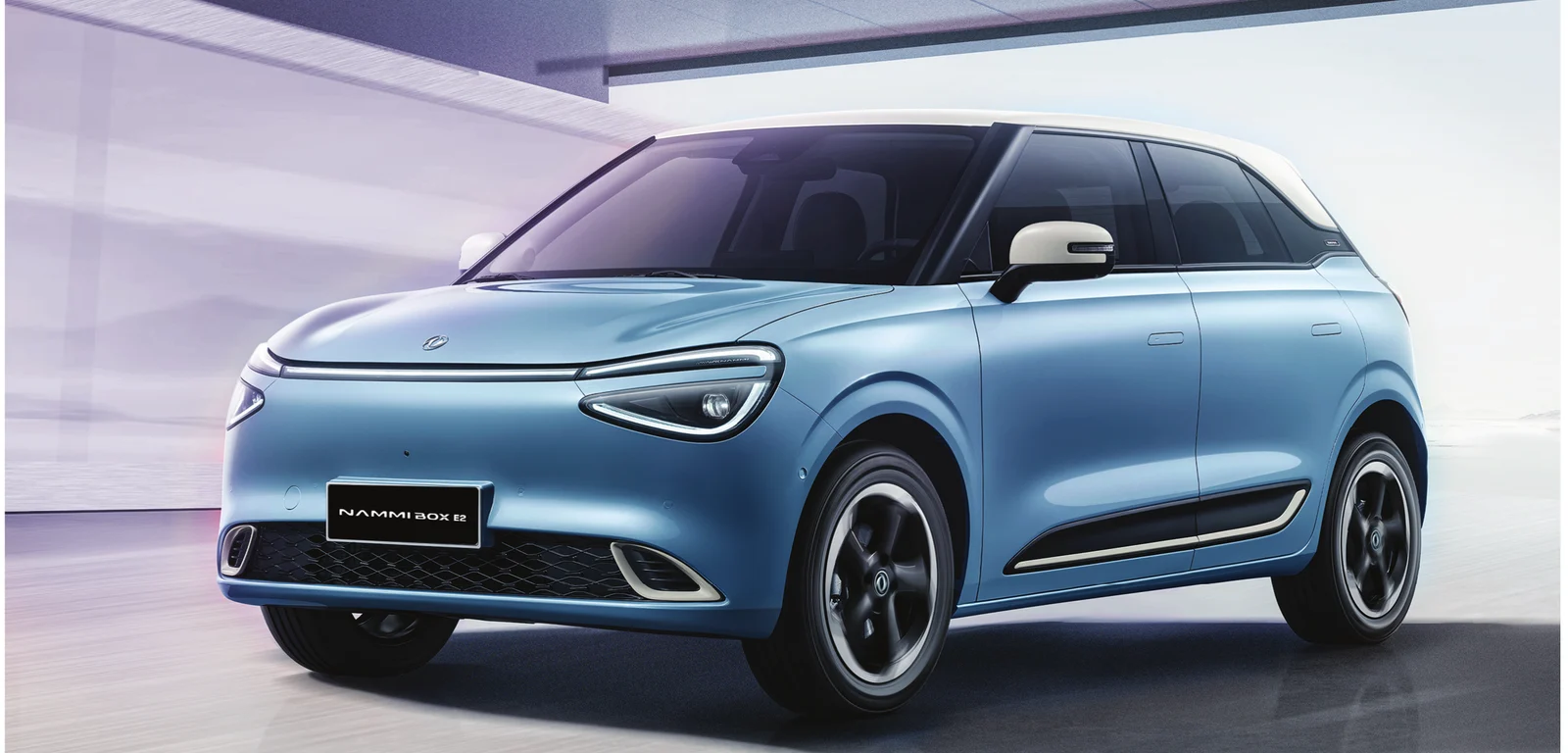
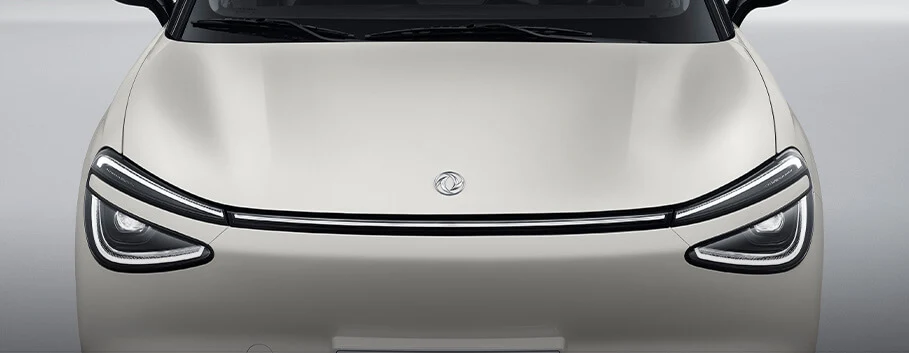
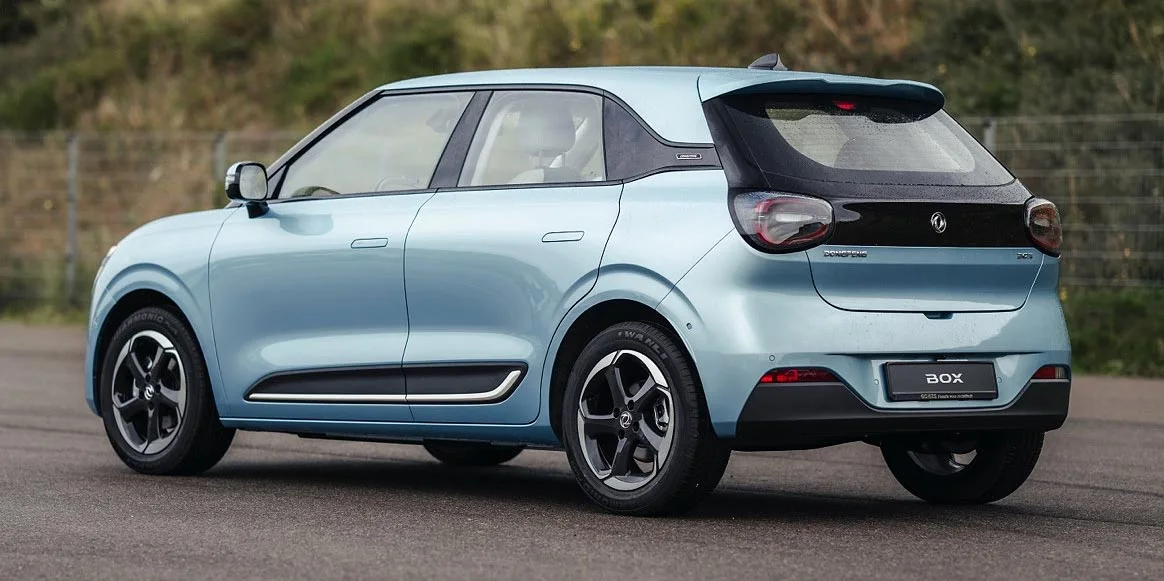
The Box looks like nothing else in its class. Slim, swept-back headlamps joined by a thin light bar, a closed nose, a floating white roof on the two-tone cars, oval tail lamps and a black and chrome strip low on the doors give it a friendly, slightly retro look. Frameless door glass and powered flush handles are standard on both trims, as are 17-inch alloys.
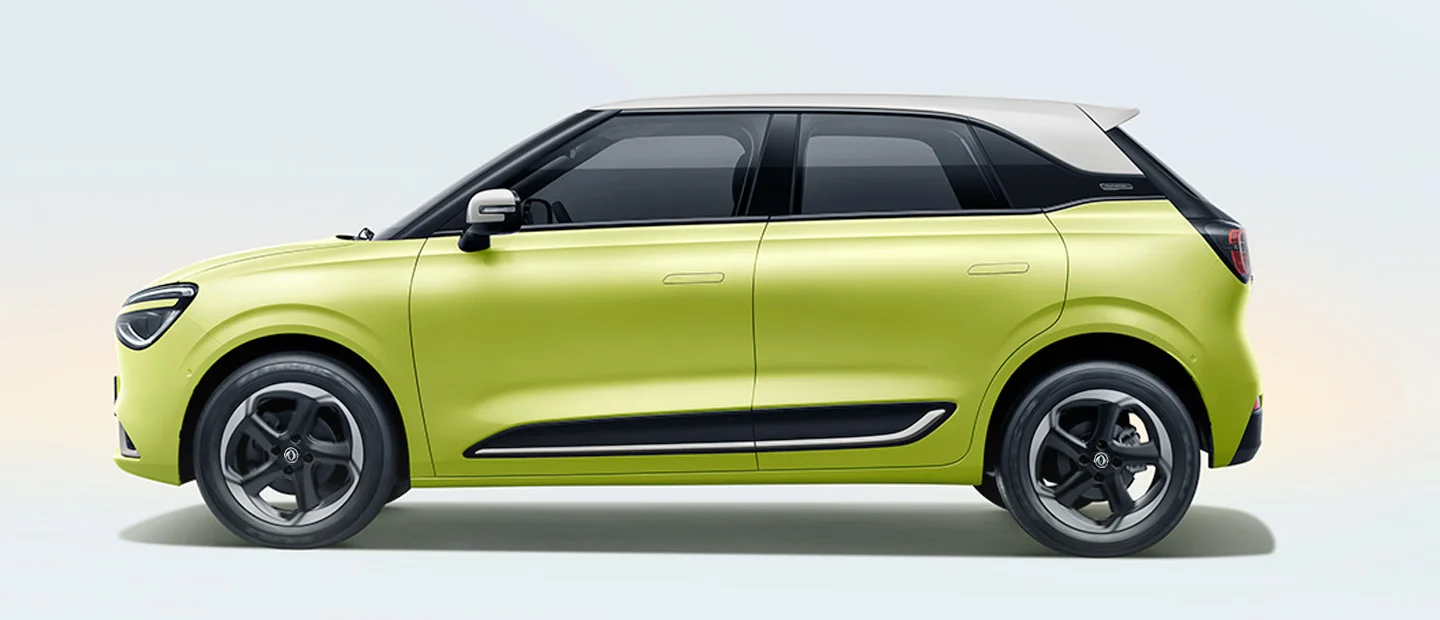
It is also bigger than it looks. At 4.02 metres it is longer than the Atto 1 and the Punch EV, and the wheelbase is longer than either. Up close, the two-tone alloys and the handles that sit flush until you need them look well finished. Nepal buyers get a wide palette, including red, pink, purple, blue and green with a contrasting white roof.
Interior, space and practicality7.0
The long wheelbase pays off in the back. Adults can sit behind tall front occupants with more knee room than the Atto 1 or Punch EV gives, and the flat floor helps the middle passenger. Headroom is the limit: tall rear passengers will find the roofline close.
The dashboard and doors are wrapped in quilted leatherette with decorative straps, which gives the cabin a dressier look than its rivals'. Lower down the plastics are hard and scratchy, and the gloss black trim scuffs quickly.
The front passenger seat reclines fully into a rest mode, which is useful while you wait at a charger. The boot is the weak spot. At about 326 litres it is fine for shopping, but the load lip is high and the rear bench folds only as a single piece, so you cannot carry a long load and a rear passenger together. Storage up front is fair, with a deep tray under the floating console, though the glovebox drawer is shallow.
Features and technology7.0
The equipment list is long for the class, and the base 330 gets everything the 430 does. Both have a 12.8-inch touchscreen, a 5-inch digital cluster, CarPlay, wireless phone charging, automatic climate control, a 360-degree camera with rear sensors, cruise control, keyless entry and heated, power-folding mirrors that tuck in when you lock the car. The driver's seat is powered, heated and ventilated, with memory, which is rare at this level.
The software is less convincing than the hardware. The touchscreen can be slow to respond, climate and drive-mode settings live in menus rather than on buttons, and some translations are odd. Android Auto is not listed, the cluster is small and the four-speaker audio is ordinary. The driver assistance package of the earlier top trim is gone, so there is no automatic emergency braking, lane keeping or adaptive cruise.
Range, battery & charging
Real-world range7.0
The 430 is the one to have for range. Its 42.3 kWh pack is rated at 430 km on the generous CLTC cycle and 317 km on WLTP, and mixed driving returns roughly 280 to 300 km, more if you stay in town. The 330's 31.4 kWh pack is rated at 330 km CLTC and 237 km WLTP, which works out to about 200 to 220 km in practice. That is enough for a week of valley commuting but tight for a one-way run to Pokhara without a charge.
- Battery
- 31.4 kWh LFP
- Range (CLTC)
- 330 km
- Range (WLTP)
- 237 km
- Typical real-world
- 200-220 km
- Battery
- 42.3 kWh LFP
- Range (CLTC)
- 430 km
- Range (WLTP)
- 317 km
- Typical real-world
- 280-300 km
Against the segment, the 430 matches the longer-range Punch EV and outlasts the Atto 1 and Tiago EV, while the 330 sits with the shorter-range versions of those cars.
Battery7.0
Both packs use lithium iron phosphate cells, which tolerate regular charging to full and age slowly, and the 42.3 kWh option is large for this class. The pack is air-cooled, though, which limits how long it can take peak charging power and makes it less forgiving of repeated fast charges on a hot day.
Efficiency and running cost8.0
In town the Box uses around 11 to 12 kWh per 100 km and it stays under about 15 kWh at highway speeds, so a full charge at home costs little. Servicing an EV this simple is cheap, and the battery and motor are covered for 8 years or 200,000 km as standard, with a paid extension to 11 years or 250,000 km that requires you to keep comprehensive insurance with the partner insurer for the whole term. The 17-inch tyres will cost a little more to replace than the smaller rubber on some rivals.
Charging6.0
On a DC charger the Box peaks at about 60 kW but averages closer to 45 kW, so 30 to 80 percent takes around half an hour, which is slower than the Punch EV and the Vigo but quicker than the Atto 1. That is less of a handicap than it sounds on Nepal's network, where most public units deliver 30 to 60 kW anyway. Most owners will charge at home overnight on AC.
Charging availability8.0
Dongfeng's distributor group runs its own charging network of more than 130 stations, with 40 and 60 kW DC units in the valley and along the main highways to Pokhara, Butwal, Hetauda, Birgunj, Nepalgunj and Surkhet. Owners can use these alongside NEA and private chargers. Coverage still thins out away from the main corridors, so longer trips into the hills need planning.
Performance & driving
Performance and hill climbing5.0
Chinese-market cars have 70 kW, but the Nepal version is rated at 49.5 kW, a figure that keeps it under the 50 kW tax threshold. It is lively enough from a standstill and keeps up with valley traffic, but it runs out of breath above about 80 km/h, overtaking needs a long clear road and top speed is limited to 130 km/h. Even the 70 kW car labours on steep climbs with a full load, so expect the Nepal car to slow noticeably on long grades such as the climb out of the valley. Three regenerative braking levels help on descents, but there is no true one-pedal mode.
Driving experience, ride and handling6.0
In town the Box is easy to drive. The steering is light and accurate, body roll is modest and the 360-degree camera makes parking simple. The ride is soft over gentle undulations, but the torsion-beam rear thumps over sharp edges and speed breakers, and it can feel fidgety on rippled tarmac. Road and wind noise build at highway speeds. The brakes are the oddest part. The blend between regeneration and the friction brakes is uneven, so the pedal bites late and takes some getting used to.
Road tolerance7.0
The Box copes reasonably well with Nepal's roads. Ground clearance is quoted at about 176 mm, and the short overhangs mean the nose and tail rarely touch on steep driveways or broken sections. The firm rear end makes deep potholes and unmarked speed breakers uncomfortable, so take them slowly.
Safety & build
Safety5.0
Safety is the main reason to hesitate. The current Nepal car has six airbags, ESC, traction control, hill-start assist, direct tyre-pressure monitoring and ISOFIX, a big step up from the two airbags of earlier cars. But the European version, also with six airbags, earned three stars from Euro NCAP. Its adult occupant score was 69 percent, and several spot welds in the A-pillar broke in the offset frontal test, which points to a problem in the body structure itself. There is no automatic emergency braking either, and the Punch EV, with five stars in its own crash test, is the safer small car.
Build quality and reliability6.0
Panel fit and the quilted cabin trim look good, and more than 2,000 Nammi cars are now on Nepali roads with no recall pattern so far. The hard lower plastics, scratch-prone gloss trim and slow software suggest cost-cutting in places you touch every day, and the crash-test weld failures are hard to ignore. The brand's track record in Nepal is still short.
Value & ownership
Price and value8.0
No rival at this level matches the Box for space and equipment: even the base trim has a 360-degree camera, six airbags, a ventilated memory seat and CarPlay. The 430 costs only a little more for a third more battery and about 80 km more real-world range, so it is the better buy for most people, as long as you can live with the slow motor and the safety record.
After-sales and service network6.0
MAW Vriddhi has a long history of selling and servicing vehicles in Nepal, and Dongfeng now has outlets at Naxal, Nayabazaar, Bhaktapur and Thasikhel in the valley. Outside it, there are dealers in Pokhara, Chitwan, Butwal, Itahari, Birtamode, Birgunj, Janakpur, Dang and Nepalgunj. Spares and EV-trained technicians are still building up, and workshop capability outside the valley differs from town to town.
Editor's opinion7.0
We would recommend the Box over a BYD Atto 1 to a buyer who values cabin space and equipment, because the Box gives more of both, and the 430 also has the longer range. The Atto 1 is the more proven choice, and buyers who put safety or hill performance first should pick the quicker, better-protected Punch EV.
Verdict
Among the cheapest EVs in Nepal, the Box has the most rear space and the longest equipment list. Both trims get the same equipment, and the 430's battery covers about 280 to 300 km in mixed driving. Against that, the 49.5 kW motor makes it slow on the highway and strained on long climbs, the software lags, and the three-star crash result of the six-airbag European car points to a weak body structure. Dongfeng's own charging network and growing dealer presence make ownership easier than for many new brands. For city-based buyers who rarely leave the valley and put space ahead of performance, it is a sensible choice.
Okay
A roomy, generously equipped small EV with a long-range option, held back by a weak motor for Nepal's hills and a poor crash-test record.
Kushal Rajbhandari
Oct 1, 2026
A roomy, generously equipped small EV with a long-range option, held back by a weak motor for Nepal's hills and a poor crash-test record.
Kushal Rajbhandari
Oct 1, 2026
FAQ
What is the difference between the Nammi Box E2 330 and E2 430?
Only the battery. The E2 330 has a 31.4 kWh pack rated at 330 km CLTC and the E2 430 a 42.3 kWh pack rated at 430 km CLTC. Equipment, the 49.5 kW motor and the six airbags are the same on both.
What is the real-world range of the Nammi Box?
Expect about 200 to 220 km from the E2 330 and 280 to 300 km from the E2 430 in mixed driving. City-only use stretches both further, while fast highway runs and long climbs cut them.
How long does the Nammi Box take to charge?
On a DC fast charger it goes from 30 to 80 percent in about 30 minutes, peaking at around 60 kW. Most owners charge overnight at home on AC.
Is the Nammi Box safe?
The current Nepal car has six airbags, ESC, traction control and a 360-degree camera, but no automatic emergency braking. The European version with six airbags scored three stars from Euro NCAP, with weak points in its body structure.
Is the Nammi Box good on Nepal's hills?
It manages, but slowly. The Nepal version is rated at 49.5 kW, and it loses pace on long, steep climbs with a full car. Regenerative braking helps control speed on the way down.
What warranty does the Nammi Box get in Nepal?
The battery and motor are covered for 8 years or 200,000 km as standard. A paid extension takes that to 11 years or 250,000 km, provided you keep comprehensive insurance with the distributor's partner insurer.
Does the Nammi Box have Apple CarPlay and Android Auto?
CarPlay is built in on both trims. Android Auto is not listed for the Nepal car.