

BYD Atto 3 review

Kushal Rajbhandari
· Oct 2, 2026
Good
A roomy, quiet and heavily equipped family SUV backed by one of Nepal's widest EV service networks, now outpaced on range, charging speed and value by newer rivals.
Kushal Rajbhandari
Oct 2, 2026
A roomy, quiet and heavily equipped family SUV backed by one of Nepal's widest EV service networks, now outpaced on range, charging speed and value by newer rivals.
Kushal Rajbhandari
Oct 2, 2026
What we like
- Roomy cabin with a flat floor and genuine rear space for adults
- Deep standard kit on both trims: head-up display, ventilated seats, panoramic roof
- Full driver-assist suite and 360-degree camera on both trims
- Blade LFP battery with a strong safety record
- Quiet, comfortable ride over broken roads
- Wide BYD service network and own charging stations across Nepal
What could be better
- Real-world range trails the larger-battery versions of its rivals
- 105 kW DC charging is slower than the fastest rivals
- Soft suspension rolls through corners and steering goes vague when pushed
- Mild regeneration means heavy brake use on long hill descents
- Lane-keeping struggles on roads with faded markings
- Costs more than most mid-size rivals for similar range
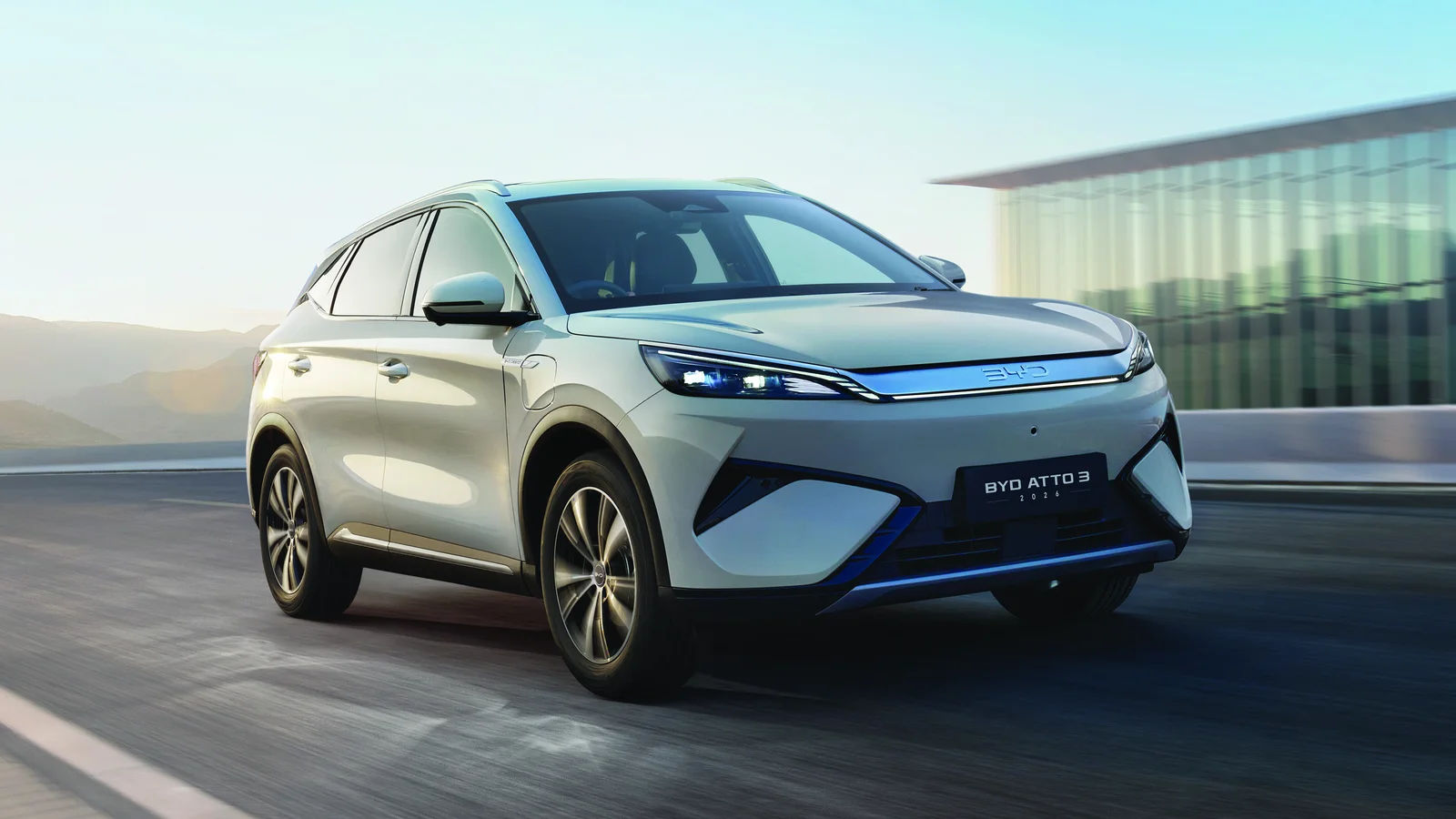
The BYD Atto 3 is the electric SUV most Nepali families have already met, in a neighbour's driveway or on the ring road, and the 2026 update keeps what made it popular while fixing several of the things owners grumbled about. It is roomy, quiet and loaded with equipment, and BYD backs it with one of the widest EV service networks in the country. It is also no longer the default choice it once was, because newer rivals now go further on a charge and fast-charge harder for less.
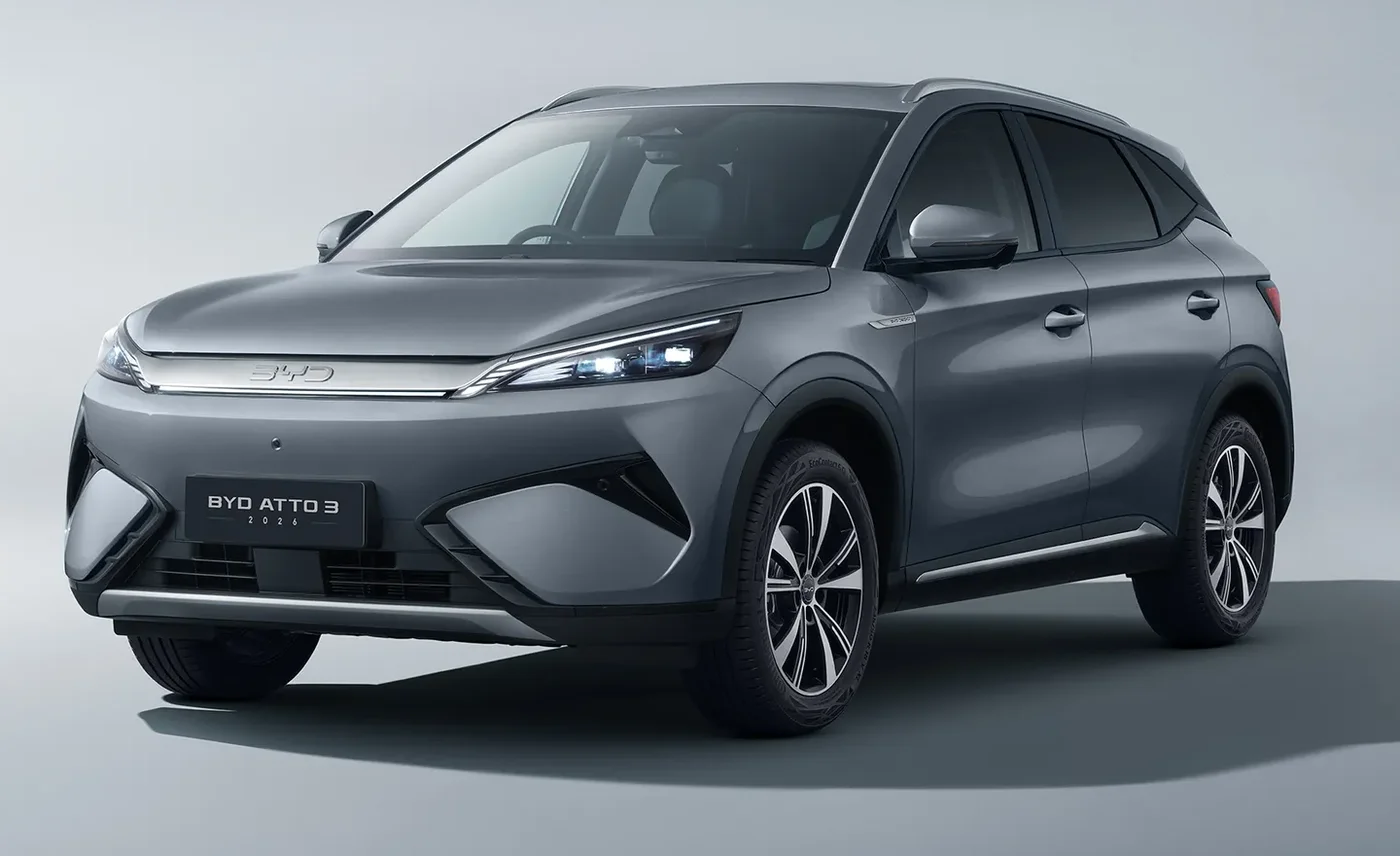
The car on sale now is the facelifted Atto 3, shown in Nepal in August 2026. It keeps the e-Platform 3.0 underpinnings, front-wheel drive and a 100 kW motor with 310 Nm, and it brings a new nose, a calmer dashboard, a column-mounted gear selector, an 8.8-inch driver display and a head-up display. Two trims are sold. The Advanced carries a 49.92 kWh Blade battery rated at 345 kilometres on the WLTP cycle, and the Superior a 60.48 kWh pack rated at 420 kilometres. Both now share the same equipment list in almost every respect.
It suits a family that wants space, a long equipment list and workshops outside the valley more than it wants the longest range or the quickest charging stop.
Design, interior & features
Design and exterior7.0
The facelift gives the Atto 3 a sharper face. A slim light bar now runs across the nose between thin LED headlamps, the lower bumper has crisper angled intakes, and the overall look is more grown-up than the bulbous original. At 4,455 mm long on a 2,720 mm wheelbase it is a proper compact SUV, a size that still slots into Kathmandu parking without drama.
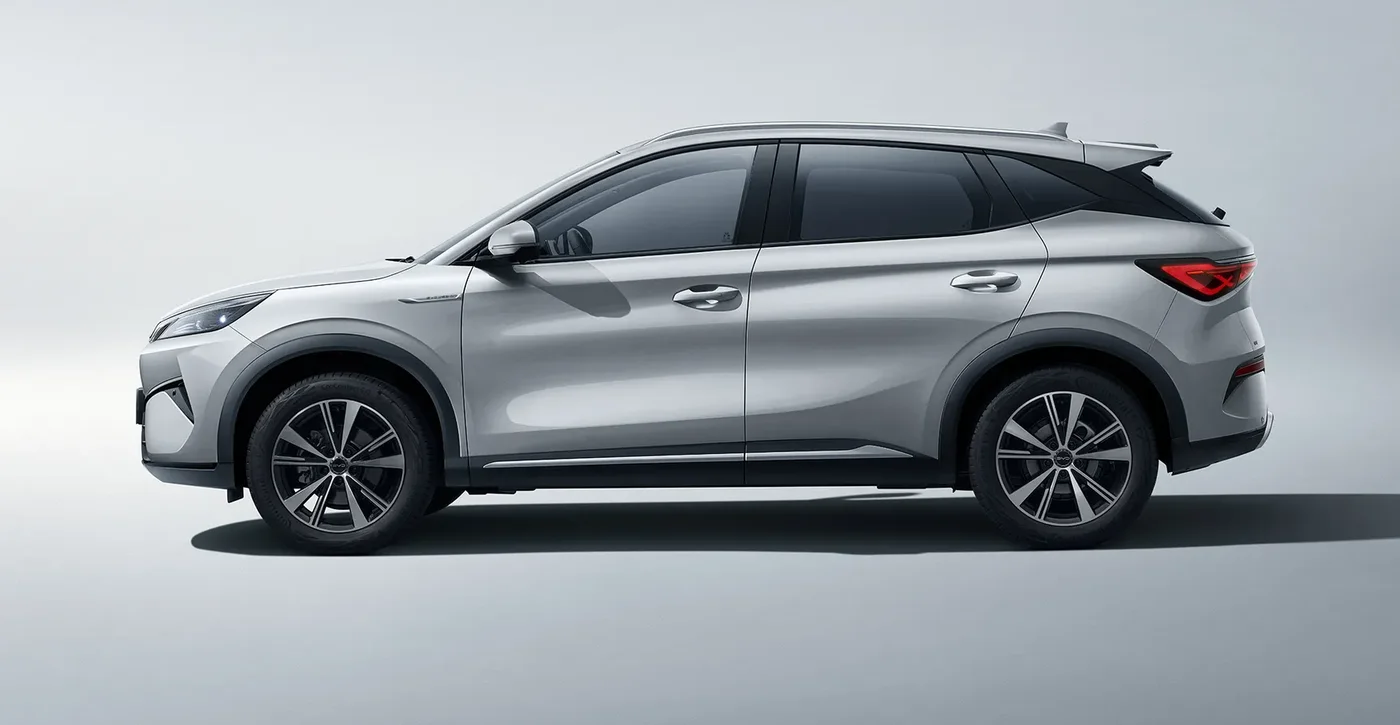
The rear is where it is most distinctive. A full-width light strip with a knotted pattern sits under a roof spoiler with a high-mounted brake light, and the black cladding around the arches gives it a sturdier stance than the body alone suggests. The Advanced rides on 17-inch alloys with 215/60 tyres and the Superior on 18-inch rims with 235/50 rubber, and six colours are offered.
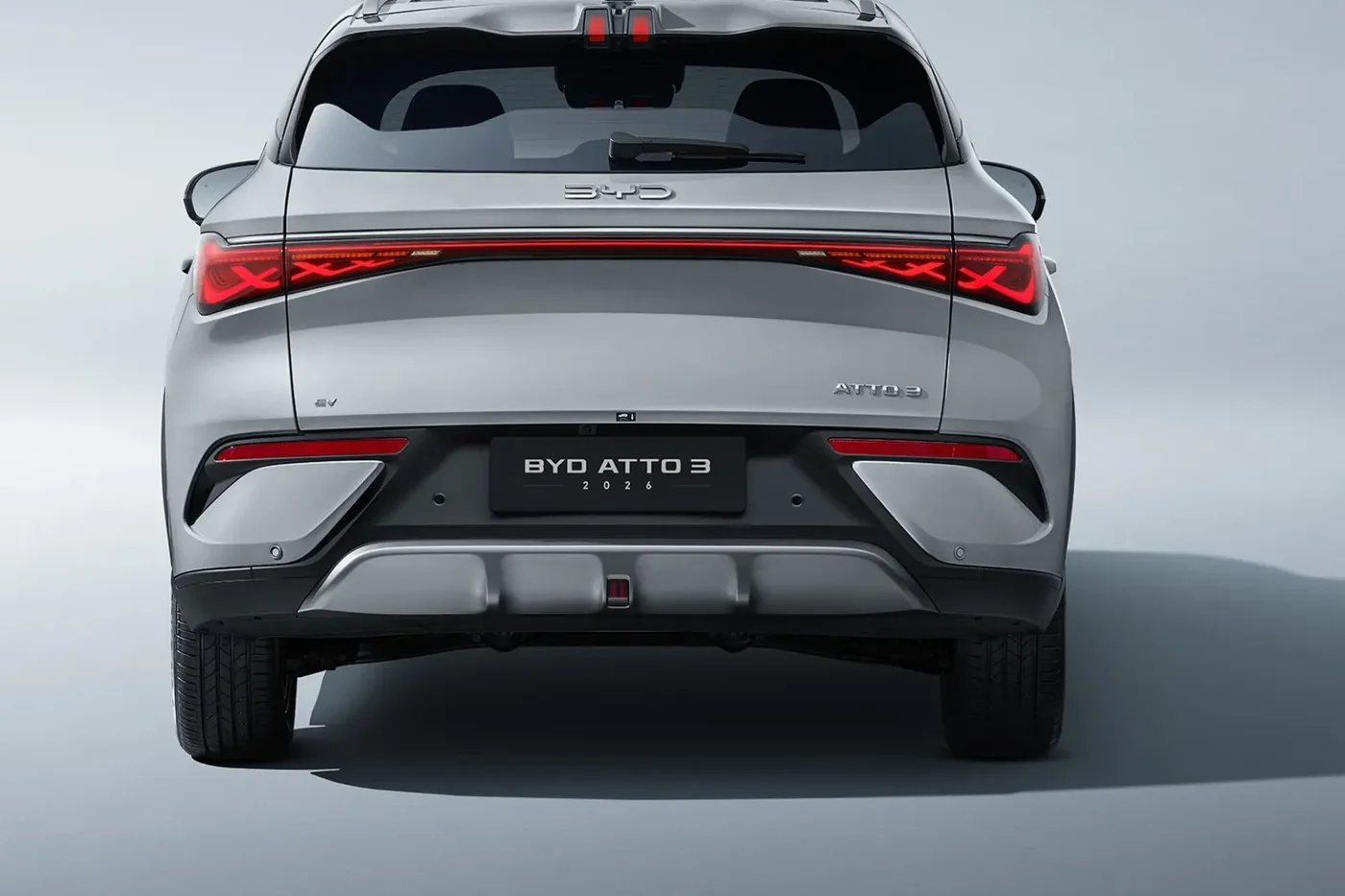
The Deepal S05 turns more heads, but the Atto 3's tidy shape should age well, and it looks more expensive than before.
Interior, space and practicality8.0
The cabin is the Atto 3's strongest argument. The flat floor and long wheelbase give the rear bench genuine room for adults, with enough knee and foot space for tall passengers and a floor without a centre hump, so the middle seat is usable on short trips. Headroom in the back is the one squeeze, because the panoramic roof eats into it slightly for anyone over six feet.
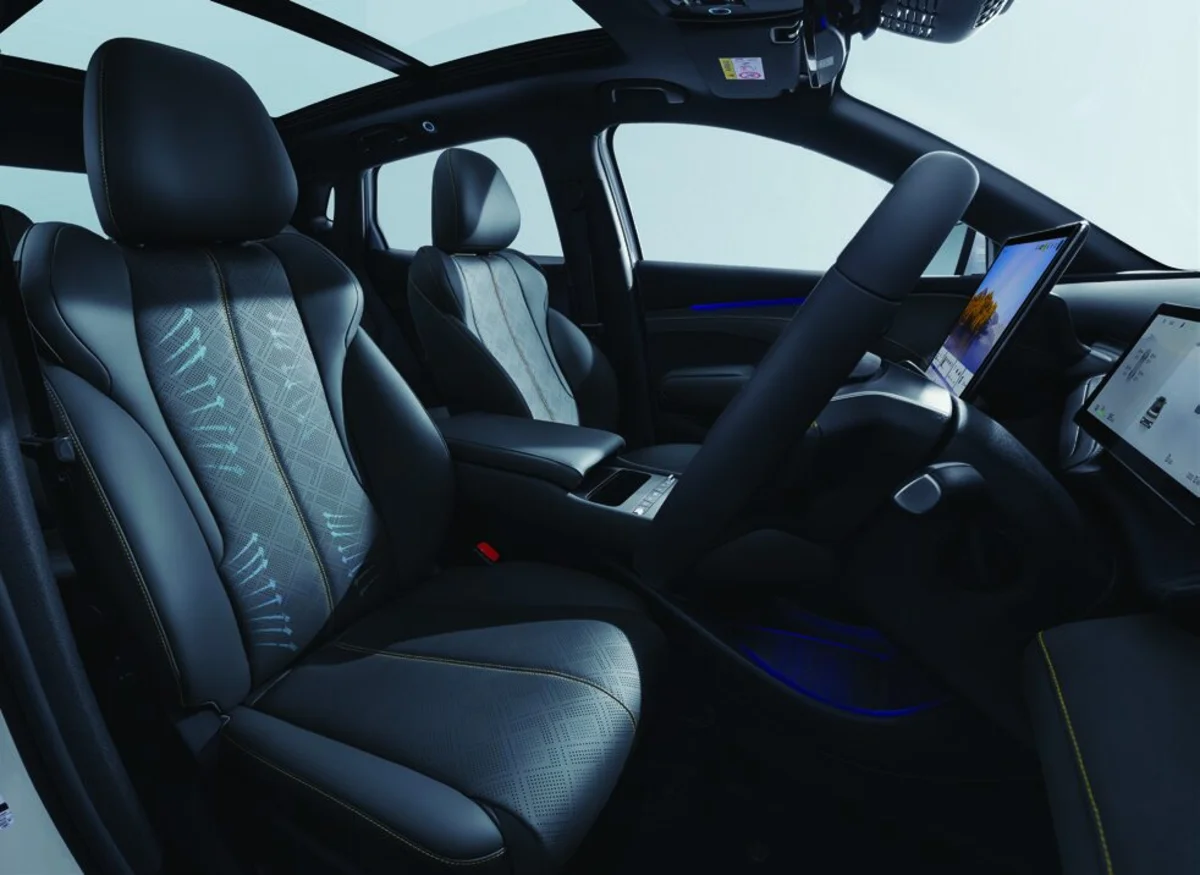
The facelift also tones the dashboard down. The ribbed, gym-themed lower dash and the chunky gear lever have gone in favour of a stitched panel and a column stalk, which frees space on the console for two phone trays and a deeper cubby. Some of the original character survives in the stretchy guitar-string door pockets and the round side vents. Upper surfaces are soft and well finished, though some of the plastics lower down still feel hard.
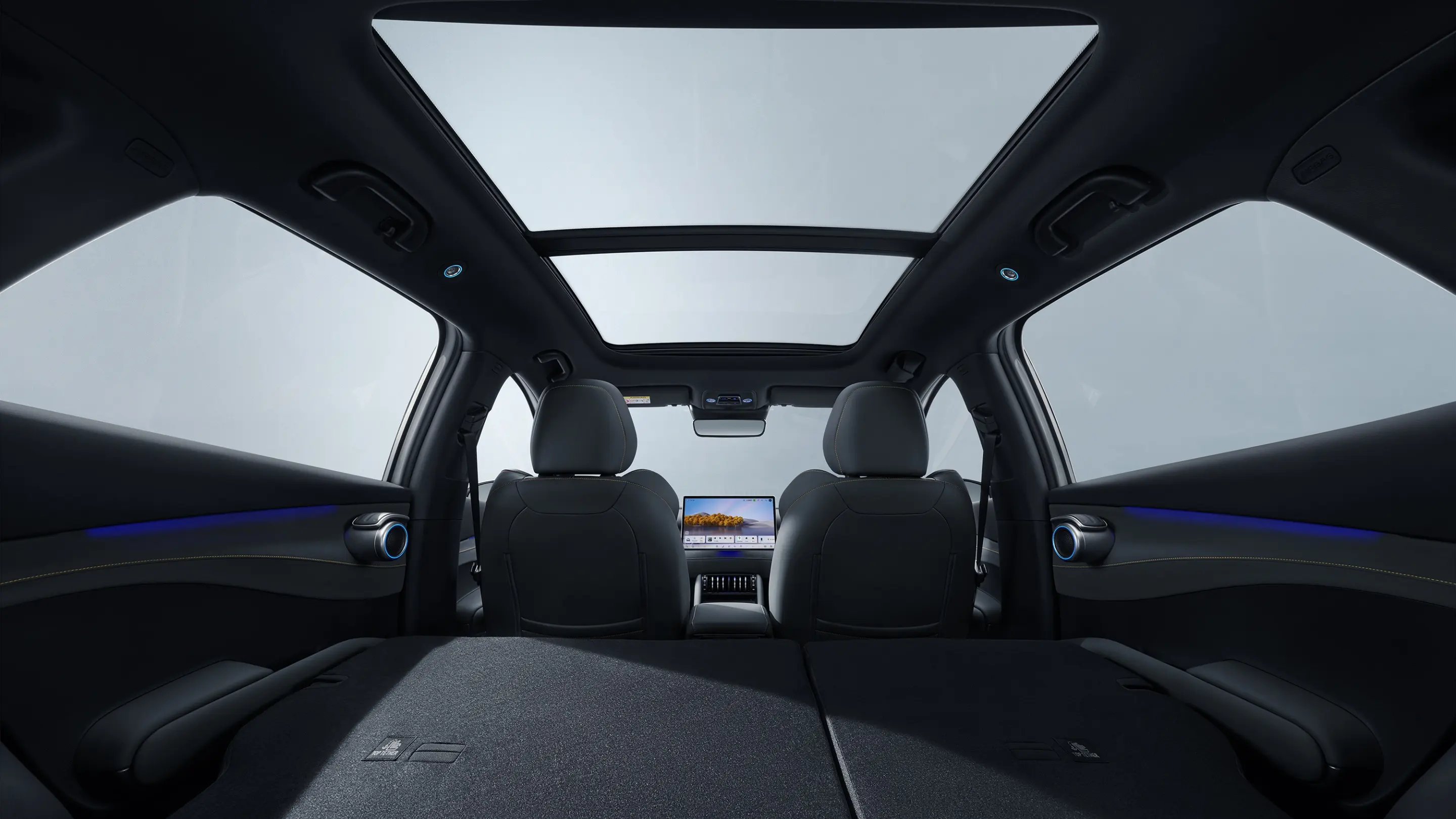
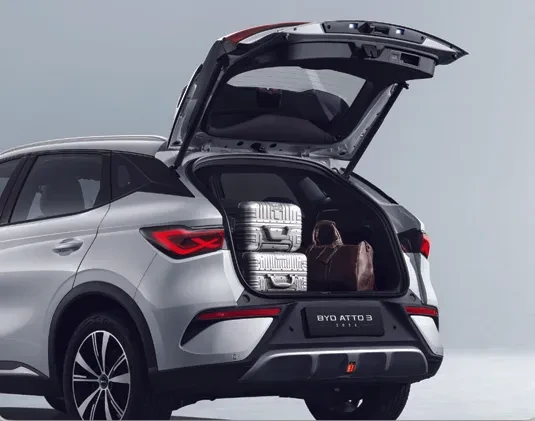
The boot holds 434 litres, about what the Hyundai Creta EV offers and a little behind the MG S5, and folding the 60/40 rear seats opens it to 1,340 litres. There is no spare wheel, only a repair kit, which matters more on a long trip outside the valley than it does in town.
Features and technology8.0
Few cars in this segment match the Atto 3's equipment, and the 2026 update adds to it. A 15.6-inch touchscreen dominates the dash; it no longer swivels, but it is bright and fast, and it runs Apple CarPlay and Android Auto both wired and wireless. The tiny old driver display has been replaced by an 8.8-inch screen, and a head-up display now projects speed and navigation onto the windscreen on both trims.
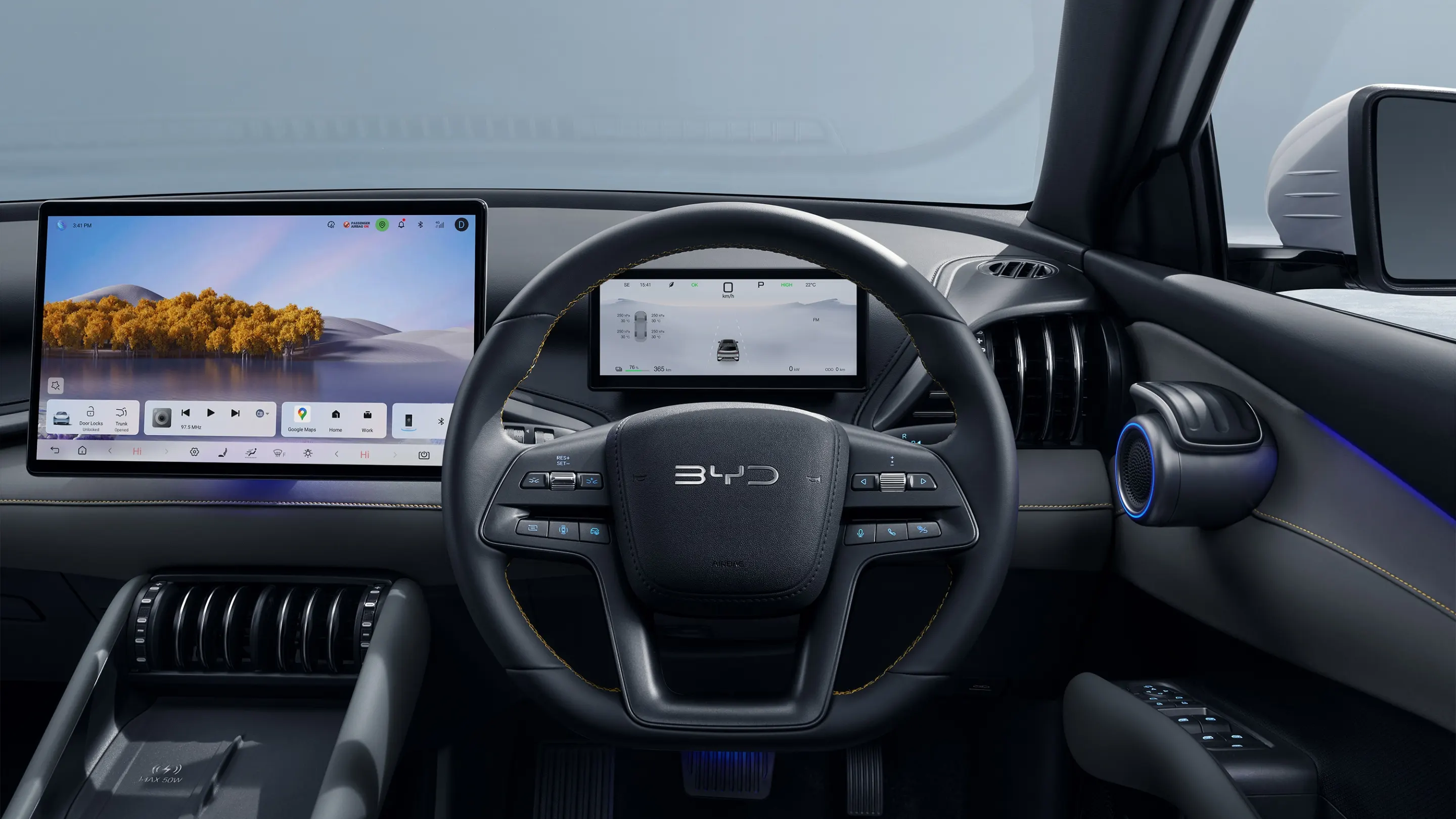
Around that sit Dirac-tuned audio with eight speakers, ventilated front seats with six-way power for the driver and four-way for the passenger, a panoramic sunroof, a 360-degree camera, rain-sensing wipers, single-zone automatic climate control with a PM2.5 filter and a 50 W wireless charger with its own cooling fan. The phone works as a key through the BYD app, with a card key as backup. Vehicle-to-load lets you run appliances off the battery during a power cut.
The Superior adds only a one-touch powered tailgate, music-synced ambient lighting and a V2L adapter in the box, so the Advanced gives up very little. The native menus can still be fiddly, and some functions sit a layer deeper in the screen than they should.
Range, battery & charging
Real-world range7.0
WLTP is one of the more realistic test cycles, so the gap to real driving is modest. In mixed Nepali use the Superior returns roughly 360 to 390 kilometres, enough for Kathmandu to Pokhara with charge to spare, and gentle city running can stretch it further. The Advanced lands around 290 to 315 kilometres in similar use.
High speeds and long climbs cut it most. At a steady 120 km/h the Superior manages only around 250 kilometres, and a loaded climb out of the valley on a hot day with the air conditioning working hard takes a clear bite. The MG S5's larger pack goes a little further on a charge, so the Superior sits mid-pack, and the Advanced's figure is closer to what the smaller Atto 2 offers.
Battery8.0
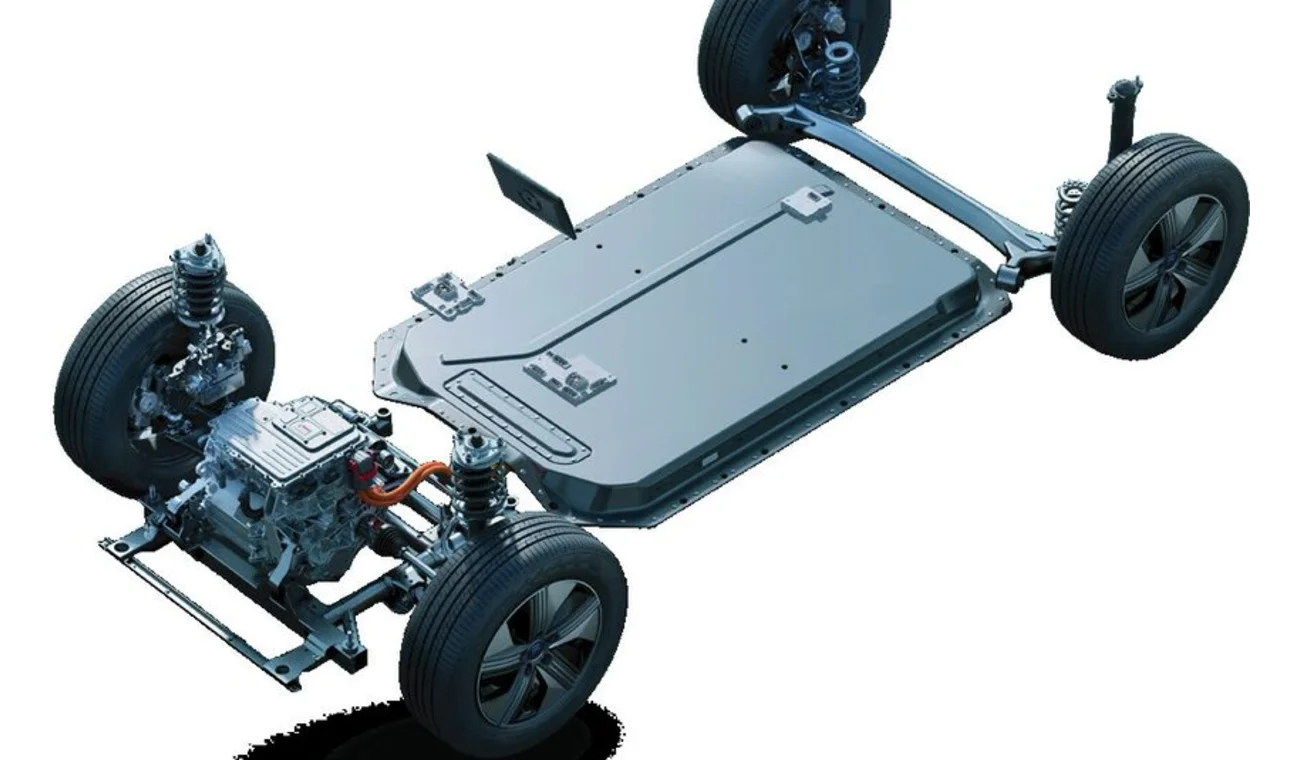
Both trims use BYD's Blade battery, a lithium iron phosphate pack built into the floor as part of the structure. LFP chemistry is tolerant of heat and of regular charging to 100 percent, which suits owners who charge at home overnight, and the Blade design has a strong safety record. BYD also fits a lithium iron phosphate 12-volt battery in the 2026 car, which should end the flat 12-volt battery problem that troubled early Atto 3s.
- Battery
- 49.92 kWh Blade (LFP)
- Range (WLTP)
- 345 km
- DC charging
- Up to 105 kW
- Tyres
- 215/60 R17
- Kerb weight
- 1,680 kg
- Battery
- 60.48 kWh Blade (LFP)
- Range (WLTP)
- 420 km
- DC charging
- Up to 105 kW
- Tyres
- 235/50 R18
- Kerb weight
- 1,750 kg
Efficiency and running cost7.0
Expect around 17 to 19 kWh per 100 km in mixed use, a fair figure for a car of this size and weight but not a standout, and lighter rivals like the Atto 2 use less. Running costs stay low because home electricity is cheap in Nepal, and the battery and vehicle are covered for eight years or 160,000 km. The main irritant is the four-month service interval, which means more workshop visits than some rivals ask for.
Charging7.0
The 2026 update lifts the DC charging peak to 105 kW on both trims, up from around 70 to 90 kW before. On a fast enough charger, 30 to 80 percent on the larger pack takes about half an hour, and the official 0 to 80 percent figure is about 50 minutes. That is respectable, though the MG S5 and Deepal S05 accept up to about 150 kW.
In practice many Nepali public chargers deliver well under 105 kW, so the gap to those rivals is smaller on the road than on paper. On AC the 7 kW onboard charger fills the Superior overnight from a home wallbox.
Charging availability8.0
BYD runs one of the largest brand-owned charging networks in Nepal, with more than 60 stations of its own on the main highways and in the cities, and the car uses the standard CCS2 connector, so it also works on NEA and private chargers. A portable mode 2 cable comes with the car, and the BYD app shows charging status remotely. Whether a home wallbox is included depends on the current offer, so confirm it at purchase.
Performance & driving
Performance and hill climbing7.0
Nepali Atto 3s use a 100 kW motor rather than the 150 kW version sold elsewhere, so 0 to 100 km/h takes 10.1 seconds. That sounds slow, but the 310 Nm of torque arrives instantly, so the car feels quicker than the number suggests when pulling away or overtaking at town speeds. Sport mode sharpens the response noticeably.
On sustained climbs the torque keeps it pulling steadily even with a full load, and it does not strain on the switchbacks out of the valley. Coming down is less convincing. Regeneration is mild, with no one-pedal mode, so on a long descent like Sindhuli or Nagdhunga you will lean on the brakes more than in some rivals, though the ventilated discs at all four corners cope well and hill descent control is standard.
Driving experience, ride and handling7.0
The Atto 3 is set up for comfort. The cabin is quiet at town and highway speeds, the suspension soaks up broken tarmac well, and the light steering and tight turning circle make it easy in narrow streets. Wind noise around the mirrors becomes noticeable at sustained highway speeds.
Push harder and the soft setup shows. The body rolls noticeably through quick corners, the steering goes vague near the limit, and on winding hill roads passengers will feel it more than the driver. The MG S5 feels tidier when driven hard.
Road tolerance6.0
Ground clearance is 175 mm, enough for most Nepali roads. The suspension rounds off potholes and speed breakers well for a soft-riding SUV, with only the deepest holes sending a thud into the cabin, and it handles gravel tracks and unpaved village roads at a sensible pace. Owners do report scraping on steep driveway ramps, and the Creta EV and Atto 2 both sit higher.
Safety & build
Safety8.0
The Atto 3 earned five stars from Euro NCAP in 2022, with 91 percent for adult occupant protection and 89 percent for child occupants, and a five-star rating from ANCAP. That rating covers the earlier car, but the structure is unchanged. The 2026 Nepali car lists six airbags, front, side and curtain, one fewer than earlier versions, which also had a far-side bag.
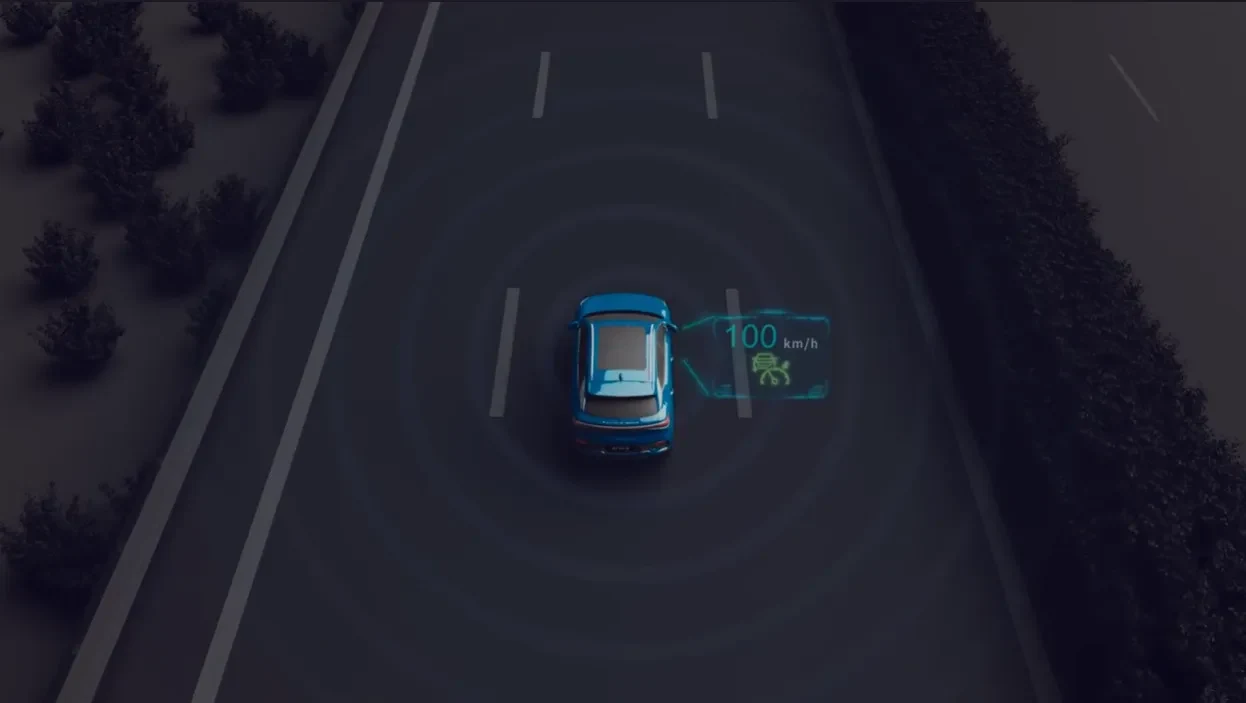
Both trims carry the full driver-assist suite: stop-and-go adaptive cruise, automatic emergency braking, forward and rear collision warning, blind-spot detection, door-opening warning, lane departure warning and lane keeping, rear cross-traffic alert and braking, and traffic sign recognition. On Nepali roads with faded or missing lane markings the lane systems struggle.
Build quality and reliability7.0
With over 4,000 sold in Nepal since late 2022, the Atto 3 is the most proven electric SUV in the country. Its reliability record is mostly good, but early cars had flat 12-volt batteries, infotainment lag and some cabin rattles. Software updates and the new LFP 12-volt battery address the worst of these, and the updated cabin feels more solidly finished than before. The Blade battery itself has given little trouble.
Value & ownership
Price and value6.0
On equipment alone the Atto 3 looks generous, since even the Advanced has a head-up display, ventilated seats, a panoramic roof and the full driver-assist suite. Against its rivals it looks dearer. The Advanced costs more than any trim of the MG S5, Hyundai Creta EV or Deepal S05, yet its smaller battery gives less range than the larger-battery versions of those cars, and the Superior is priced into the class above. BYD's name and network cover part of that premium.
After-sales and service network7.0
BYD's after-sales is a real strength. There are 14 service centres across six provinces, two in the valley and the rest in places like Pokhara, Butwal, Biratnagar, Birgunj, Narayanghat, Nepalgunj and Dhangadhi, with more planned. Parts for the Atto 3 are well stocked because so many are on the road. The four-month service interval is the one drawback, and owners outside the main towns still face a long drive to the nearest workshop.
Editor's opinion7.0
The Atto 3 is still an easy car to recommend for its space, kit and the reassurance of BYD's network, and the 2026 update makes it a better car to live with. Against the MG S5, though, it gives up range, charging speed and value, and the cheaper Atto 2 delivers much of its appeal in a smaller package. We would still recommend it to a buyer who values comfort and support over outright range.
Verdict
The 2026 Atto 3 is a more mature version of Nepal's best-known electric SUV, with a calmer cabin, more technology and the same roomy, comfortable family-car character. The Blade battery, a strong safety record and one of the country's widest EV service and charging networks give it a track record newer rivals have yet to build. Against rivals its range sits mid-pack, the 105 kW charging trails the fastest of them, and the soft chassis rolls when pushed. The bigger issue is value, because rivals now offer more range and faster charging for less. For a buyer who puts comfort, equipment and dependable after-sales first, it remains a sound choice; buyers focused on range should drive the MG S5 first.
Good
A roomy, quiet and heavily equipped family SUV backed by one of Nepal's widest EV service networks, now outpaced on range, charging speed and value by newer rivals.
Kushal Rajbhandari
Oct 2, 2026
A roomy, quiet and heavily equipped family SUV backed by one of Nepal's widest EV service networks, now outpaced on range, charging speed and value by newer rivals.
Kushal Rajbhandari
Oct 2, 2026
FAQ
What is the real-world range of the BYD Atto 3 in Nepal?
In mixed driving the Superior's 60.48 kWh pack covers roughly 360 to 390 kilometres, and the Advanced's 49.92 kWh pack about 290 to 315 kilometres. Sustained highway speeds, heavy loads and long climbs push those figures lower.
What changed in the 2026 BYD Atto 3?
It gets a new front end, a calmer dashboard without the old gym-themed details, a column-mounted gear selector, an 8.8-inch driver display, a head-up display, a 50 W cooled wireless charger and faster DC charging of up to 105 kW. The powertrain and battery sizes are unchanged.
How fast does the BYD Atto 3 charge?
It accepts up to 105 kW on DC, and on a fast enough charger 30 to 80 percent on the larger pack takes about half an hour. The official 0 to 80 percent figure is about 50 minutes. On AC the 7 kW onboard charger refills it overnight at home.
Can the BYD Atto 3 handle Nepali hill roads?
Yes. The 310 Nm of torque keeps it climbing steadily with a full load, and the 175 mm ground clearance copes with most broken roads. On long descents the mild regeneration means you rely more on the brakes, and the soft suspension lets the body roll on winding roads.
What is the difference between the Advanced and Superior trims?
The Superior has the larger 60.48 kWh battery, 420 km of WLTP range against 345 km, 18-inch wheels instead of 17-inch, a one-touch powered tailgate, music-synced ambient lighting and a V2L adapter. Otherwise the equipment, including the head-up display, ventilated seats and driver assists, is the same.
How safe is the BYD Atto 3?
It holds five-star ratings from Euro NCAP and ANCAP, earned by the earlier car on the same structure, and the Nepali 2026 car has six airbags plus a full driver-assist suite on both trims, including automatic emergency braking and blind-spot detection.
Where can the BYD Atto 3 be serviced outside Kathmandu?
BYD has 14 service centres across six provinces, including Pokhara, Butwal, Biratnagar, Birgunj, Narayanghat, Nepalgunj and Dhangadhi, and the brand runs more than 60 charging stations of its own.