

BYD Atto 2 review

Kushal Rajbhandari
· Sep 20, 2026
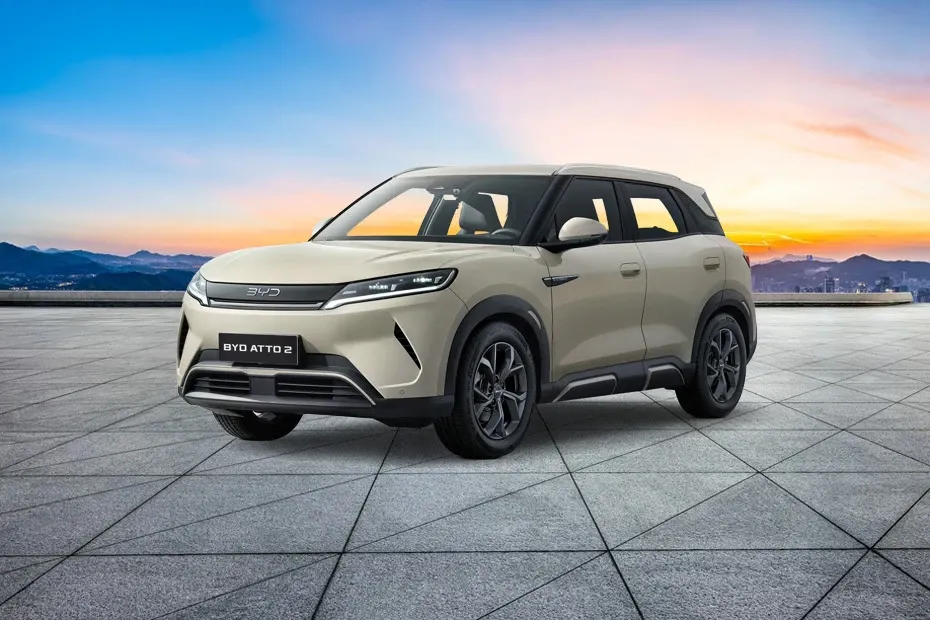
The BYD Atto 2 is the most complete small electric SUV you can buy at this end of the market in Nepal, and it gets there by loading a lot of car into a compact, city-friendly package rather than by being exciting to drive. If your days are mostly Kathmandu traffic, a school run, and the occasional trip to Pokhara, it does almost everything you would want, quietly and without fuss.
It sits below the Atto 3 in BYD's range and rides on the same e-Platform 3.0, with the company's LFP Blade Battery built into the floor as part of the body structure. That gives it a rigid, safe-feeling shell and a flat cabin floor, and it is the reason a car barely 4.3 metres long feels roomier inside than its footprint suggests. Two versions are sold here: an Essential with the smaller battery and a Premium with the larger one, both front-wheel drive.
What you are really buying is equipment and refinement for the money. A full suite of driver-assist features, a heat pump, vehicle-to-load power, a panoramic roof, ventilated front seats, and wireless charging are the sort of kit that usually sits a segment or two above this one. The trade-offs are honest and worth knowing before you sign: the real-world range trails the headline figure, more so on hills, charging is competent rather than quick, and the driving character is calm to the point of being forgettable.
Design and exterior
The Atto 2 looks tidy and modern without trying to make a statement, which will suit most buyers and frustrate the few who want their EV to stand out. The front wears BYD's latest slim-lit face, the flanks are clean, and the connected tail light bar ties it to the rest of the family. It reads as a proper small SUV rather than a jacked-up hatchback, helped by black lower cladding and a raised stance.
Dimensions tell the practical story better than the styling does. At about 4.31 metres long on a 2.62-metre wheelbase, it is easy to place in tight lanes and simple to park, yet the long wheelbase pays off inside. Ground clearance of 200 millimetres is genuinely useful on broken city edges and rougher approach roads, though this is a road-biased car and not something to take off the tarmac. It rolls on 17-inch alloys wrapped in 215/60 tyres, a sensible size that favours ride comfort over looks. Six colours are offered, from plain whites and greys to the more distinctive greens and blues.
Interior, space and practicality
Inside is where the Atto 2 earns most of its goodwill. The cabin feels a clear step above what the segment usually delivers, with soft-touch surfaces, neat detailing, and vegan leather upholstery that lifts the ambience well beyond the ordinary. The driving position is a highlight: there is a lot of adjustment, the seat drops low enough for taller drivers, and all-round visibility is good, which matters as much in a jam as it does on the highway.
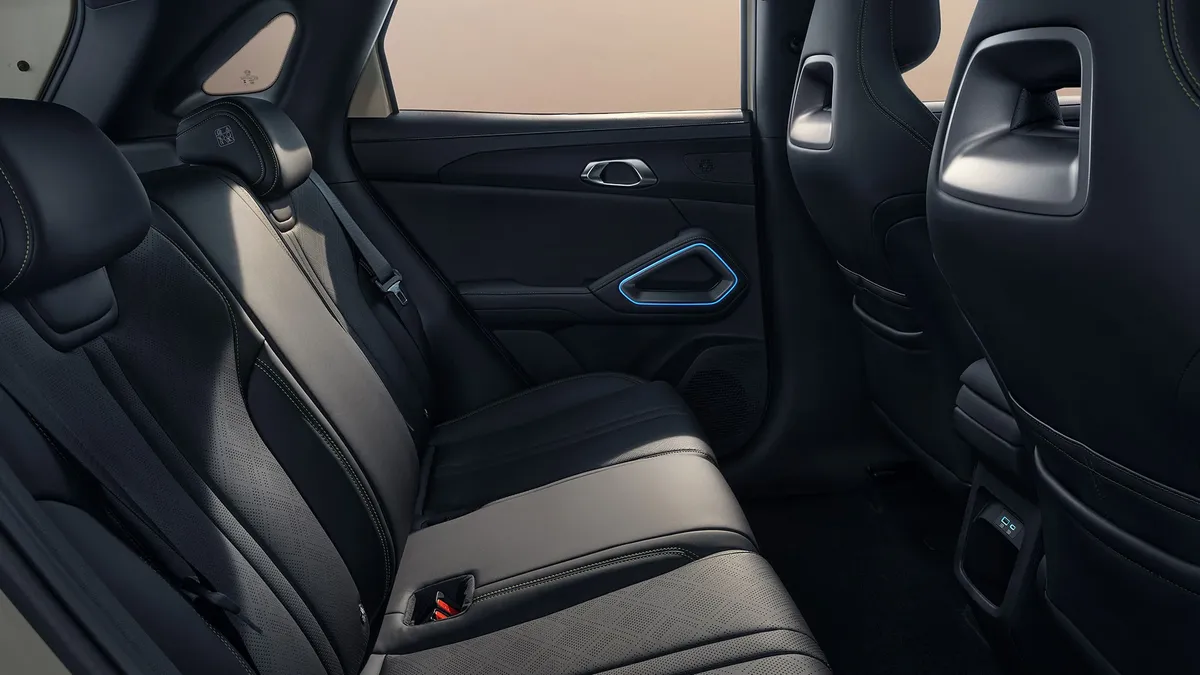
Rear space is the surprise. The slim battery floor and long wheelbase free up more legroom and foot room than a car this size has any right to offer, and headroom is fine for adults. Three at a pinch is realistic for short hops, and the back seat comes with its own vents, USB ports, and an armrest. The boot is the weak spot in an otherwise strong practicality case, opening at around 380 litres, which is adequate rather than generous and smaller than a few direct rivals, though folding the 60/40 rear seats liberates a large, flat load bay of roughly 1,320 litres and there is useful hidden storage under the floor for cables. A handful of small ergonomic gripes take a little shine off: some cabin functions have migrated into the touchscreen that would be easier as physical buttons, and not every adjustment is as flexible as it could be.
Features and technology
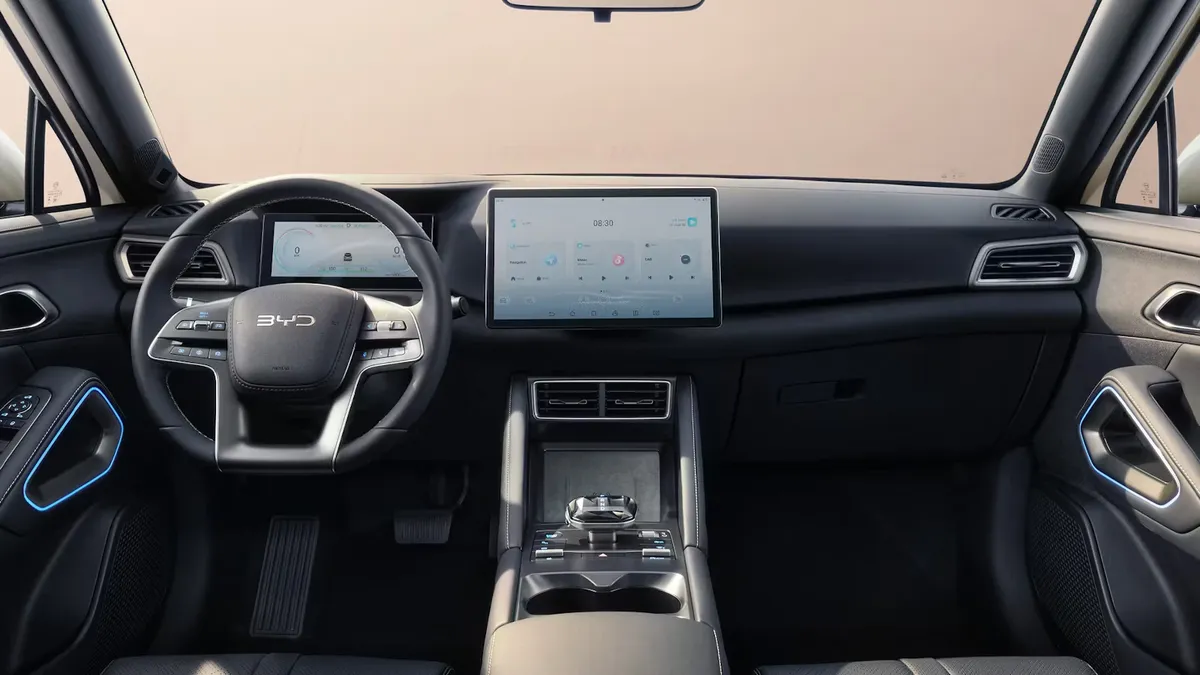
The equipment list is the Atto 2's headline act. The centrepiece is a 12.8-inch rotating touchscreen paired with an 8.8-inch digital driver's display, and the screen runs wireless Apple CarPlay and Android Auto, which most buyers will lean on rather than the native menus. Around that sit wireless phone charging, an eight-speaker system, keyless entry with phone-as-key, ventilated front seats, a six-way powered driver's seat, automatic climate control with a cabin air filter, and a panoramic roof that makes the interior feel bigger still.
The driver-assistance package is unusually deep for the price. Adaptive cruise, lane-keeping, autonomous emergency braking, traffic-sign recognition, and traffic-jam assist are all present, and a heat pump is fitted as standard, which quietly helps efficiency in cold weather. Vehicle-to-load lets you run appliances or tools off the battery, a genuinely handy feature during load-shedding or on a trip. The systems are not flawless. The lane and speed warnings can be eager enough that you will want to soften them, and one notable omission for Nepali roads is blind-spot monitoring, which is exactly the sort of aid that earns its keep in dense, unpredictable traffic.
Range and charging
Range is where expectations need managing. The Premium quotes 345 kilometres on the WLTP cycle from its 51.13 kWh battery and the Essential quotes 312 kilometres from a 45.12 kWh pack, but the number you will actually see is lower, and Nepal's climbs make the gap wider than it would be on flat roads. In mixed real-world use the larger battery settles closer to the low 300s in kind conditions and less when you are working it uphill with the air-conditioning on. That is still enough for comfortable daily running and most weekend routes, but this is a car to plan longer trips around rather than one to rely on for effortless long-distance driving.
Charging is competent without being a strong suit. On alternating current it takes 7 kW, so a full top-up from a home or destination wallbox is an overnight job. On direct current the Premium peaks in the low 80s of kilowatts, which turns a meaningful charge into a coffee-break stop when you find a healthy fast charger, while the Essential charges more slowly and trails key rivals here. The practical catch is less about the car and more about the country: fast chargers are still concentrated in the larger cities, and advertised speeds are not always what you get, so charging around the Atto 2 asks for a little forethought outside Kathmandu and Pokhara. The port is the standard CCS2.
Driving experience
The Atto 2 is easy and relaxing to drive, and deliberately undramatic. The single front motor makes 100 kW and 290 Nm, enough for a 0 to 100 time of about nine seconds, and around town the instant, smooth response makes it feel brisker than that figure suggests. Pulling into gaps and keeping up with traffic never feels like an effort. Refinement is a real strength: it is quiet at city speeds, well isolated from the worst of the road, and calm in a way that takes the edge off a long commute.
Ask for more and the character stays firmly on the comfortable side. The steering is light and accurate but tells you little, body control through corners is middling, and the throttle can feel a touch soft in its initial response. The ride is generally settled and geared towards comfort, though it can get a little busy over sharp, repeated bumps. None of this makes it bad to drive. It simply means the Atto 2 is tuned to soothe rather than to entertain, which is the right call for how most owners here will actually use it.
Ownership
The Atto 2 is cheap to run in the way EVs tend to be, and the LFP Blade Battery brings a reputation for durability and thermal stability that suits a hot climate. Efficiency is good, several drivers report consumption better than they expected, and the standard heat pump helps. The vehicle-to-load function doubles as a backup power source, which is a real-world bonus in a country that still sees outages.
The honest caveat is the network. BYD has grown quickly in Nepal but its service and parts footprint is still younger and less proven than long-established names like Tata, and that is worth weighing if you live outside the main cities or plan to keep the car for many years. The mechanical simplicity of an EV works in your favour, but for peace of mind check where your nearest service point is and what parts availability looks like before you commit. For a city-based buyer near a dealer, ownership should be straightforward and inexpensive.
Verdict
The Atto 2 is the small electric SUV to beat on value in Nepal right now, and it earns that standing honestly rather than on a spec sheet. It brings equipment, cabin space, and a quality of finish that usually belong a segment or two higher, and it goes about daily city driving with a calm, refined ease that makes it genuinely easy to live with. The compromises are real but predictable for the money: the range trails its headline figure and shrinks further on climbs, charging is competent rather than quick, and the driving character is tuned to soothe rather than to thrill. The still-maturing service network is worth weighing if you live far from a dealer or plan to keep the car for many years. For a city-based buyer who wants a lot of modern EV without stretching, though, it is one of the easiest recommendations in its class.
Great
A generously equipped, spacious and refined small electric SUV that leads its class on value, let down only by modest range and unremarkable driving.
Kushal Rajbhandari
Sep 20, 2026
FAQ
Is the BYD Atto 2 good for Kathmandu traffic?
Yes. Its compact size, light steering, strong low-speed visibility, and smooth instant torque make it well suited to congested city driving, and the raised ground clearance handles broken roads better than a low hatchback would.
What is the real-world range of the BYD Atto 2?
The Premium is rated at 345 kilometres and the Essential at 312 kilometres on the WLTP cycle, but expect less in practice, with the larger battery realistically in the low 300s in good conditions and lower on sustained climbs or with heavy air-conditioning use.
How long does the BYD Atto 2 take to charge?
On a 7 kW home or destination charger a full charge is an overnight job. On a healthy DC fast charger the Premium tops up quickly enough for a coffee break, while the Essential charges more slowly. It uses the standard CCS2 port.
Does the BYD Atto 2 have ADAS safety features?
Yes, and unusually thorough ones for the price, including adaptive cruise, lane-keeping, autonomous emergency braking, traffic-sign recognition, and traffic-jam assist. Blind-spot monitoring is the notable missing item.
How many people can the BYD Atto 2 seat?
Five. Rear legroom and headroom are generous for a car this size thanks to the flat battery floor and long wheelbase, and the back seat has its own vents and USB ports.
Is the BYD Atto 2 better than the Atto 3?
They serve different buyers. The Atto 2 is smaller, more affordable, and focused on the city, while the Atto 3 offers more space and range. If your driving is mostly urban, the Atto 2 covers it for less.
What are the main drawbacks of the BYD Atto 2?
Real-world range that falls short of the claim on hills, charging speed that lags the best rivals, a boot that is only adequate, driving manners that prioritise calm over fun, and a service network that is still maturing in Nepal.