

Tata Tiago EV review

Kushal Rajbhandari
· Sep 23, 2026
Okay
The refreshed Tiago EV is a comfortable, well-equipped and very cheap-to-run city car, held back mainly by its 200 km real-world range.
Kushal Rajbhandari
Sep 23, 2026
The refreshed Tiago EV is a comfortable, well-equipped and very cheap-to-run city car, held back mainly by its 200 km real-world range.
Kushal Rajbhandari
Sep 23, 2026
What we like
- Modern next-gen design with LED lighting
- Comfortable, well-damped city ride
- Feature-rich cabin for the price (large touchscreen, wireless CarPlay and Android Auto, 360 camera, cruise)
- Strong safety kit with 6 airbags standard, ESP, hill hold and blind view monitor
- Smooth single-speed automatic that feels brisk in town
- Improved fast charging, 10 to 80 percent in about 35 minutes
What could be better
- Real-world range around 200 km limits confident long-distance trips
- Modest 240 litre boot
- Cabin gets noisy at higher speeds
- Feels out of its comfort zone above about 90 km/h
- Only the 24 kWh battery is offered, no larger-range option
- Rear drum brakes
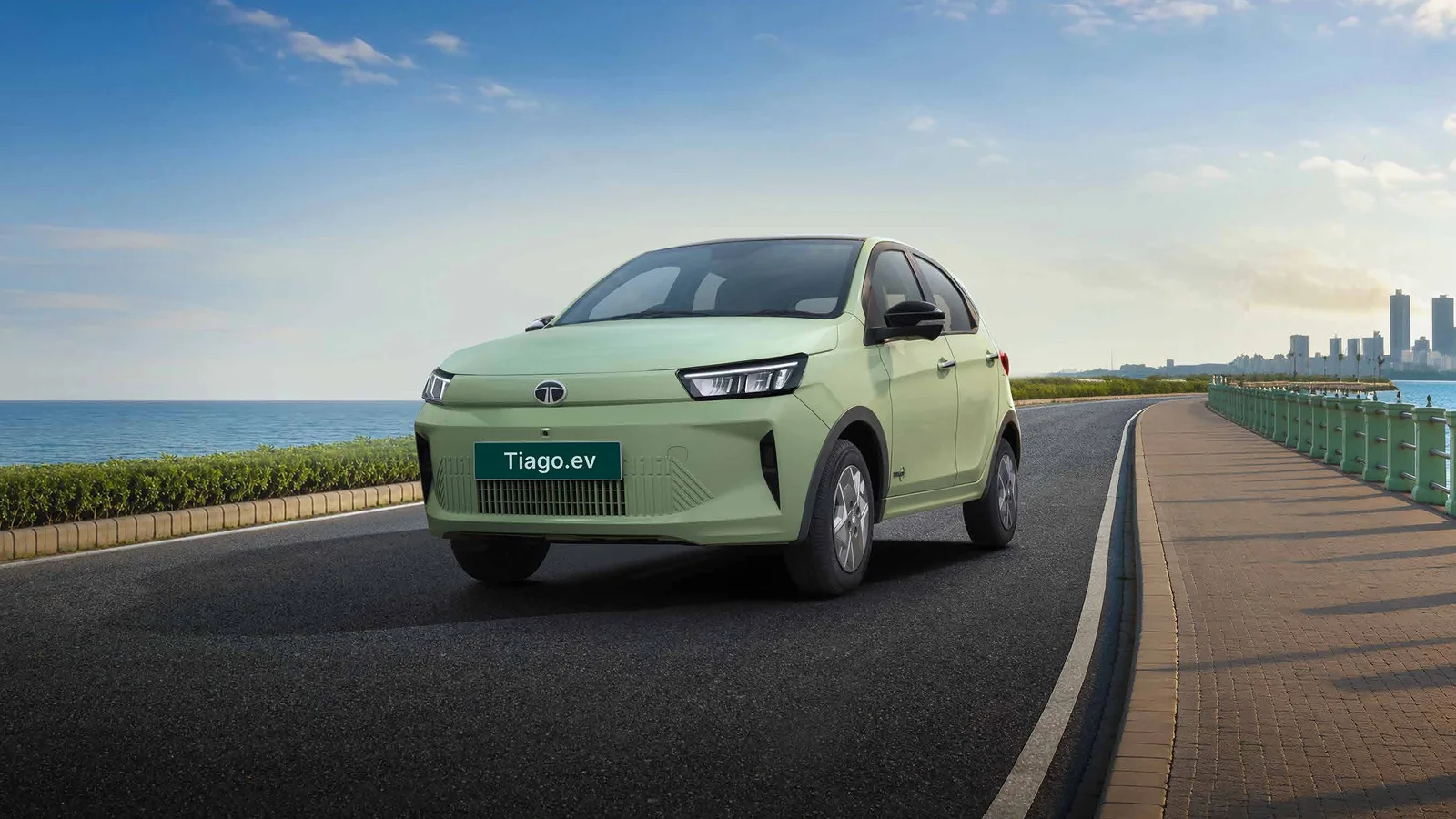
The refreshed Tata Tiago EV is one of the easiest electric cars to recommend in Nepal, as long as you buy it for what it is: a compact, comfortable, cheap-to-run city hatchback. This midlife update is far more than a facelift. It brings a cleaner new face with full LED lighting, a redesigned and better-trimmed cabin, six airbags as standard, a 360 degree camera, rear AC vents and quicker DC charging, all on the familiar Tiago body that slips through Kathmandu traffic and parks anywhere.
What has not changed is the battery. Both Nepal variants, the Pure +24 and the Creative +24, use the same 24 kWh pack and 55 kW motor, and in real driving that means roughly 200 km on a full charge. For a daily commute, school runs and errands across the valley that is plenty, and home charging makes the running cost almost trivial. For regular trips out of the valley, or long climbs over the hills, the small battery is the constraint you will plan around.
The choice between the two trims comes down to kit rather than performance. The Pure +24 already gets six airbags, wireless Apple CarPlay and Android Auto, automatic climate control and a rear camera. The Creative +24 adds the larger screen, the 360 degree camera and blind view monitor, stability control, hill hold, cruise control, keyless entry, LED headlamps and rear AC vents, and it is the version that makes the update feel complete.
Design, interior & features
Design and exterior7.0
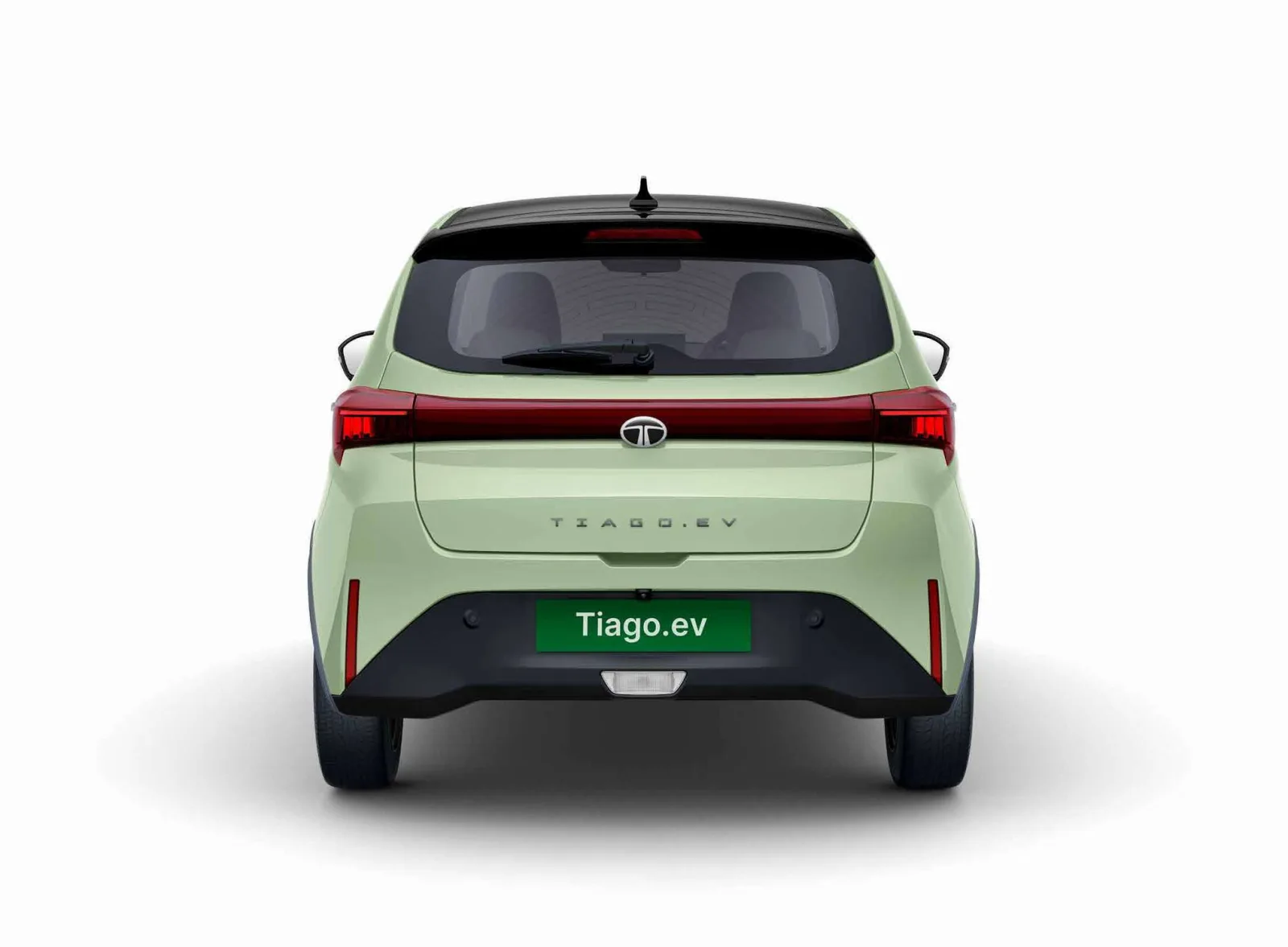
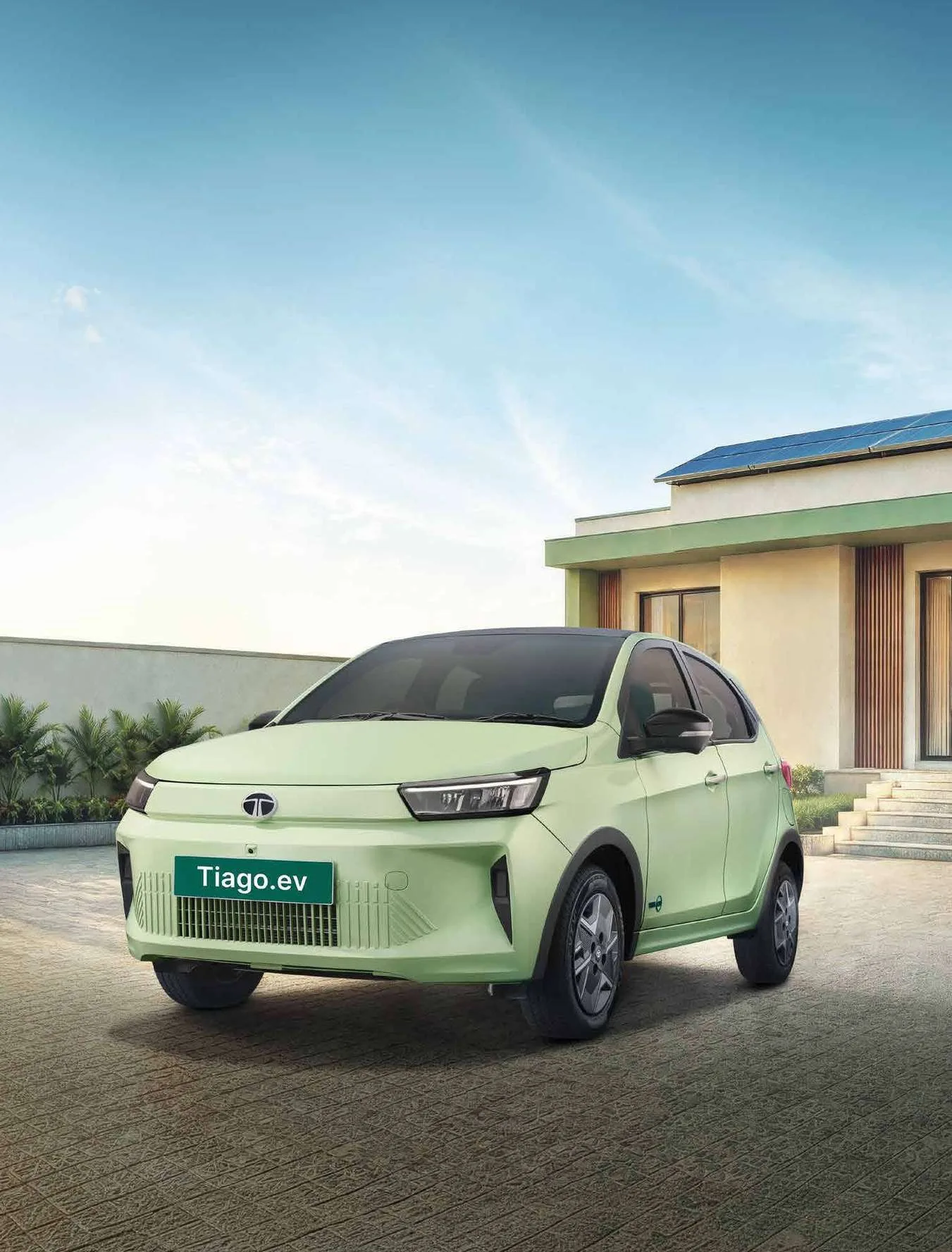
The new Tiago EV looks like a proper current-generation EV rather than a petrol hatchback with blue badges. The closed-off, body-coloured nose, slim LED headlamps with eyebrow-style DRLs, a textured lower bumper, contrasting wheel-arch cladding, a black roof and a connected light bar across the tailgate all freshen a shape that had started to look dated. It remains a genuinely compact car at 3,825 mm long on a 2,400 mm wheelbase, with a tight 5.1 m turning radius that makes U-turns and narrow gallis painless.
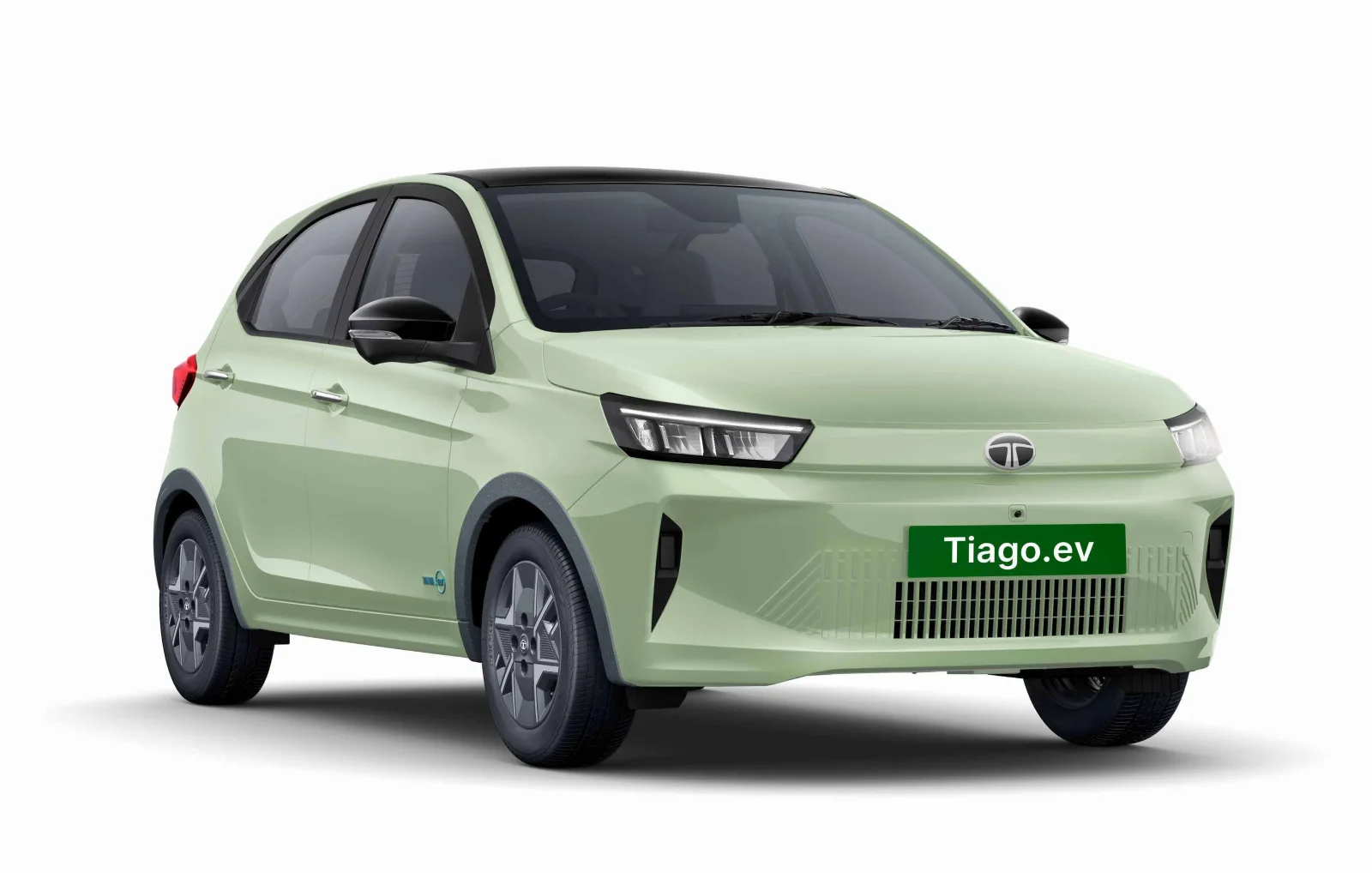
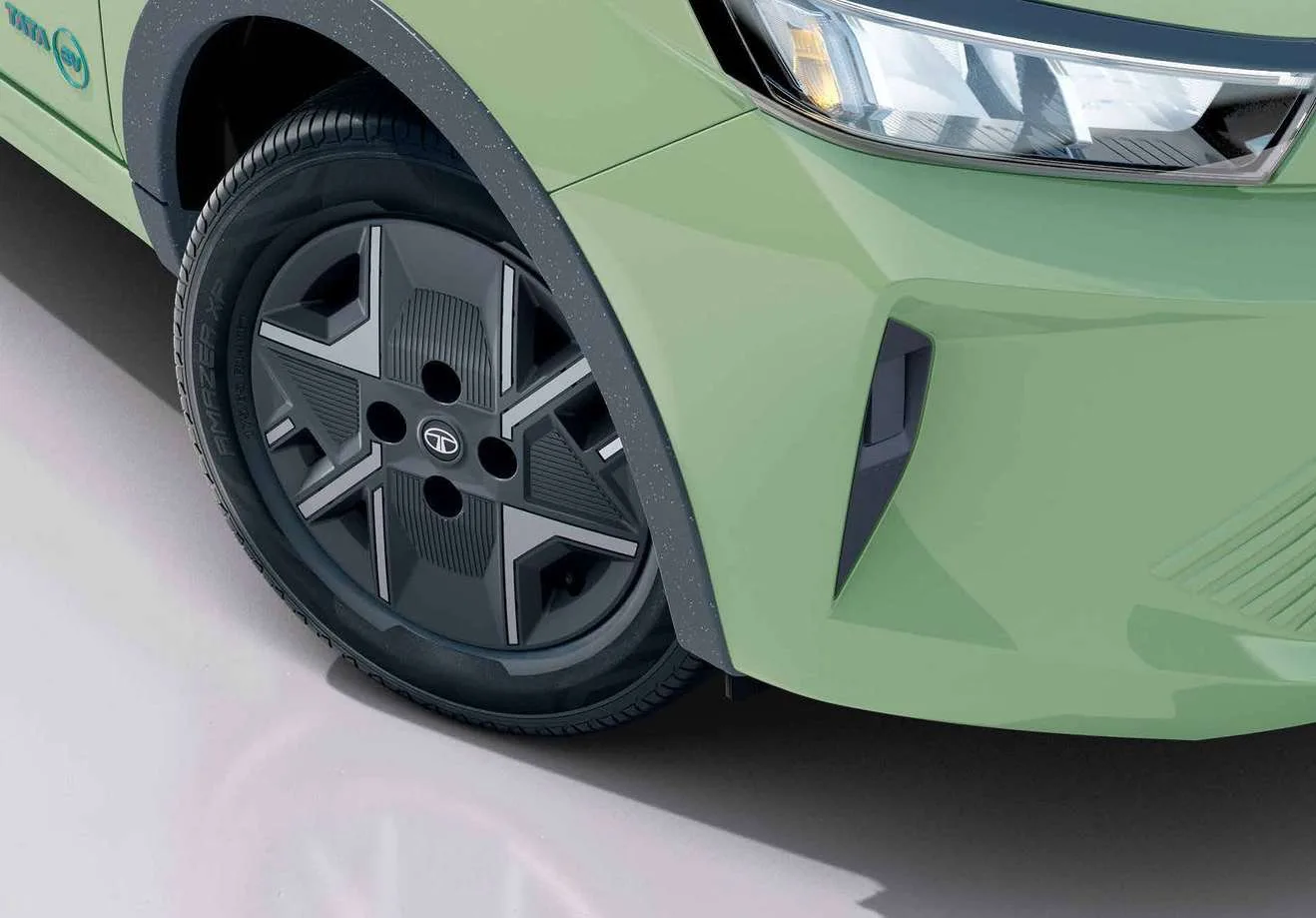
The one thing that lets the design down is the wheels. Both trims ride on 14-inch steel wheels, with covers on the Pure and a more stylised Hyperstyle design on the Creative, and they look undersized inside the new cladding. The blank front can also read as plain rather than purposeful, depending on the colour. Pick one of the bolder shades and it carries the look well.
Interior, space and practicality6.0
The cabin is where the update is most obvious. A two-tone dashboard wrapped in grey fabric, matte trims in place of fingerprint-prone piano black, a free-standing touchscreen and a floating driver display make it feel a class above the old car. The front seats now have better bolstering and more under-thigh support, which you notice on longer drives, and the Creative adds a front armrest with storage, a cooled glovebox and rear AC vents.
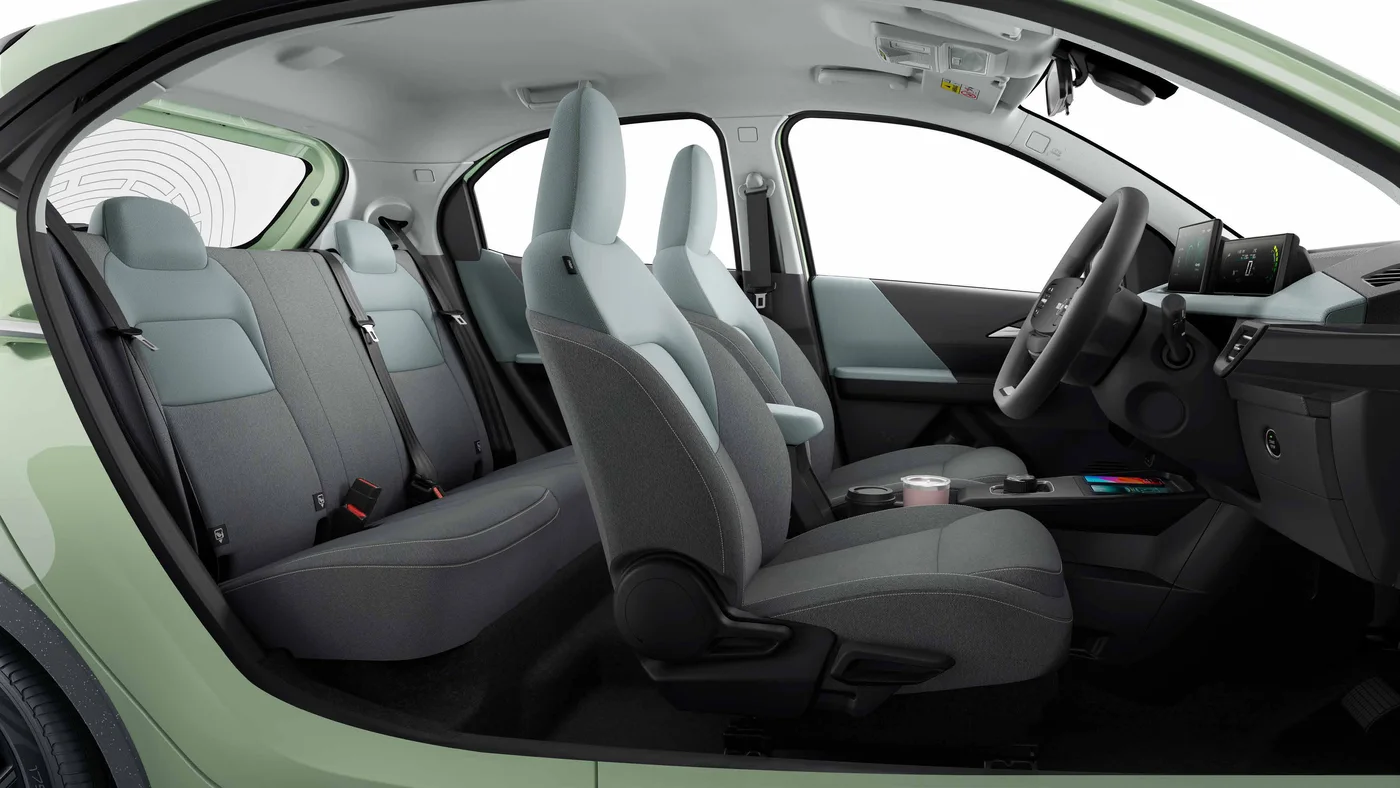
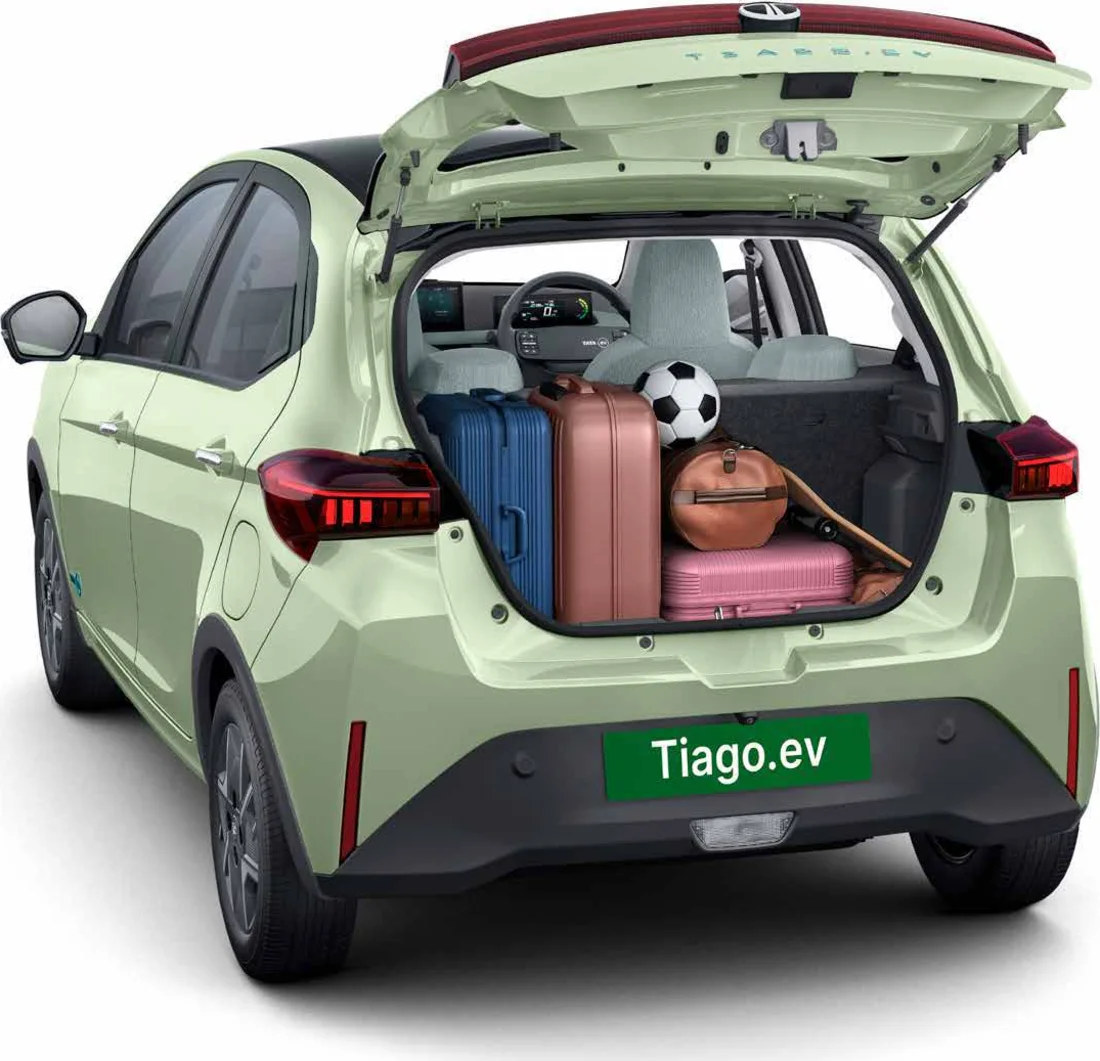
Space is where it remains a small car. The rear bench is comfortable for two adults of average build, with a well-judged backrest angle, but a third passenger is squeezed by the floor hump and taller occupants will find headroom tight. The boot holds 240 litres, enough for three cabin-sized bags or a weekly shop, but the rear seat does not split-fold and there is no spare wheel. Look closely and fit and finish is not uniformly tidy, with some uneven panel gaps and rough edges, and the front seats lack adjustable headrests.
Features and technology7.0
For a car this size, the equipment list is generous. Every Tiago EV gets six airbags, automatic climate control, wireless Apple CarPlay and Android Auto on a 20.32 cm touchscreen, a digital driver display, a rear camera, tyre pressure monitoring, a 65 W USB-C port and electrically adjustable mirrors. The Creative +24 steps up to a sharper 26.03 cm screen, a 360 degree camera with 2D and 3D views, a blind view monitor that shows a live feed when you indicate, cruise control, keyless entry and start, rain-sensing wipers, auto headlamps and auto-folding mirrors.
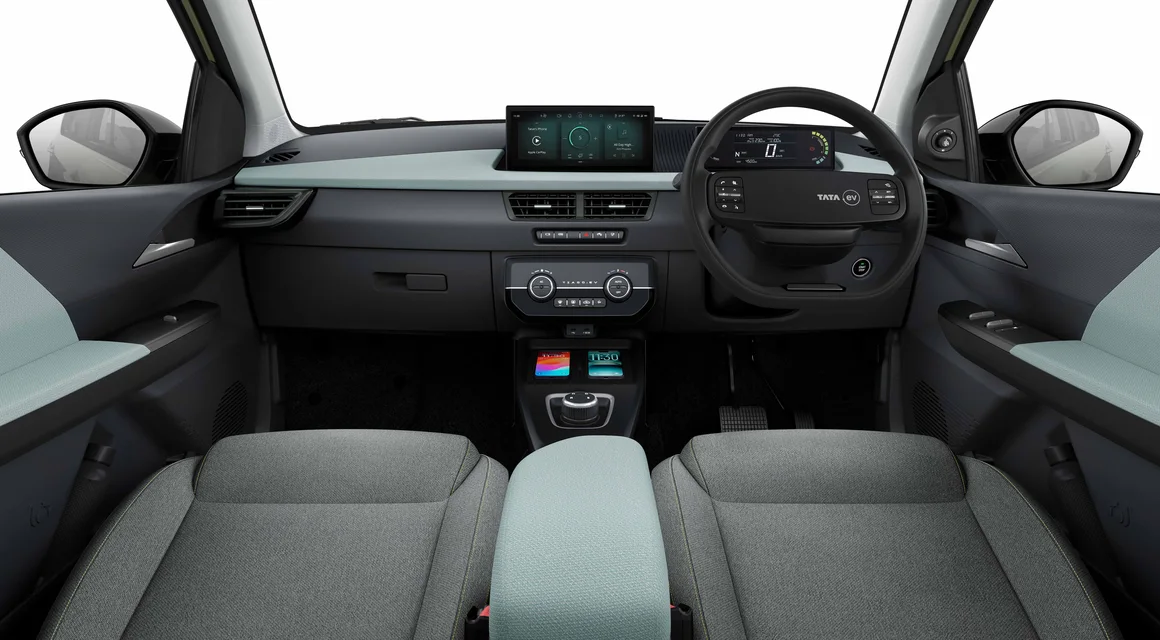
The 360 degree camera is the standout addition, and in tight Nepali parking and narrow lanes it earns its place every day. The software is also quicker and smoother than before. The gaps are small but real: no wireless phone charger, no rear USB port, a driver display whose coloured side sections wash out in bright sunlight, and a blind view feed that takes over the whole screen, including navigation, whenever you signal.
Range, battery & charging
Real-world range5.0
This is the Tiago EV's biggest limitation. The certified figure is 285 km, but in mixed real driving the car returns about 200 km, and Tata's own real-world estimate is 205 to 215 km. With the air conditioning running in traffic it sits near the lower end, and a hill route drains it faster still. On a longer run out of Kathmandu toward the Tarai, a charging stop before the big climb is part of the plan rather than an emergency.
For the job it is designed for, that range is entirely usable. Most city owners cover 30 to 50 km a day, which means charging two or three times a week, or simply plugging in overnight whenever convenient.
- Battery
- 24 kWh
- Motor
- 55 kW, 114 Nm
- Real-world range
- ~200 km
- Screen
- 20.32 cm touchscreen
- Camera
- HD rear camera
- ESP and hill hold
- No
- Battery
- 24 kWh
- Motor
- 55 kW, 114 Nm
- Real-world range
- ~200 km
- Screen
- 26.03 cm touchscreen
- Camera
- 360 degree with blind view
- ESP and hill hold
- Yes
Battery6.0
The 24 kWh pack is small by current standards and it is the only size offered in Nepal, so there is no longer-range option to step up to. What it does well is durability. The pack is liquid cooled, the battery and motor are IP67 rated against dust and water, and Tata has revised the cell chemistry, balancing and thermal control in this update. The battery and motor are covered for 8 years or 1,60,000 km, which removes much of the worry about long-term degradation.
Efficiency8.0
Efficiency is a genuine strength. The Tiago EV is light and small, and in stop-start city traffic it gets more out of each unit of electricity than larger EVs, helped by three regeneration levels, plus an off setting, that claw energy back as you slow. That is why a small battery still delivers useful range. Efficiency falls off at sustained highway speeds and on long climbs, as with any EV, but the car spends most of its life in exactly the conditions where it is most frugal.
Charging6.0
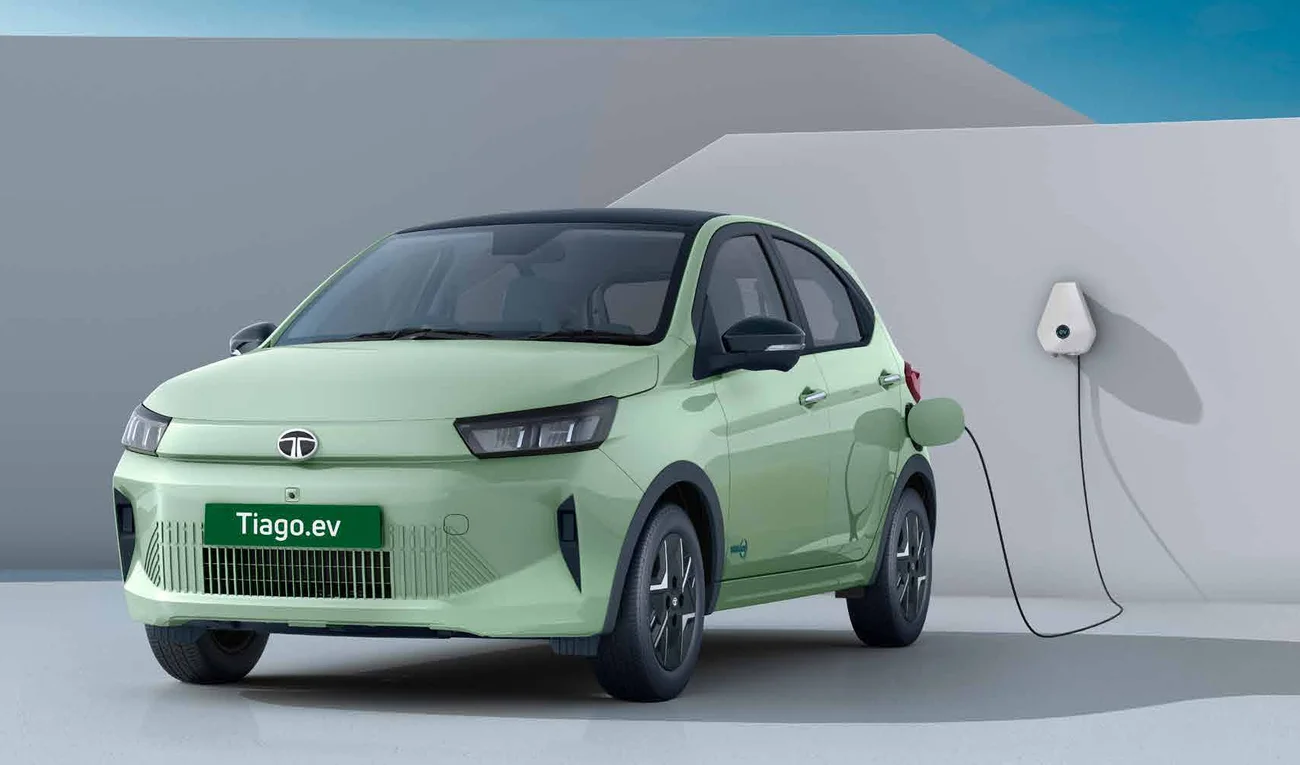
Charging is one of the clear gains of this update. DC fast charging now runs at up to 30 kW, taking the battery from 10 to 80 percent in about 35 minutes and adding around 100 km in roughly 18 minutes. At home, the included 3.3 kW wall box fills the pack overnight in around 8.7 hours, while a 7.2 kW AC charger cuts that to about 3.5 hours. For most owners, the home wall box covers daily needs without ever visiting a public charger.
Charging availability6.0
The CCS2 connector matches Nepal's public fast chargers, and the network of AC and DC points around the Kathmandu valley and along the main highways keeps growing. The Tiago EV's small battery makes that network matter more, not less, because longer trips need a stop sooner than they do in a larger EV. Coverage thins quickly away from the cities and fast chargers can be occupied or out of service, so plan stops on any journey beyond the valley.
Performance & driving
Performance6.0
The 55 kW motor and 114 Nm of torque will not thrill anyone, but they suit the car. City mode softens the throttle and is smooth enough for a first-time EV driver, pulling confidently up to around 105 to 110 km/h before tapering off. Sport mode unlocks the full output and gives noticeably more urgency for overtaking, with 0 to 60 km/h taking 5.7 seconds. Power delivery is now more linear than before, with less of the old car's wheel-spinning surge, which makes it easier to drive smoothly in traffic.
Driving experience, ride and handling7.0
The ride is the Tiago EV's best trait and a real surprise for a car this small. The suspension absorbs potholes, broken patches and sharp ridges with a composure you would expect from a bigger, more expensive car, and it stays stable at highway speeds. The cabin is quiet in town, though wind and road noise build above about 90 km/h, where the car starts to feel outside its comfort zone. The steering is light and easy for parking and tight streets but a little vague, and the rear drum brakes are progressive rather than sharp. There is no true one-pedal mode, so the brake pedal is still needed to stop fully.
Hill performance6.0
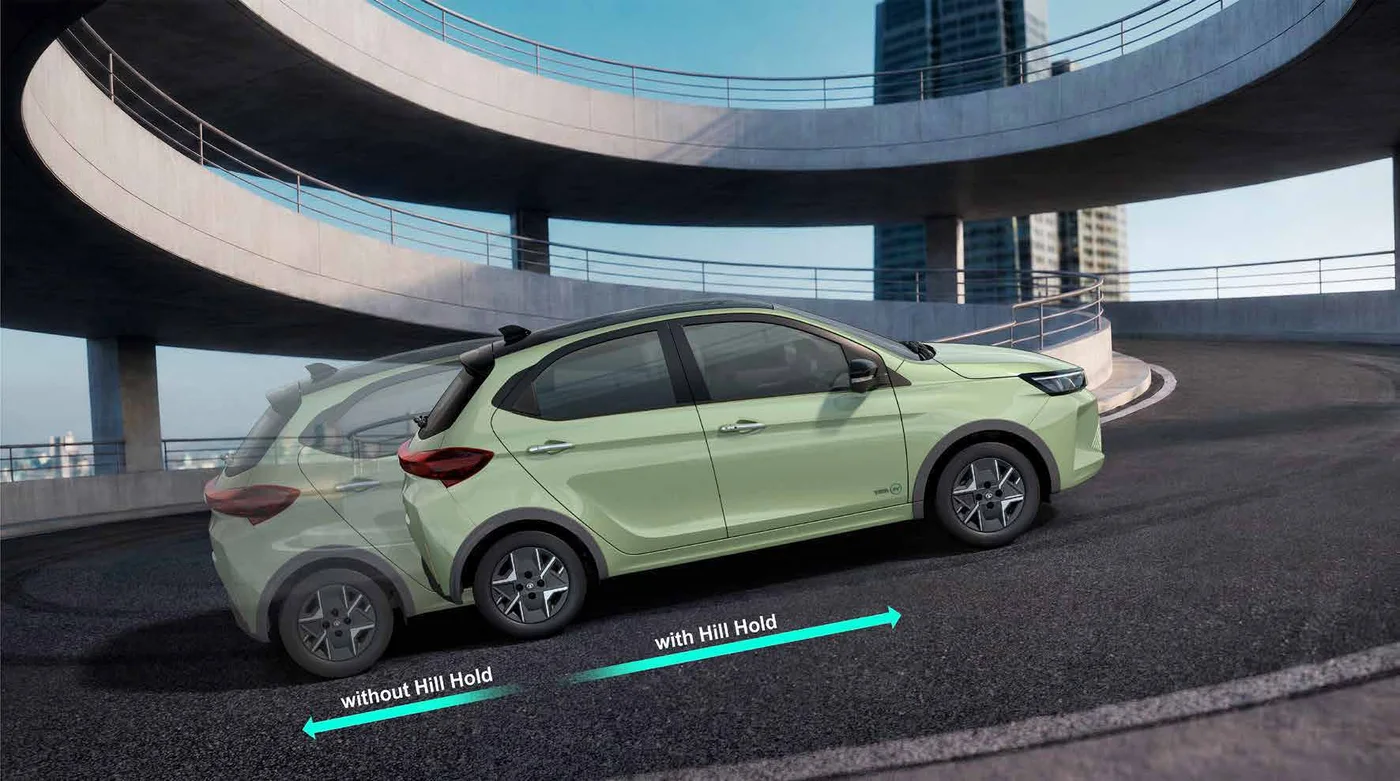
Instant torque helps the Tiago EV climb better than a small petrol hatch, with no gear changes and no strain from a revving engine, and Sport mode is worth selecting on steep sections. The small battery is the catch: a sustained climb uses a big share of the charge, so a hill route needs a healthy buffer and a charger mapped before the ascent. Coming down, the stronger regeneration levels hold speed and recover energy, easing the load on the brakes. Hill hold is fitted to the Creative only, which is a pity on a car that will spend time on steep Kathmandu lanes.
Road tolerance7.0
For a hatchback, the Tiago EV copes well with Nepali roads. Ground clearance of around 170 mm is healthy for the class, the tall-sidewall 14-inch tyres cushion sharp edges, and the soft, well-damped suspension soaks up potholes and broken tarmac rather than crashing through them. It is still a low car next to a compact SUV, so large speed breakers and rutted unpaved stretches call for care, especially with four people aboard.
Safety & build
Safety7.0
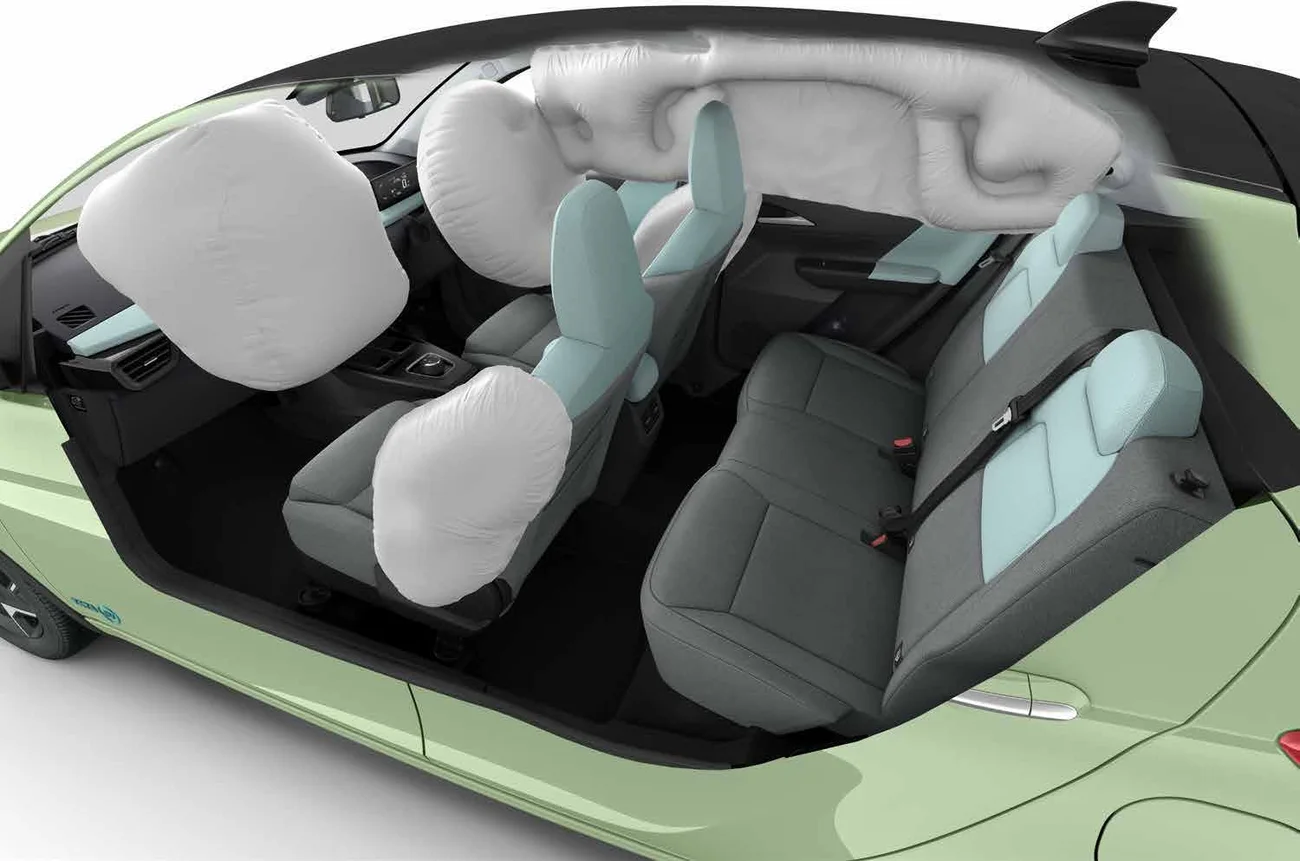
Safety takes a big step forward. Six airbags are now standard on both trims, together with ABS with EBD, ISOFIX mounts, tyre pressure monitoring, rear parking sensors and a rear camera, and the body structure has been strengthened with more high-strength steel. The Creative +24 adds electronic stability control with traction control, hill hold, the 360 degree camera and the blind view monitor. The drawbacks are that stability control is not standard on the Pure +24, the rear brakes are drums, and the refreshed car has yet to be crash tested, so it cannot yet point to a current rating.
Build quality and reliability6.0
The Tiago EV feels solid on the road, and the sealed, liquid-cooled battery and motor are built for heat, dust and monsoon water. The improved cabin materials make it feel more upmarket, but assembly is inconsistent, with uneven gaps and rough edges that are easy to find. The Tiago EV has been on sale long enough for its core hardware to be proven, and reliability has improved with each update, though software and minor electrical niggles are still worth checking on delivery.
Value & ownership
Price and value7.0
The Tiago EV remains one of the most affordable ways to go electric in Nepal, and this update adds a lot of equipment and safety without changing its role. Six airbags across the range, the camera systems and a genuinely modern cabin give buyers much more car than before. The counterpoint is that the Creative +24 edges close to larger EVs with bigger batteries, including Tata's own Punch EV, so it only makes sense if you want the smallest, easiest car and are happy with city range. As a first EV or an urban second car, it is strong value.
Ownership cost8.0
This is the Tiago EV's clearest financial argument. Charged at home on a small 24 kWh pack, a full battery costs very little, and the per-kilometre running cost is a fraction of a petrol hatchback's. Servicing is simpler with no engine oil, clutch or exhaust to maintain, and the 8 year or 1,60,000 km battery and motor warranty, alongside a 3 year or 1,25,000 km vehicle warranty, limits the biggest long-term costs.
After-sales support8.0
Sipradi has represented Tata in Nepal for more than four decades and runs one of the country's most established sales and service networks. For an EV that matters: parts, trained technicians and a dealer you can actually reach reduce the risk of a car sitting idle waiting for a component. On support, the Tiago EV is on far firmer ground than most newer EV brands.
Service outside Kathmandu8.0
The same network extends well beyond the valley, with Tata workshops in major towns and along key highways, so service and parts are more likely to be within reach if you live or travel outside Kathmandu. Charging beyond the cities is the bigger constraint for this small-battery car, but on the service side it is better covered than most rivals.
Verdict
The refreshed Tata Tiago EV fixes most of what held the old car back. It looks modern, the cabin feels a class above before, six airbags are now standard, the Creative +24 brings a 360 degree camera and stability control, and faster DC charging makes the most of a small battery. Add a remarkably comfortable ride, a compact body that is effortless in Kathmandu traffic, very low running costs and Sipradi's nationwide service network, and it is one of the most sensible electric cars in Nepal. The trade-offs are just as clear: roughly 200 km of real-world range, a single battery size, a small boot, a tight rear seat and uneven fit and finish. Buy it as a city car or an urban second car and it is very easy to live with; if you regularly leave the valley, look at something with a bigger battery.
Okay
The refreshed Tiago EV is a comfortable, well-equipped and very cheap-to-run city car, held back mainly by its 200 km real-world range.
Kushal Rajbhandari
Sep 23, 2026
The refreshed Tiago EV is a comfortable, well-equipped and very cheap-to-run city car, held back mainly by its 200 km real-world range.
Kushal Rajbhandari
Sep 23, 2026
FAQ
What is the real-world range of the refreshed Tata Tiago EV?
Expect around 200 km on a full charge in mixed driving, against a certified 285 km. Heavy traffic with the air conditioning on and long hill climbs pull it lower, so plan trips beyond the valley around a charging stop.
How long does the Tata Tiago EV take to charge?
On a DC fast charger it goes from 10 to 80 percent in about 35 minutes and adds roughly 100 km in 18 minutes. At home, the included 3.3 kW wall box takes around 8.7 hours for a full charge, and a 7.2 kW AC charger takes about 3.5 hours.
What is new in the refreshed Tiago EV?
A new front and rear design with full LED lighting, a redesigned fabric-trimmed dashboard, better front seats, six airbags as standard, faster 30 kW DC charging and, on the Creative +24, a larger 26.03 cm touchscreen, a 360 degree camera, blind view monitor, stability control, hill hold, cruise control and rear AC vents. The 24 kWh battery and 55 kW motor are unchanged.
What is the difference between the Pure +24 and Creative +24?
They share the same battery, motor and range. The Creative +24 adds the larger screen, 360 degree camera and blind view monitor, stability control with traction control, hill hold, LED headlamps, cruise control, keyless entry, rain-sensing wipers, auto-folding mirrors, rear AC vents and a front armrest.
Is the Tata Tiago EV good for Nepali roads?
For a hatchback, yes. Around 170 mm of ground clearance and a soft, well-damped suspension handle potholes and broken tarmac comfortably, though large speed breakers and rough unpaved roads still call for care with a full load.
Is the Tata Tiago EV safe?
Six airbags, ABS with EBD, ISOFIX mounts and tyre pressure monitoring are standard on both trims, and the Creative +24 adds stability control and hill hold. The rear brakes are drums, and the refreshed model has not yet been crash tested.
Can the Tata Tiago EV handle trips outside Kathmandu?
It can, with planning. The small battery means a stop on most trips beyond the valley, especially routes with long climbs, but the CCS2 port works with Nepal's public fast chargers and a stop of around 35 minutes restores most of the charge.