

Tata Sierra EV review

Kushal Rajbhandari
· Nov 20, 2026
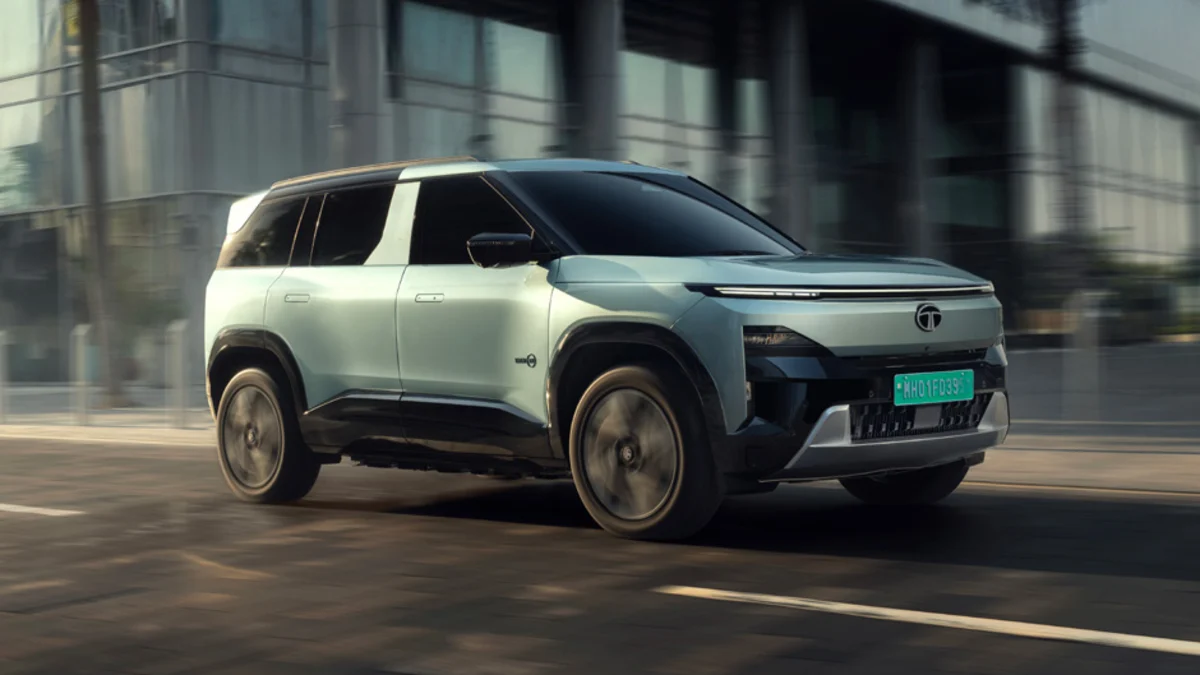
Good
A roomy, long-range electric SUV with the ground clearance for rough Nepali roads, let down by patchy cabin quality and slow charging, and not yet on sale here.
Kushal Rajbhandari
Nov 20, 2026
A roomy, long-range electric SUV with the ground clearance for rough Nepali roads, let down by patchy cabin quality and slow charging, and not yet on sale here.
Kushal Rajbhandari
Nov 20, 2026
What we like
- Up to 75 kWh LFP battery, good for about 400 to 430 km of mixed Nepali driving in the QWD
- 205 mm ground clearance, short overhangs and absorbent frequency-selective dampers
- Roomy flat-floor rear seat, 622-litre boot and a front boot
- Five-star Bharat NCAP rating for adults and children, six airbags standard
- Strong performance, with the QWD reaching 100 km/h in about six seconds
- Backed by Sipradi's nationwide sales, service and charging network
What could be better
- Not on sale yet, with no confirmed Nepal price, trims or delivery date
- Cabin fit and finish below rivals, with early reports of rattles and software faults
- DC charging slower than claimed, and Sipradi's own DC chargers are 30 kW
- No spare wheel or spare-wheel well, only a tyre repair kit
- AC charging limited to 7.2 kW, up to 10.5 hours for a full home charge
- Level 2 driver assistance and automatic parking only on the top Empowered A trims
The Tata Sierra EV is a boxy, upright five-seat SUV with a big battery and 205 mm of ground clearance, and its dampers cope well with broken roads. Tata's nationwide network stands behind it. The cabin is not as well finished as its rivals', charging is slower than the spec sheet suggests and there is no spare wheel. It is also not on sale yet.
Sipradi showed the Sierra EV at the NADA Auto Show in August 2026 and took bookings, but when we wrote this it had not announced a price, the Nepal trims or a delivery date, and only two display cars had come into the country. This review is based on the Indian-market car, which comes with a 63 kWh or 75 kWh LFP battery and with rear-wheel drive or Tata's dual-motor QWD all-wheel drive. We will update it when Sipradi confirms what Nepal gets.
It suits a family that wants room and clearance for trips out of the valley and values a service network reaching well beyond Kathmandu. Buyers who want quick charging and a better-finished cabin should also look at the XPENG G6.
Design, interior & features
Design and exterior8.0
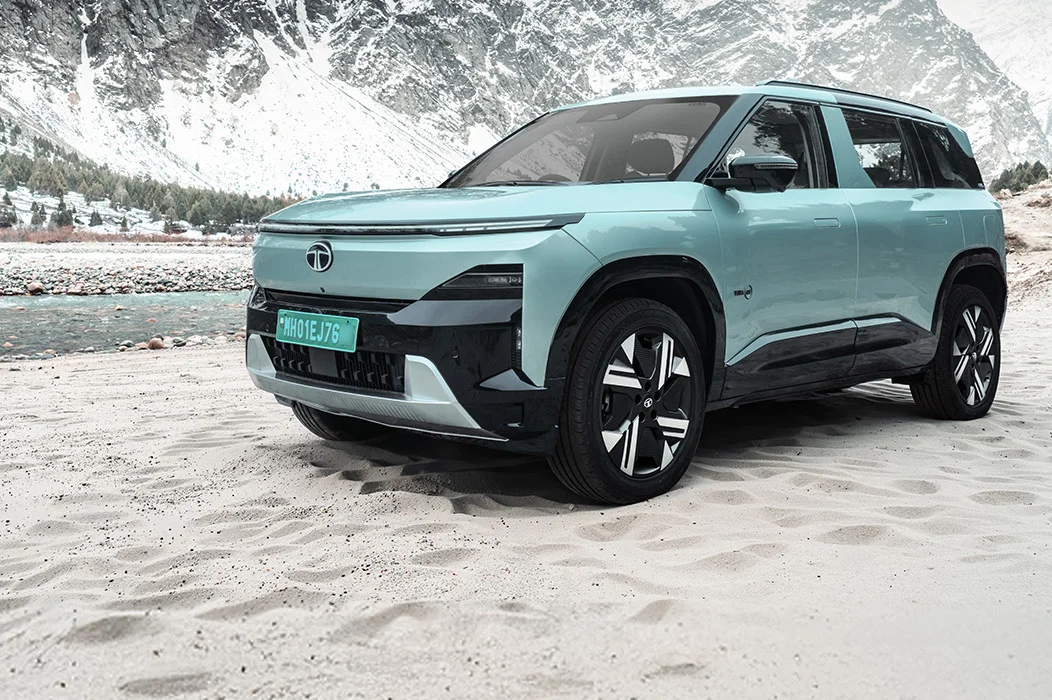
The Sierra EV revives a name Tata first used in the 1990s, and it looks like nothing else in its class. The body is tall and square, with short overhangs, a flat roof and rear side glass that runs up into the roofline. The EV has a closed front panel with a full-width light bar, flush door handles that light up as you approach, and an illuminated ring around the charging port. It is 4,340 mm long, 1,841 mm wide and 1,750 mm tall, compact on the outside for the space inside.
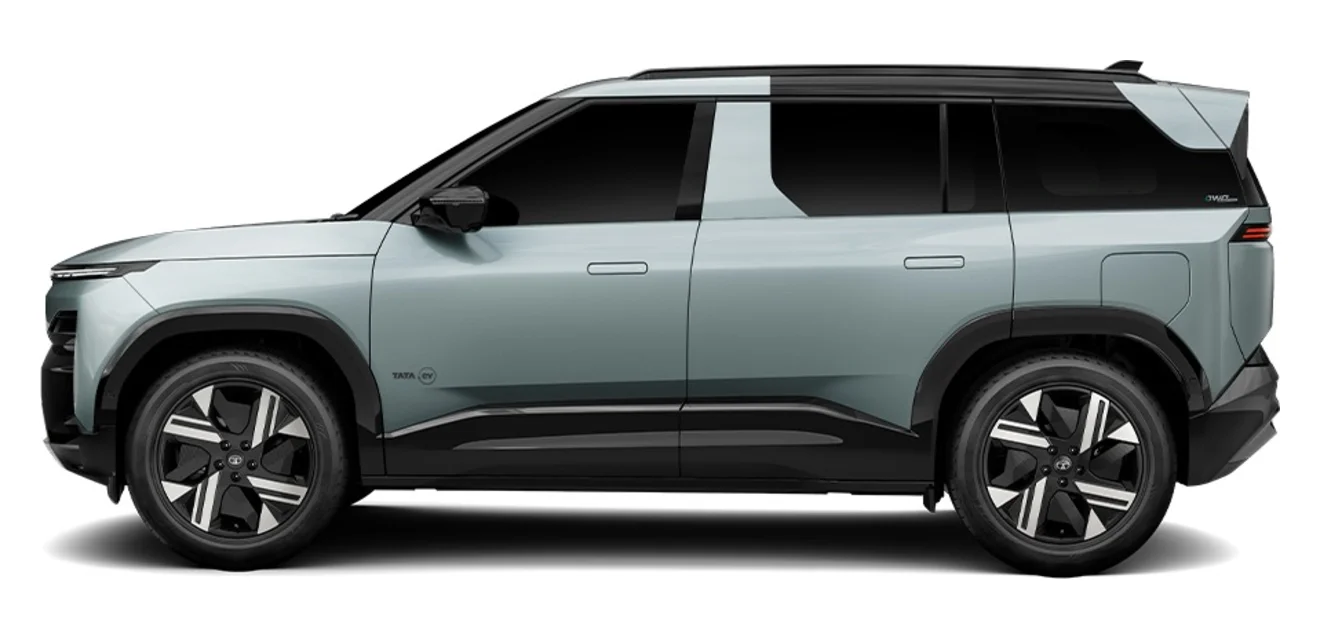
Lower trims ride on 18-inch alloys and the top trims on 19-inch wheels. Thick black cladding runs around the wheel arches and sills, and it will hide scuffs better than painted bumpers do. Seven colours are offered in India, one of them only on the QWD, and the two-tone pale blue-green suits the shape best.
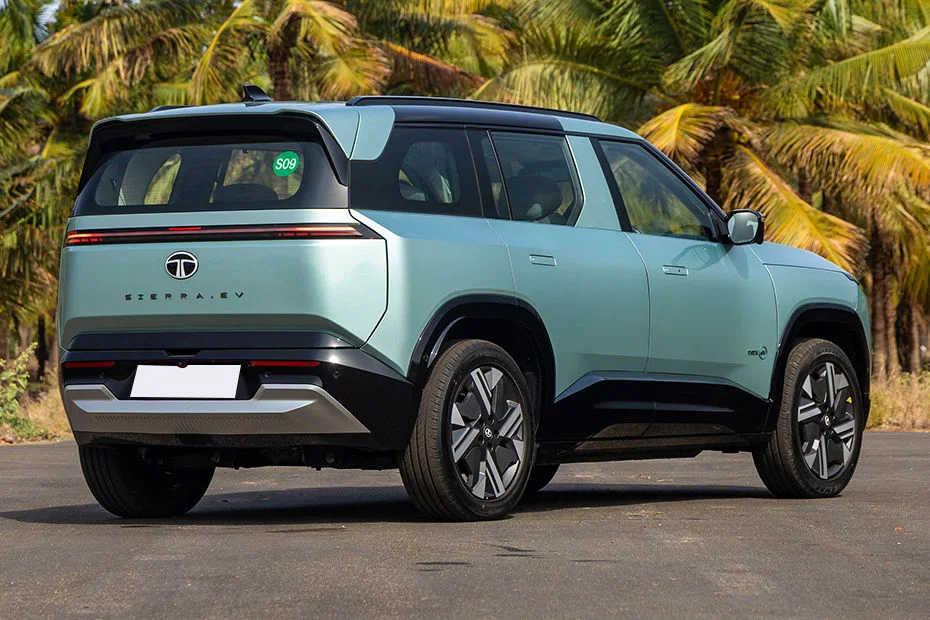
Interior, space and practicality7.0
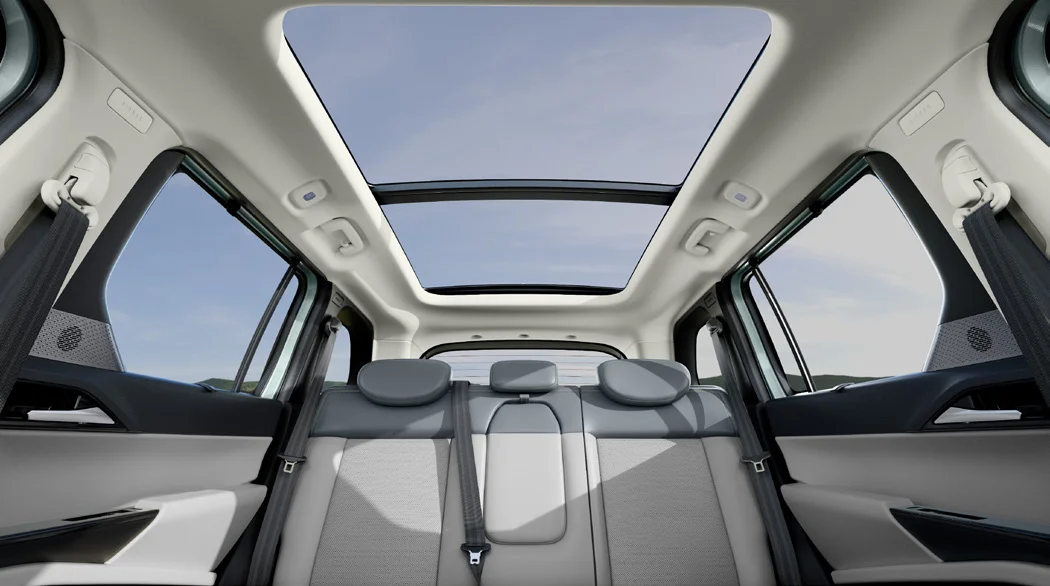
The long wheelbase and flat floor give the back seat plenty of legroom, and three adults fit across it more easily than in most rivals. Headroom is generous under the tall roof. From the Empowered trim the rear backrest reclines in two stages and gets an armrest and an adjustable centre headrest. The battery raises the floor a little, so adults get less support under the thigh than in the petrol Sierra.
The boot holds 622 litres and 1,257 litres with the rear seats folded, more than the XPENG G6 offers. There is no underfloor compartment, so the charging cable case sits on the boot floor and takes up space. The front boot holds 55 litres on rear-wheel-drive cars and 35 litres on the QWD, where the front motor takes up room.
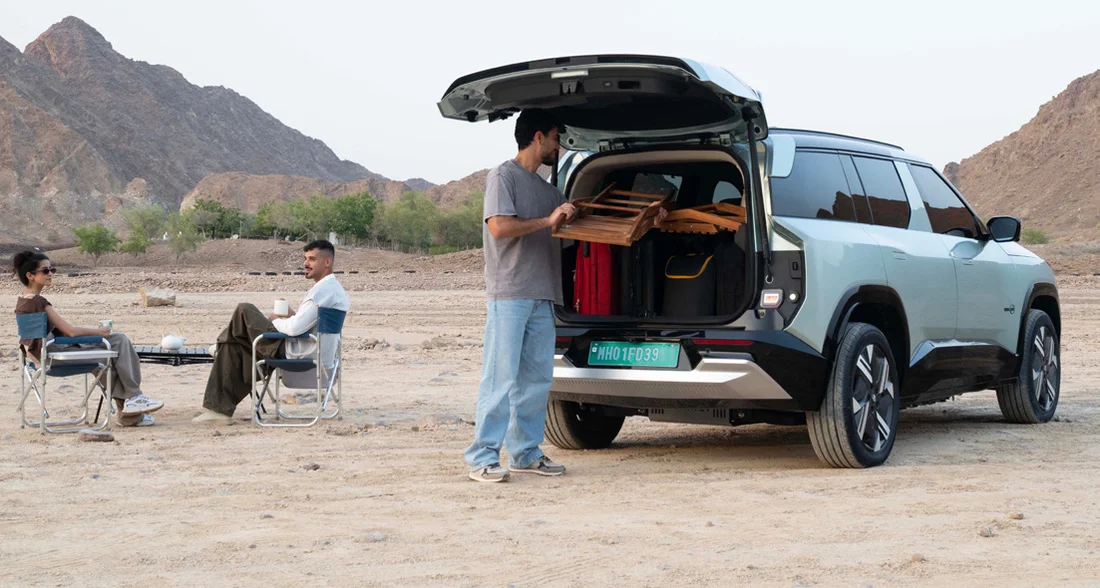
Small-item storage is weaker. Testers found the box behind the gear selector narrow and hard to reach, the cupholders small and low, and the umbrella holders in the doors without drains, so water pools in them.
Features and technology8.0
Every Sierra EV has a 12.3-inch touchscreen, a 10.25-inch driver display, wireless Android Auto and Apple CarPlay, six airbags, cruise control, regen paddles and over-the-air updates. From the Empowered trim a third 12.3-inch screen for the front passenger joins the other two across the dash, along with ventilated front seats, a powered driver seat with memory, dual-zone climate control and a gesture-controlled tailgate.
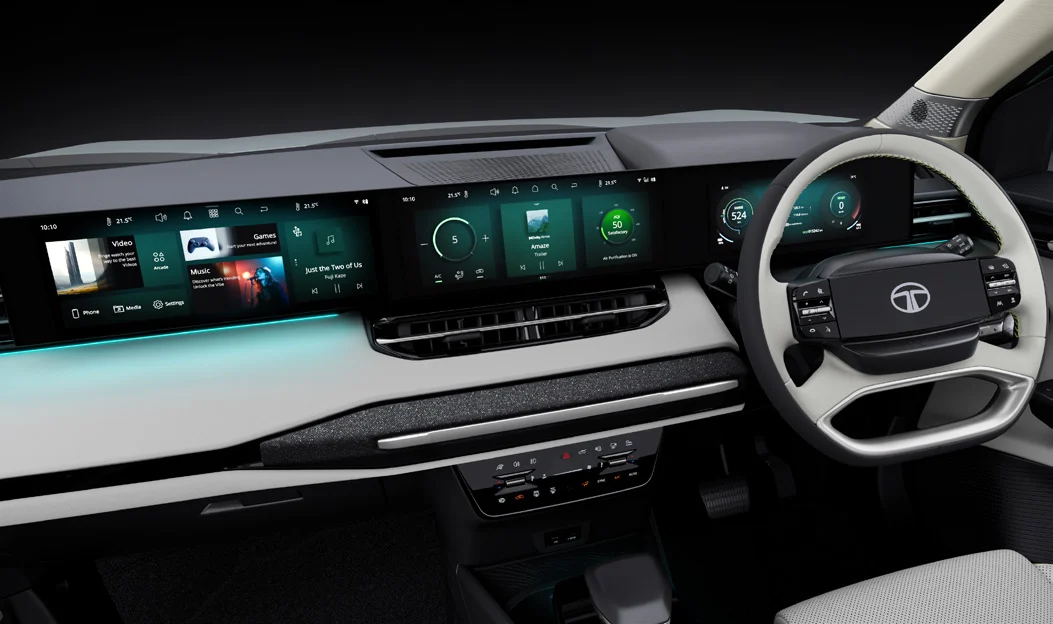
The screens are sharp and respond quickly. The driver display is cluttered, and the passenger screen, which can run games and streaming apps, feels like a gimmick. Climate has its own row of physical buttons below the screens. Google's EV route planner in Android Auto predicts the charge left on arrival and adds charging stops, which makes long trips easier to plan.
From the Adventure trim there are 12 JBL speakers with a subwoofer, a soundbar and Dolby Atmos, plus a 360-degree camera and a wireless phone charger. The panoramic sunroof comes from the Pure S trim up. Only the top Empowered A trims get the head-up display, a 540-degree camera that can see under the car, Level 2 driver assistance and automatic parking.
Range, battery & charging
Real-world range7.0
The claimed MIDC figures are 566 km for the 63 kWh car, 665 km for the 75 kWh rear-drive car and 624 km for the 75 kWh QWD. Tata's own real-world estimates are much lower, at 440 to 460 km, 510 to 530 km and 480 to 500 km. In independent testing in 40-degree heat with the AC running, a QWD covered about 438 km in the city and 437 km on the highway.
Hills, a full load and AC will cut that further in Nepal. Plan on roughly 400 to 430 km from the QWD and 350 to 380 km from the 63 kWh car. In the bigger car that covers Kathmandu to Pokhara and part of the way back, and it beats the 350 to 380 km we expect from the XPENG G6 in the same conditions.
Battery7.0
Both packs use LFP cells, which tolerate regular charging to 100 percent and age slowly. They are liquid-cooled, and the battery and motors are sealed to IP67 against dust and water. Tata has not published usable capacity. The packs sit on the Acti.ev+ platform shared with the Harrier EV.
- Battery
- 63 kWh LFP
- Motor
- 175 kW rear, 315 Nm
- Range (MIDC)
- 566 km
- Tata real-world estimate
- 440 to 460 km
- DC 20-80%
- about 25 min
- AC 10-100% (7.2 kW)
- 8.9 h
- Front boot
- 55 L
- Battery
- 75 kWh LFP
- Motors
- 103 kW front, 154 kW rear, 504 Nm
- Range (MIDC)
- 624 km
- Tata real-world estimate
- 480 to 500 km
- DC 20-80%
- about 26 min
- AC 10-100% (7.2 kW)
- 10.5 h
- Front boot
- 35 L
Sipradi has not published Nepal warranty terms. In India the battery is covered for 15 years with no distance limit for the first private owner, the motor for eight years or 160,000 km and the rest of the car for three years or 125,000 km. The Nexon EV in Nepal carries the same motor and vehicle cover, so similar terms are likely.
Efficiency and running cost7.0
Testers recorded about 17 to 20 kWh per 100 km in the QWD, which is reasonable for a square, two-tonne SUV with two motors. The rear-drive cars should use a little less. Charging at home keeps daily running costs low, and routine servicing is light because there is no engine to maintain. The 225-section tyres are narrower and cheaper to replace than the 20-inch rubber on some rivals.
Charging6.0
Tata claims 20 to 80 percent in about 25 minutes for the 63 kWh car on a charger of 110 kW or more, and 26 minutes for the 75 kWh cars on 120 kW or more. In independent testing a QWD peaked at about 90 kW and took 35 minutes for 20 to 80 percent, then another 39 minutes to reach 100 percent. That is slower than the XPENG G6, which charges at more than 200 kW.
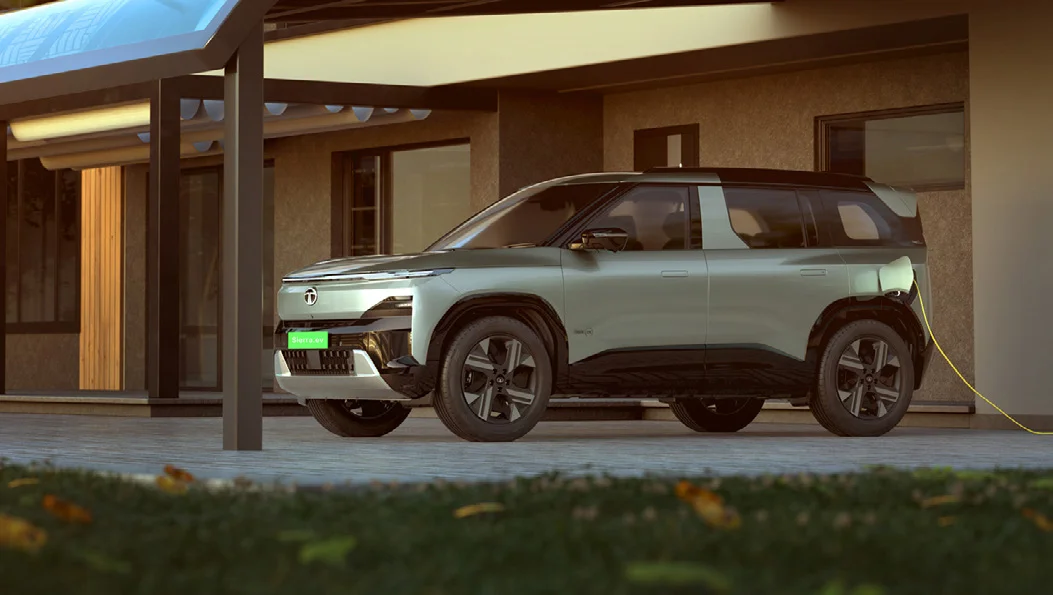
AC charging is limited to 7.2 kW, with no 11 kW option, so a full charge from 10 percent takes 8.9 hours on the 63 kWh car and 10.5 hours on the 75 kWh cars. From the Pure S trim the Sierra can power appliances through vehicle-to-load at up to 3.3 kVA, or charge another EV at up to 5 kVA.
Charging availability8.0
Sipradi runs one of the largest brand-owned networks in Nepal, with more than 185 charging points including around 25 DC sites on the main highways at places such as Malekhu, Mulkot, Bharatpur, Hetauda, Pokhara, Bhairahawa, Nepalgunj, Dhangadhi and Itahari. Every Sipradi DC unit we found is rated at 30 kW, though, so taking a 75 kWh Sierra from 20 to 80 percent on one takes well over an hour. For quicker stops you will need the faster NEA and private chargers that any CCS2 car can use. Sipradi has not said whether a home wall box comes with the Sierra.
Performance & driving
Performance and hill climbing8.0
The 63 kWh rear-drive car has the stronger single motor, at 175 kW and 315 Nm. The 75 kWh rear-drive car makes 154 kW. The QWD adds a 103 kW front motor for 504 Nm in total and a Boost mode, and in independent testing it reached 100 km/h in just under six seconds, quicker than the XPENG G6. Even the slowest version has plenty of pull for a family SUV.
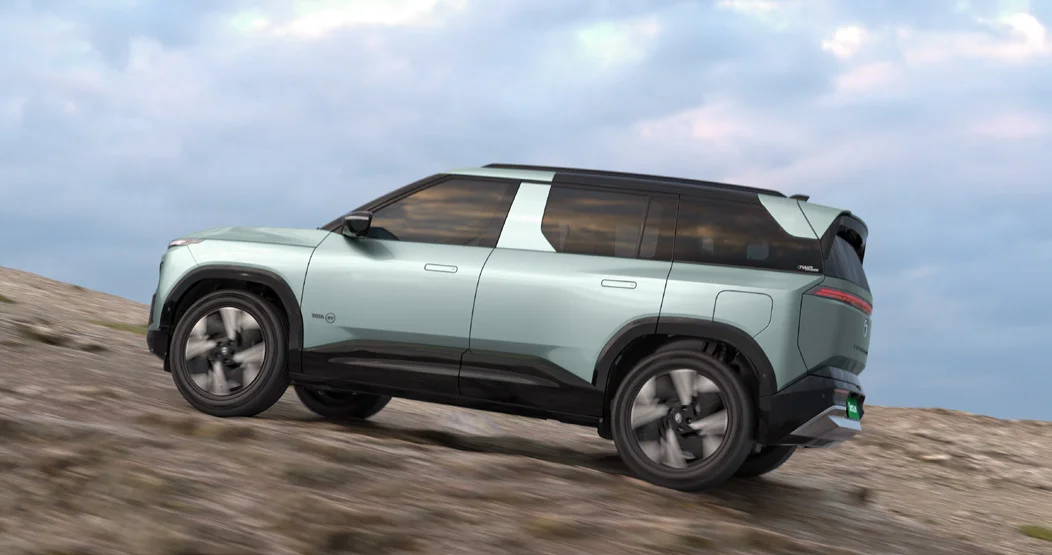
A full load on a long climb out of the valley should not trouble any version. Hill hold and hill descent control are standard, and the paddles select four regen levels, which help hold speed on the way down and save the brakes. There is no true one-pedal mode, so the car keeps creeping at the strongest setting and you need the brake to stop. Testers also noted a small dead zone at the top of the accelerator followed by a sudden surge, which takes care in stop-start traffic.
Driving experience, ride and handling7.0
The Sierra EV uses frequency-selective dampers, which soften over sharp bumps and firm up for larger body movements. Testers found the low-speed ride absorbent over potholes and broken tarmac, though stiffer than the petrol Sierra's because of the extra weight. At highway speed it stays stable, but some found it bouncy over undulations.
It is heavy, at around 2.1 tonnes for the QWD, and the weight shows when you push it through corners. Body roll is controlled for a tall car. The steering is light in town and weights up with speed, but gives little feel. Wind noise around the front pillars and road noise on coarse surfaces are noticeable at highway speed, and the brake pedal feels spongy, though the brakes themselves are strong.
Road tolerance8.0
With 205 mm of ground clearance, short overhangs and tall-sidewall 225/60 R18 tyres on most trims, the Sierra EV is better equipped for rough Nepali roads than most of its rivals. The QWD adds six terrain modes and an off-road assist function to the Empowered A's 540-degree camera, and testers took it over rock beds, axle twisters and steep ramps without fuss.
There is no spare wheel and no well to carry one, only a tyre repair kit, which will not fix a sidewall cut on a remote road. If you plan to travel far from towns, carry a spare on the boot floor and give up some luggage space.
Safety & build
Safety8.0
The Sierra EV scored five stars for both adults and children in Bharat NCAP, with 30.62 out of 32 for adult protection and 45 out of 49 for children. Tata tested the top QWD, and the rating covers every version. All Sierra EVs have six airbags, stability control with rollover mitigation, disc brakes on all four wheels, ISOFIX mounts and a tyre pressure monitor.
The Level 2 driver assistance suite, with adaptive cruise, lane centring, automatic emergency braking and blind-spot and cross-traffic alerts, is fitted only to the top Empowered A trims, while the XPENG G6 has it on every car. Testers found the adaptive cruise and lane keeping reliable, but reported glitches in the lane-change function, and automatic parking sometimes failed to find a space.
Build quality and reliability6.0
Build quality is the Sierra EV's weakest area. Several testers found hard plastics, rough edges, uneven stitching and misaligned panels, and some low-mileage cars developed squeaks and rattles. Early Indian owners have reported screens going blank, a draining 12-volt battery, key fob and app faults, and an air-conditioning leak. Tata has acknowledged software problems in the early months of its recent models.
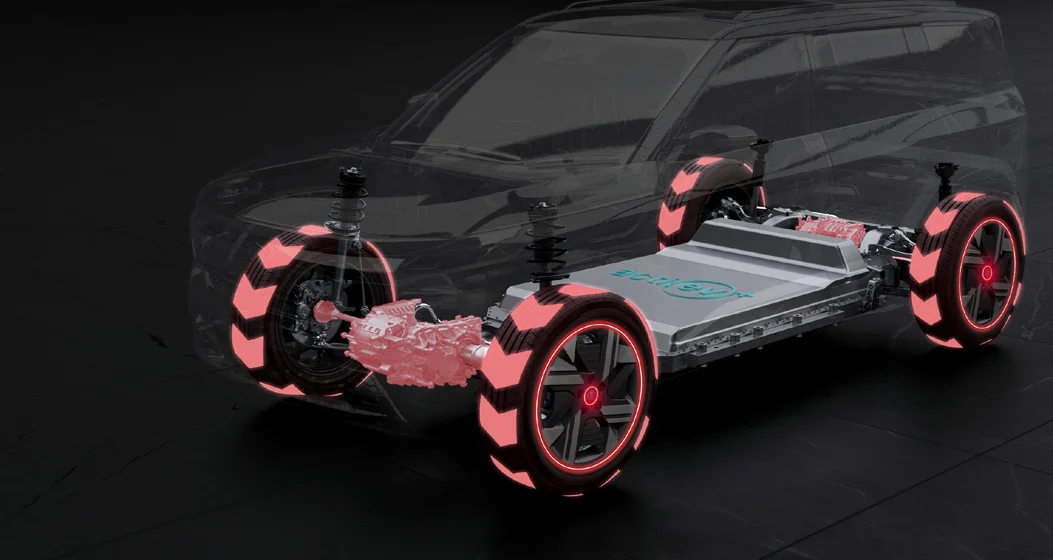
The mechanical parts are on firmer ground. The platform and electronics are shared with the Harrier EV, which has been on sale longer, and Tata has more EV experience in Nepal than most rival brands. But the Sierra EV is a new model with little ownership history anywhere, so judge reliability on early Nepali owners once deliveries start.
Value & ownership
Price and value7.0
Sipradi has not set a price, so the score here is provisional. In India the Sierra EV starts below the Harrier EV, though its top trims overlap it. If Sipradi prices the 75 kWh car close to the XPENG G6, the Sierra EV would offer more range, more ground clearance and a bigger network, though less polish and much slower charging.
After-sales and service network8.0
Sipradi has sold Tata cars in Nepal for decades and has delivered more than 10,800 Tata EVs since 2021, second only to BYD. It runs more than 16 dedicated EV service centres, a battery diagnostic and restoration facility, and roadside assistance, with sales and service points from Biratnagar and Birtamode in the east to Pokhara, Butwal, Nepalgunj and Dhangadhi in the west. No rival covers as much of the country.
The Sierra EV is a new platform here, though. Parts stocks and technician training will have to build up from scratch, and early Indian owners describe service as inconsistent, so expect a learning period.
Editor's opinion7.0
We would put the Sierra EV on a shortlist alongside the XPENG G6. If Sipradi brings the 75 kWh car at a sensible price, its longer range and Tata's workshops outside the valley make it the better fit for a Nepali family that travels. The G6 charges much faster, feels better built and is on sale now.
Verdict
The Tata Sierra EV fits an LFP battery of up to 75 kWh, a roomy flat-floor back seat and a 622-litre boot into a body only 4,340 mm long. Its 205 mm clearance and frequency-selective dampers handle broken roads well, the five-star Bharat NCAP rating covers every version, and Sipradi's workshops reach well beyond the valley. Against that, the cabin has hard plastics and early software faults, DC charging takes longer than Tata claims and slows further on Sipradi's 30 kW units, and there is no spare wheel for remote roads. Sipradi has not announced a price, trim list or delivery date, so the value case is still open. If the 75 kWh car arrives at a fair price, it will be one of the better long-distance EVs for Nepal.
Good
A roomy, long-range electric SUV with the ground clearance for rough Nepali roads, let down by patchy cabin quality and slow charging, and not yet on sale here.
Kushal Rajbhandari
Nov 20, 2026
A roomy, long-range electric SUV with the ground clearance for rough Nepali roads, let down by patchy cabin quality and slow charging, and not yet on sale here.
Kushal Rajbhandari
Nov 20, 2026
FAQ
Is the Tata Sierra EV on sale in Nepal?
Not yet. Sipradi unveiled it at the NADA Auto Show in August 2026 and took bookings, but it has not announced a price, the Nepal trims or a delivery date. Only two display cars had been brought into the country by October 2026.
How far can the Tata Sierra EV go on a full charge?
The claimed MIDC ranges are 566 km for the 63 kWh car, 665 km for the 75 kWh rear-drive car and 624 km for the 75 kWh QWD. In mixed Nepali driving with hills and AC, expect roughly 400 to 430 km from the QWD and 350 to 380 km from the 63 kWh car.
How long does the Tata Sierra EV take to charge?
Tata claims 20 to 80 percent in about 25 to 26 minutes on a DC charger of 110 to 120 kW or more, but independent testing of the QWD took 35 minutes. On Sipradi's 30 kW chargers it takes well over an hour. A full charge from 10 percent on a 7.2 kW home charger takes 8.9 hours for the 63 kWh car and 10.5 hours for the 75 kWh cars.
Which versions of the Sierra EV will Nepal get?
Sipradi has not confirmed this. In India the Sierra EV comes with a 63 kWh battery and rear-wheel drive, a 75 kWh battery and rear-wheel drive, or a 75 kWh battery with dual-motor QWD all-wheel drive, across six trims from Pure to Empowered A AWD.
Is the Tata Sierra EV safe?
Yes. It has a five-star Bharat NCAP rating for adults and children, six airbags as standard, stability control and disc brakes all round. Level 2 driver assistance is fitted only to the top Empowered A trims.
Does the Tata Sierra EV have a spare wheel?
No. It comes with a tyre repair kit, and there is no well under the boot floor for a spare. If you travel on remote roads, carry a spare on the boot floor.
How big is the Tata Sierra EV boot?
The boot holds 622 litres with the rear seats up and 1,257 litres with them folded. There is also a front boot of 55 litres on rear-drive cars and 35 litres on the QWD.